

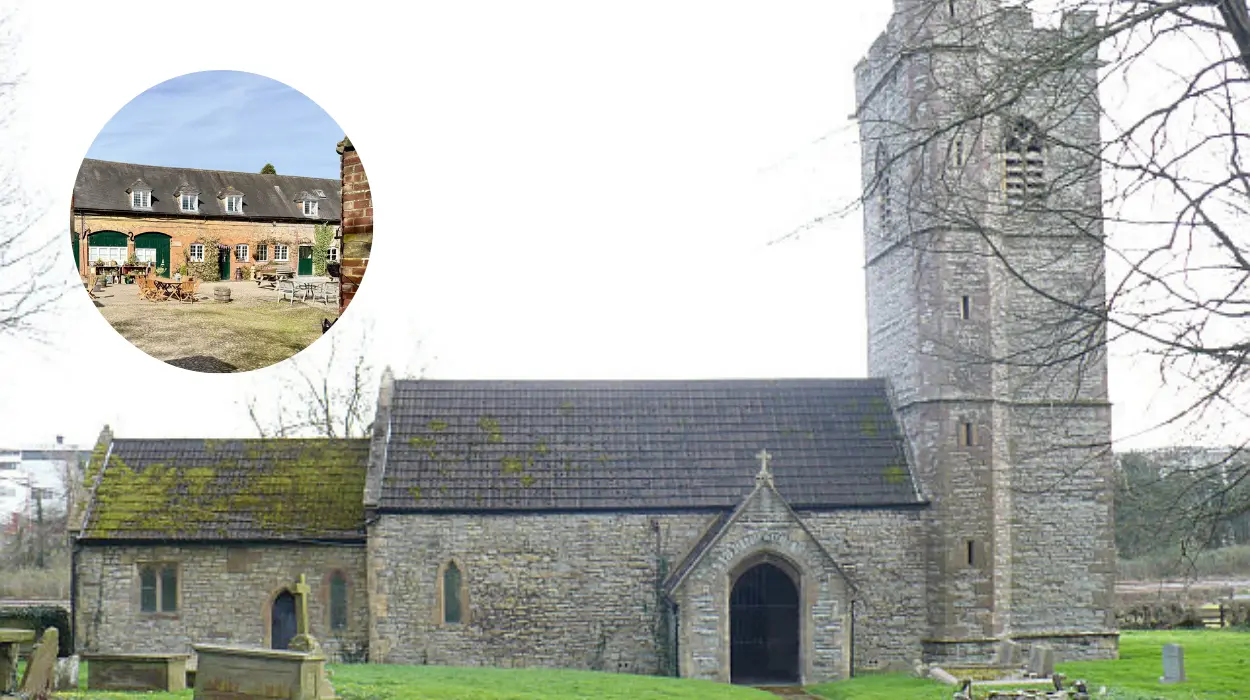
Nestled in the rolling landscapes of South Wales, Bishton captivates with its rich tapestry of history, serene rural charm, and enduring community spirit. This quaint village offers an evergreen allure for those seeking to uncover layers of medieval legacy, ecclesiastical significance, and natural beauty that have defined it for centuries.
- The Ancient Origins of Bishton
- St Cadwaladr’s Church: A Beacon of Faith and Architecture
- Bishton Castle: Echoes of Medieval Fortification
- Evolution Through the Centuries: From Manor to Modern Village
- Natural Beauty and Outdoor Pursuits in Bishton
- Community Life and Cultural Traditions
- Bishton’s Place in Newport’s Broader Tapestry
- Notable Figures and Family Legacies
- Exploring Bishton Today: Practical Visitor Guide
- Economic Foundations: Agriculture and Beyond
- Environmental Stewardship and Future Prospects
- Why Bishton Endures as an Evergreen Destination
The Ancient Origins of Bishton
Bishton’s story begins deep in early medieval Wales, where records trace its existence to pivotal moments in Welsh ecclesiastical and royal history. The earliest documented reference appears in the Liber Landavensis, a 12th-century manuscript chronicling the deeds of the Bishops of Llandaff. Around the year 700, Guidnerth received a pardon for slaying his brother Merchion and was granted lands stretching from the coastline of Llangadwaladr to St. Cadwaladr’s church, under the witness of Bishop Berthguinus. This charter not only marks Bishton’s territorial beginnings but also underscores its ties to ancient Celtic land divisions and tribal reconciliations.
The village’s name itself evokes ecclesiastical roots, derived from “Bishop’s Town,” reflecting its alleged role as a residence for the Bishops of Llandaff. During turbulent times, figures like Owain Glyndŵr razed episcopal palaces here and at Llandaff in the early 15th century, prompting a relocation to Mathern Palace. Bishop John Pascall met a grim fate in Bishton in 1361, succumbing to the plague amid an era when the village served as a vital hub for church administration in Gwent. These events positioned Bishton at the crossroads of Welsh resistance and religious authority, shaping its identity as a place of spiritual and political refuge.
St Cadwaladr’s Church: A Beacon of Faith and Architecture
At the heart of Bishton stands St Cadwaladr’s Church, a structure whose dedication honors one of Wales’ last native kings, Cadwaladr, who reigned until his death in AD 664 according to chronicler Geoffrey of Monmouth. This rare dedication—shared only with Llangadwaladr in Anglesey and possibly St Mary’s in Magor—highlights the church’s unique place in Welsh Christian heritage. The site follows the classic Celtic “llan” pattern, a circular churchyard enclosing early monastic grounds, though the present building emerged in the early English period post-Norman Conquest.
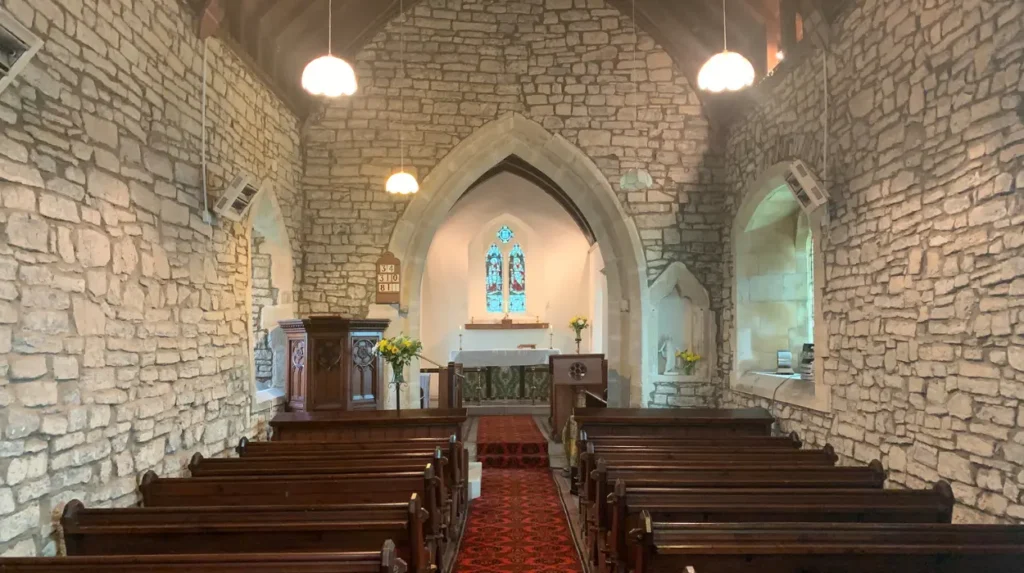
Tragedy struck in 1760 when the original tower collapsed, severely damaging the decorated and Perpendicular Gothic elements within. Restoration efforts soon followed, preserving features like the 14th-century font and 15th-century stoup. The 19th century brought further enhancements: a porch addition and, in 1887, a new Victorian Gothic tower with a single bell, designed by architect John Prichard. Stained glass in the east window, installed in 1915, adds a modern devotional touch, while the chancel arch’s mysterious origins invite ongoing scholarly intrigue. Designated a Grade II listed building in 1963, the church remains a living testament to Bishton’s architectural evolution and unwavering faith.
Generations of parishioners have gathered here for baptisms, weddings, and memorials, fostering a continuity that binds the village’s past to its present. The churchyard, dotted with weathered headstones, whispers stories of local families who tilled the surrounding fields and navigated the upheavals of industrial Wales.
Bishton Castle: Echoes of Medieval Fortification
Overlooking Bishton Road from elevated ground near a farm lies the scheduled remains of Bishton uk/local/swansea/castle/">Castle, a poignant reminder of the village’s defensive past. This motte-and-bailey structure, though largely ruined, speaks to the strategic importance of Bishton during the Norman era, when lords fortified borderlands against Welsh incursions. Its location provided commanding views of the coastal plains toward the Severn Estuary, ideal for vigilance over trade routes and potential invaders.
Archaeological surveys reveal earthworks and stone fragments that hint at a once-imposing residence, possibly linked to the episcopal estates. Protected as a scheduled monument, the site draws historians and ramblers eager to ponder its role in regional power struggles. Unlike grander Welsh castles like Caerphilly, Bishton’s fortification embodies the understated might of local nobility, integrated seamlessly into the agrarian landscape that still dominates today.
Evolution Through the Centuries: From Manor to Modern Village
Bishton’s trajectory mirrors broader Welsh history, transitioning from ecclesiastical center to agricultural hamlet amid waves of social change. Post-medieval records show it as part of the manor of Goldcliff, under the stewardship of Llandaff Bishops until the Dissolution of the Monasteries in 1536 scattered monastic influences. By the 19th century, enclosure acts reshaped its fields into neat farms, supporting a population sustained by dairy, crops, and proximity to Newport’s growing ports.
The 20th century brought subtle modernization: electricity in the 1930s, post-war housing expansions, and integration into Newport’s unitary authority in 1996. Yet, Bishton resisted urbanization, maintaining a population under 1,000 as per recent censuses. Community halls host events like the annual Bishton Show, celebrating local produce and crafts, while the village hall serves as a nexus for clubs and gatherings. This balance of preservation and progress ensures Bishton’s appeal as an evergreen retreat from urban bustle.
Agricultural heritage persists in farms like those along Underwood Road, where traditional methods coexist with sustainable practices. The village’s Welsh name, Llangadwaladr Trefesgob or simply Trefesgob (“Bishop’s Town”), endures in bilingual signage, nodding to cultural bilingualism in modern Wales.
Natural Beauty and Outdoor Pursuits in Bishton
Bishton’s countryside enchants with its verdant fields, hedgerows teeming with wildlife, and proximity to the Gwent Levels—a UNESCO-recognized wetland of international importance. Ramblers traverse footpaths linking Bishton to neighboring Llanwern and Goldcliff, offering vistas of grazing sheep, ancient pollard willows, and distant estuary views. The area supports rare species like otters and water voles, drawing birdwatchers to spot lapwings and redshanks in winter.
Cyclists pedal the National Cycle Route 88, which skirts Bishton, connecting it to coastal paths toward Cardiff Bay. For nature enthusiasts, the Nash Pill nature reserve nearby provides tidal mudflats rich in biodiversity, ideal for mindful exploration. These pursuits embody Bishton’s timeless draw as a haven for wellness, where fresh air and quiet trails rejuvenate the spirit year-round.
Seasons paint the landscape vividly: spring daffodils blanket verges, summer buzzes with insects, autumn harvests fill lanes with tractors, and winter mists cloak the levels in ethereal calm. Local initiatives, like those from the Gwent Wildlife Trust, promote conservation, ensuring Bishton’s natural splendor thrives for future generations.
Community Life and Cultural Traditions
Bishton’s close-knit community thrives on traditions that weave residents together across generations. The Bishton Cricket Club, with roots in the Victorian era, fields teams on its picturesque ground, fostering rivalries with nearby villages. Annual fetes feature ploughman’s lunches, live music, and children’s games, echoing harvest festivals of yore.
The primary school, serving Bishton and Underwood, emphasizes local history in its curriculum, instilling pride through projects on St Cadwaladr’s legends. Pubs like the Carpenters Arms offer hearty Welsh fare—cawl soup, bara brith—and host quizzes, preserving oral histories over pints. These institutions form the social glue, sustaining Bishton’s identity amid Wales’ evolving cultural landscape.
Volunteering flourishes, from church flower festivals to litter picks along the levels, reflecting a stewardship ethos inherited from farming forebears. Digital connectivity has modernized outreach, with a village Facebook group sharing news of road closures or lost pets, blending old-world camaraderie with contemporary tools.
Bishton’s Place in Newport’s Broader Tapestry
As part of Newport’s eastern fringe, Bishton benefits from urban amenities while retaining rural autonomy. Commuter links via the A48 and M4 place Cardiff and Bristol within easy reach, attracting families seeking affordable housing amid rising city prices. Regeneration in nearby Llanwern, with its steelworks legacy transitioning to green energy, promises economic ripples without overwhelming the village.
Newport’s cultural scene enriches Bishton life: residents attend the Riverfront Theatre or Celtic Manor events, returning to village quietude. This symbiosis highlights Bishton’s evergreen value—proximity without perdition, tradition without stagnation.
Notable Figures and Family Legacies
Bishton’s annals feature luminaries tied to its lands. Bishop John Pascall’s plague-ridden end symbolizes medieval perils, while Owain Glyndŵr’s destruction marked national rebellion. Local surnames like those from the Bissopeston lineage trace to 12th-century Worcestershire estates, evolving post-Hastings into enduring Welsh branches.
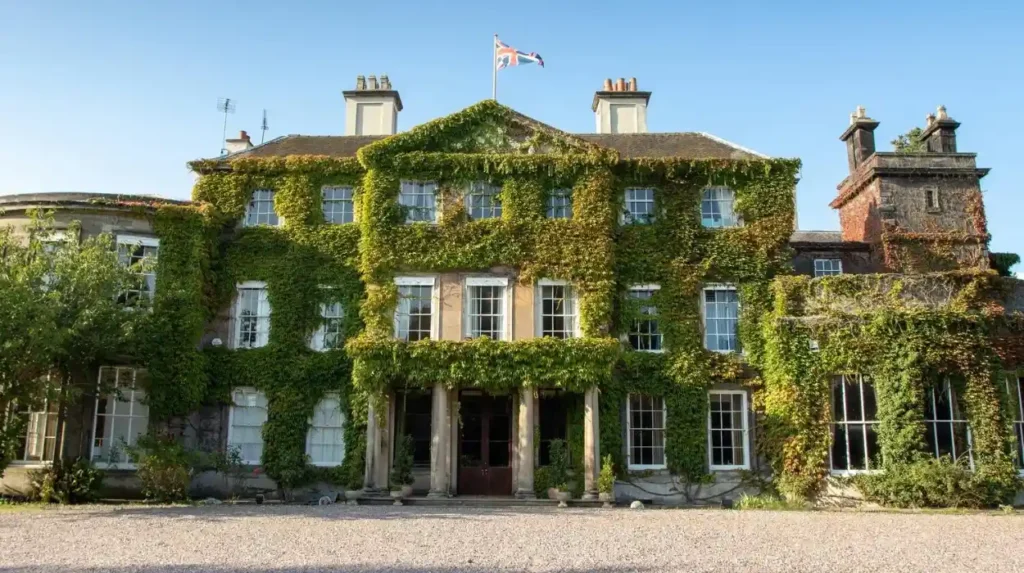
Farmers and clergy dominate oral histories, their descendants still active in parish councils. Charlotte Sparrow of a related Staffordshire Bishton Hall (often conflated but distinct) exemplifies philanthropic spirits, founding schools in the 19th century—echoing Gwent’s educational fervor. These tales personalize Bishton’s history, inviting visitors to trace ancestral roots via parish records at Newport Library.
Exploring Bishton Today: Practical Visitor Guide
Reaching Bishton is straightforward: from Newport, follow the B4240 east for 5 miles, or train to Llanwern station and cycle the remainder. Parking abounds at church or hall, with ample inns for overnight stays. Guided walks, bookable via Newport Tourism, delve into castle ruins and church secrets, perfect for history buffs.
Seasonal highlights include summer open days at St Cadwaladr’s, showcasing restored features, and autumn farm trails. Accessibility improves with level paths, though sturdy shoes suit muddy lanes. For deeper dives, the West Glamorgan Archive Service holds manor rolls, offering researchers endless fascination.
Economic Foundations: Agriculture and Beyond
Bishton’s economy roots in agriculture, with dairy herds and arable fields feeding Newport markets. Diversification into agritourism—pick-your-own fruits, farm shops—bolsters resilience against subsidy shifts. Renewable energy ventures, like solar on barns, align with Wales’ net-zero goals, future-proofing prosperity.
Small businesses thrive: artisans craft from village workshops, and B&Bs cater to walkers. Proximity to Magor services aids daily needs, while community enterprises like the village shop sustain local loops.
Environmental Stewardship and Future Prospects
Bishton embraces sustainability, participating in the Gwent Levels Restoration Project to combat flooding via rewilding. Community orchards and hedgerow planting enhance biodiversity, countering climate pressures. Housing developments respect green belts, prioritizing brownfield sites in line with Welsh planning laws.
Looking ahead, Bishton’s masterplan envisions enhanced broadband for remote work, youth facilities, and heritage trails linking to Wales Coast Path. These efforts secure its status as a model rural idyll, where history informs progressive living.
Why Bishton Endures as an Evergreen Destination
Bishton’s blend of antiquity and approachability ensures lasting appeal. From Cadwaladr’s sacred echoes to levels’ whispering winds, it offers immersive escapes for urban dwellers and locals alike. Whether tracing bishopric paths or savoring pub tales, visitors depart enriched by its unassuming depth.
In an era of fleeting trends, Bishton stands resolute—a village where time slows, stories linger, and natural beauty heals. For The Wales Times readers, it exemplifies the hidden treasures defining Welsh heritage, deserving exploration beyond the headlines.