
Hanmer is a small Welsh border village with a long, layered history, a distinctive landscape of meres and moraine, and an enduring sense of place that continues to define life there today.
- Where Hanmer Is – And Why Its Location Matters
- Early Origins: From Meres to Manor
- Medieval Hanmer and the Hanmer Family
- St Chad’s Church: Spiritual and Historic Heart
- A Royal Rebel’s Wedding: Owain Glyndŵr in Hanmer
- Hanmer in War and Conflict
- Architecture and Village Character
- The Mere and the Landscape of Water
- Language, Dialect and Identity
- Demography and Community Life Today
- Conservation Status and Planning
- Education, Heritage and Continuity
- Hanmer’s Enduring Appeal for Visitors
- Hanmer in the Story of Wales
Where Hanmer Is – And Why Its Location Matters
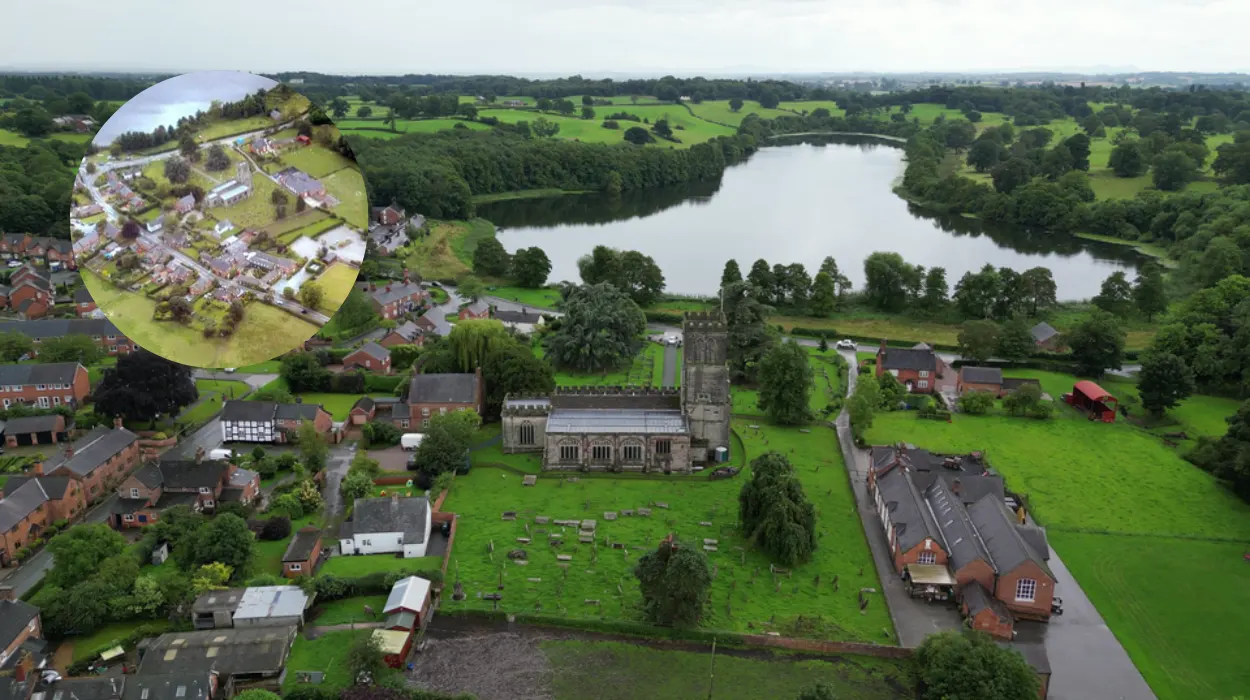
Hanmer lies in Wrexham County Borough in north‑east Wales, around nine miles south‑east of uk/local/wrexham/">Wrexham and close to the English border, just off the A539 between Wrexham and Whitchurch. The village has grown on a low glacial moraine beside Hanmer Mere, a natural lake that forms part of the wider “Shropshire lake district” created by the last Ice Age.
This landscape gives Hanmer a distinctive appearance: gently undulating ground, a broad sheet of water reflecting the church tower, and fertile surrounding farmland. Its position on historic routes between Wrexham, Whitchurch, Overton and Bettisfield has long shaped its role as a local focus for worship, schooling and rural trade.
Early Origins: From Meres to Manor
Archaeological and historical evidence suggests that settlement at Hanmer reaches back at least as far as the Anglo‑Saxon period, when St Chad, later Bishop of Lichfield, is believed to have visited around 670 and established an early Christian cell. Before that, the wider region had formed part of the territory of the Cornovii, a British tribe whose lands later became incorporated into the Mercian district known as Wreocensaete.
The name “Hanmer” is thought to derive from earlier forms such as “Handmere” or “Hagenamere”, referring to a mere or lake associated with a local Mercian lord, showing how closely the identity of the place is tied to its waters. By the high Middle Ages, a manor had developed here, and the family that took its name from the village – the Hanmers – rose to regional prominence under Edward I in the late thirteenth century.
Medieval Hanmer and the Hanmer Family
Following Edward I’s conquest of Wales, the area around the mere was granted to Sir Thomas de Macclesfield; his descendants adopted the name of the village, establishing the Hanmer family as major landholders whose influence extended across the borderlands. Haughmond Abbey near Shrewsbury also held land and rights in Hanmer during the medieval period, emphasizing the church’s importance as a manorial and ecclesiastical centre.
St Chad’s Church and the adjacent moated site together underline the status of medieval Hanmer, with the moat—probably constructed between about 1200 and 1325—seen as a visible sign of lordship linked to the manor and the abbey’s control. Over time, the Hanmer estate expanded, and after the Dissolution of the Monasteries in the sixteenth century, Sir Thomas Hanmer purchased Haughmond’s former property in the area, consolidating secular ownership and shaping the pattern of settlement around the church.
St Chad’s Church: Spiritual and Historic Heart
The oldest recorded reference to a church at Hanmer dates from 1110, indicating that organised Christian worship on the site has continued for more than nine centuries. Medieval Hanmer revolved around this church, which developed into a substantial late Perpendicular building with aisles, chantry chapels and notable stained glass.
St Chad’s has suffered repeated destruction and renewal, reflecting wider conflicts in British history. The church was badly damaged around 1463 during the Wars of the Roses and subsequently rebuilt around 1490; in the seventeenth century, Parliamentarian troops used it as a stable during the Civil War, and during this period the medieval churchyard cross was thrown down on the orders of Oliver Cromwell, only being re‑erected in the eighteenth century.
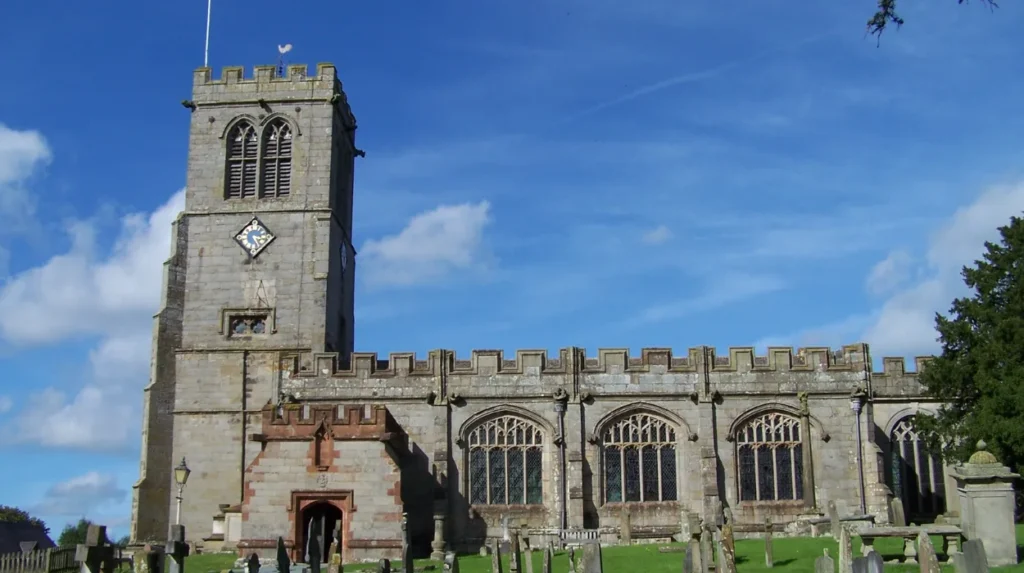
The most dramatic event in its modern story was the “Great Fire” of 3 February 1889, when a blaze gutted the building, destroyed its intricate woodwork and medieval glass, and threatened nearby thatched cottages. Rebuilding began quickly to designs by the architects Bodley and Garner, and the church reopened in 1892, although the chancel remained sealed off and roofless until a final phase of restoration in 1935–36 under W. D. Caröe. Inside, the current timber ceiling incorporates carvings produced by village youths in woodwork classes in the years before the First World War, a poignant reminder of a generation many of whom did not return from the conflict.
Today, St Chad’s stands as one of the oldest and most architecturally significant churches in Wales, overlooking the mere from a rectangular churchyard that still preserves a medieval stone cross and a strong sense of continuity. Its dedication to St Chad links Hanmer to broader patterns of early Christian mission in Mercia and the Welsh borderlands.
A Royal Rebel’s Wedding: Owain Glyndŵr in Hanmer
One of the most evocative episodes in Hanmer’s history is its association with Owain Glyndŵr, the Welsh leader whose early fifteenth‑century revolt against English rule has made him a national symbol. In 1383, St Chad’s Church was the setting for the marriage of Margaret Hanmer, daughter of David Hanmer, to Glyndŵr, binding the rising figure to one of the most established borderland families.
This alliance exemplified the complex loyalties of the Marches, where Welsh identity, English law and local aristocratic networks overlapped. For visitors today, this connection gives Hanmer a unique place in the story of Welsh nationhood, linking a quiet rural village to some of the most dramatic chapters in the country’s past.
Hanmer in War and Conflict
Conflict has periodically intruded on Hanmer’s otherwise pastoral setting. As noted, the Wars of the Roses brought destruction to its medieval church in the fifteenth century, requiring a major rebuilding by the end of that century. During the English Civil War, Roundhead forces from Nantwich are recorded as invading the village and stabling their horses in St Chad’s, an act that would have shocked a devout rural community.
A skirmish near Hanmer Mere on 20 June 1643 saw a large body of Parliamentarian horse and dragoons ambushed and “cut to pieces” by Welsh Royalists, underlining the strategic significance of routes around the mere. In later centuries, the names on Hanmer’s war memorials and the unfinished church ceiling carvings mark the impact of the First World War on this small community, where the loss of young men weighed heavily on families and on village life.
Architecture and Village Character
The physical fabric of Hanmer today preserves a mixture of medieval, early modern and later architectural layers that together define its special character. Around the church lie the early eighteenth‑century vicarage, and Church Cottage, a half‑timbered house regarded as the oldest in the village. Nearer the mere stands Magpie Cottage, a thatched black‑and‑white building that has become something of a visual shorthand for the village’s “picture postcard” appeal.
Facing the west front of St Chad’s is a school founded in 1676, often described as one of the oldest schools in Wales to have been in continuous educational use. This building was sympathetically redeveloped in the early 2000s to meet contemporary standards while retaining its historic character, illustrating how Hanmer has adapted its heritage to modern needs.
The overall pattern of development, as assessed in conservation studies by Wrexham County Borough Council, remains recognisably historic, with buildings clustered around the church and along the old Whitchurch–Overton road. Later twentieth‑century expansion has been limited mainly to the eastern and southern edges of the village, allowing Hanmer to keep its traditional linear plan and wide visual relationship with the surrounding fields and the mere.
The Mere and the Landscape of Water
Hanmer Mere shapes not just the village’s silhouette but also its ecology, micro‑climate and recreational life. The mere is one of a chain of natural lakes formed in depressions left by retreating glacial ice, part of a distinctive cluster of meres and mosses that straddle the Wales–England border and are sometimes dubbed the Shropshire lake district.
The mere’s calm waters, reed beds and surrounding pasture support a range of aquatic plants and birdlife, making it a valued local habitat as well as a scenic backdrop. Historically, such meres were used for fishing, wildfowling and grazing, and their shorelines often became focal points for settlement and routeways, helping explain why Hanmer grew exactly where it did.
Language, Dialect and Identity
Hanmer occupies a cultural as well as a political borderland. Until the reorganisation of local government in 1974, it lay within English Maelor, a detached part of historic Flintshire, and even today its identity balances Welsh and English influences. This duality is reflected in language: Hanmer was the only site in north Wales included in the mid‑twentieth‑century Survey of English Dialects, and its speech was grouped with that of neighbouring Cheshire, underscoring its English‑border character.
Yet the village’s association with figures such as Owain Glyndŵr, and its current inclusion in Wrexham County Borough, also root it firmly in the story of Wales. Census data indicates that while English is the dominant everyday language, Welsh identity and the Welsh language remain present as part of the community’s heritage, supported through education and cultural initiatives.
Demography and Community Life Today
Modern statistical snapshots present Hanmer as a small but stable rural community with a relatively older age profile. The wider Bronington and Hanmer ward has a population in the low thousands, with an average age approaching 50, reflecting national trends of ageing in rural areas and the attraction of the countryside for retirees. Within the specific Hanmer community, census counts have recorded several hundred residents, with only modest change over recent decades.
Housing is predominantly low‑density and owner‑occupied, with traditional cottages, farmhouses and a limited number of newer properties forming a compact settlement pattern. Local life centres on the church, the primary school, and village amenities that support clubs, events and informal social networks, sustaining a strong sense of belonging that is typical of small Welsh border communities.
Conservation Status and Planning
Recognising its built and landscape qualities, Wrexham County Borough Council has designated Hanmer as a Conservation Area and published a detailed Character Assessment and Management Plan. This planning framework describes Hanmer as a settlement of high historic and architectural interest, highlighting key features such as the church, the moated site, the eighteenth‑century vicarage, older cottages, and the open setting around the mere.
Conservation policies aim to manage change sensitively by controlling new development, preserving important views, encouraging the repair of traditional materials, and protecting trees and green spaces that form part of the village’s setting. For residents and visitors alike, this ensures that Hanmer’s distinctive appearance—its skyline, street pattern and relationship with the water—is retained even as individual buildings are adapted for modern use.
Education, Heritage and Continuity
The historic school building in front of St Chad’s is more than an architectural landmark; it symbolises Hanmer’s long commitment to education. Established in 1676 as a free school, it has provided teaching in various forms across more than three centuries, making it one of the oldest continuously used school sites in Wales and a central part of the community’s story.
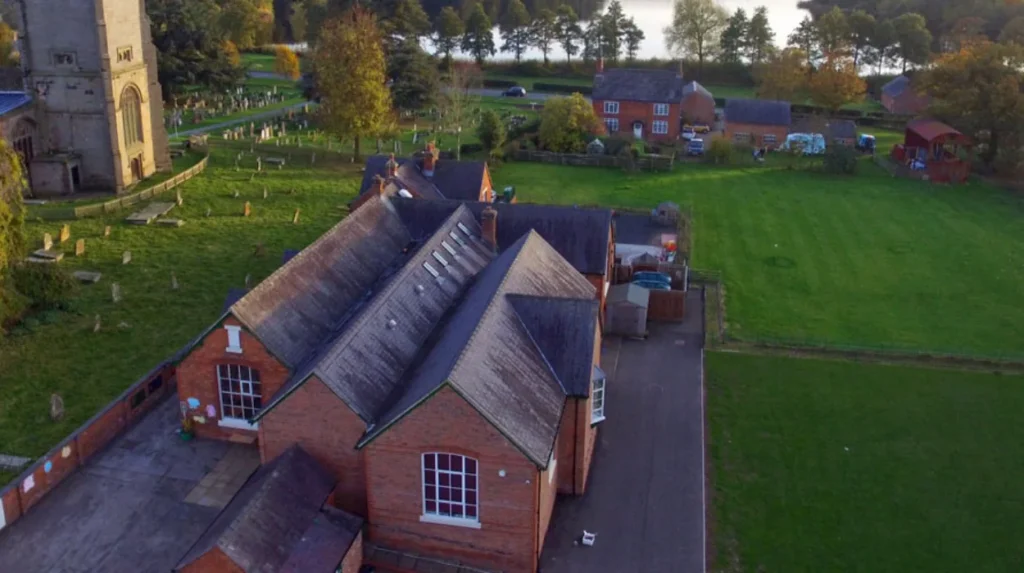
In the early twenty‑first century the building was refurbished to provide modern facilities while respecting its historic fabric, an approach that mirrors broader efforts in Hanmer to balance heritage and contemporary needs. Alongside formal education, local history groups, church publications and conservation initiatives help keep knowledge of the village’s past alive for new generations, reinforcing a sense of continuity from medieval manor to modern community.
Hanmer’s Enduring Appeal for Visitors
Although modest in size, Hanmer offers a concentration of historic and landscape interest that makes it an appealing destination for visitors exploring Wrexham County Borough and the Welsh Marches. The combination of St Chad’s Church, its churchyard cross, the moated site, traditional black‑and‑white cottages, and the broad expanse of the mere creates a setting that feels quintessentially borderland and distinct from larger towns.
Walking routes around the village and along lanes towards Bettisfield, Overton and Whitchurch reveal long views, hedged fields and subtle changes in topography that reflect the underlying glacial landscape. For those interested in Welsh history, the link to Owain Glyndŵr and to the story of the English Maelor adds an extra layer of meaning, turning a quiet village visit into a journey through centuries of political and cultural change.
Hanmer in the Story of Wales
Seen from a distance, Hanmer might appear simply as another rural settlement on the north‑east Wales map, but its history and character reveal why it continues to attract attention from historians, planners and visitors alike. From the early Christian associations of St Chad and the formation of the Hanmer manor, through its role in medieval, Tudor and Civil War conflicts, to the trauma and renewal marked by the 1889 fire and twentieth‑century wars, the village has repeatedly adapted while retaining a strong core identity.
Today, protected as a Conservation Area and supported by a close‑knit community, Hanmer stands as a living example of how a small Welsh village can hold together landscape, language, architecture and memory in one coherent whole. For readers of The Wales Times, it offers a vivid illustration of the richness of Wales’s border parishes—places where every lane, field and waterside view is layered with stories that continue to shape the present.