
Nestled in the rolling hills west of Wrexham, Brymbo offers a captivating blend of ancient geology, industrial legacy, and resilient community spirit. This evergreen exploration uncovers the village’s timeless story, perfect for history enthusiasts and nature lovers seeking authentic Welsh heritage.
- Origins and Early Settlement
- Industrial Revolution and Brymbo Steelworks
- Brymbo Hall: A Lost Architectural Marvel
- Community Evolution and Governance
- Population and Demographic Shifts
- Modern Brymbo: Regeneration and Attractions
- The Prehistoric Marvel: Brymbo Fossil Forest
- Cultural Legacy and Notable Figures
- Visiting Brymbo Today
Origins and Early Settlement
Brymbo’s name likely derives from the Welsh “Bryn baw,” translating to “mud hill” or “dirt hill,” a nod to its rugged, clay-rich terrain. Records first mention the area in 1339 as a expansive township dotted with farms, commons, and uncultivated “wastes,” though human presence dates back millennia.
By 1410, locals from nearby Holt mined coal in Brymbo’s wastes, then known as “Harwd” or “Harwood,” hinting at early hare-populated woods. In the 15th century, Edward ap Morgan ap Madoc constructed a dwelling that evolved into Brymbo Hall, home to the influential Griffith family. A 1620 survey by John Norden detailed its boundaries, from brooks like Gwenfro and Avon y Frith to commons such as Koed boeth and Nant y Frith, painting a picture of a sparsely settled upland manor in Esclusham.
Archaeological treasures reinforce this ancient footprint. In 1958, workers unearthed “Brymbo Man,” a Bronze Age burial from around 1600 BC, complete with a flint knife and beaker, revealing a 5-foot-8-inch man aged 35-40. The nearby Offa’s Dyke, an 8th-century earthwork, once ran visibly close to Brymbo Hall, with 1892 excavations by Professor Thomas McKenny Hughes uncovering horse bones and rude shoes beneath it.
Industrial Revolution and Brymbo Steelworks
The late 18th century ignited Brymbo’s industrial fire. Visionary John “Iron-Mad” Wilkinson bought Brymbo Hall in the 1780s, mining coal and ironstone while erecting an ironworks that birthed the Brymbo Steelworks in 1794. By 1821, his estate alone hosted 41 coal pits, fueling expansion.
The 19th century boomed with deep mines and worker housing clinging to Brymbo Hill’s steep slopes, overlooking the Cheshire Plain. Railways from GWR, LNWR, and LNER converged, amplifying growth. Henry Robertson modernized operations, adding foundries, engines, and a 1845 branch line via the Brymbo Mineral & Railway Company. William and Charles Darby managed the ironworks, pioneering steel in 1885 under the Brymbo Steel Company.
Production doubled from 1898 to 1914 amid technological upgrades. Nationalized in 1967 as part of British Steel Corporation, it shifted to high-quality scrap steel by 1978. Yet decline loomed; collieries like Plas Power closed in 1938, Smelt in 1967, and open-cast mining ended in 1975. The steelworks shuttered in stages from 1990-1991, devastating the local economy.
Remnants endure as industrial archaeology gems: Wilkinson’s No. 1 blast furnace, the “Bottle” lead smelter above the village by the Cold Pool, and the Scheduled Penrhos Engine House in nearby Pen-uk/local/wrexham/rhos/">Rhos. These structures symbolize Brymbo’s pivotal role in Britain’s iron age.
Brymbo Hall: A Lost Architectural Marvel
Brymbo Hall stood as a stately centerpiece, partially built in 1624 for John Griffith with possible Baroque and Palladian touches attributed to Inigo Jones. Wilkinson’s ownership marked its industrial pivot, but later residents included Liberal MP George Osborne Morgan in the late 19th century and Christmas Price Williams, who grew up there.
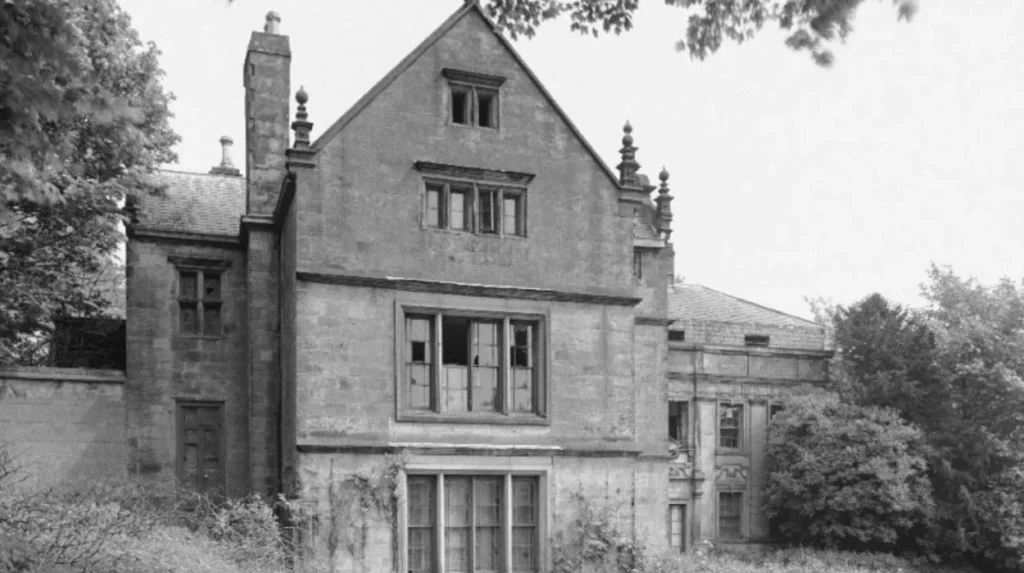
Post-1930, it decayed, serving wartime military use and postwar livestock storage. Demolished in 1973 for opencast mining, its loss ranks among Wales’ architectural tragedies, deeds destroyed in a 1794 fire erasing much early history.
Community Evolution and Governance
Brymbo’s community, encompassing Tanyfron, Bwlchgwyn, Vron, Pen-Rhos, Four Crosses, Maes Maelor, Glascoed, and Ffrwd, mirrors old township lines. From Wrexham’s ecclesiastical parish pre-1844, it became its own, now under Brymbo Community Council (Cyngor Cymuned Brymbo) with wards like Brymbo, Bwlchgwyn, and Vron.
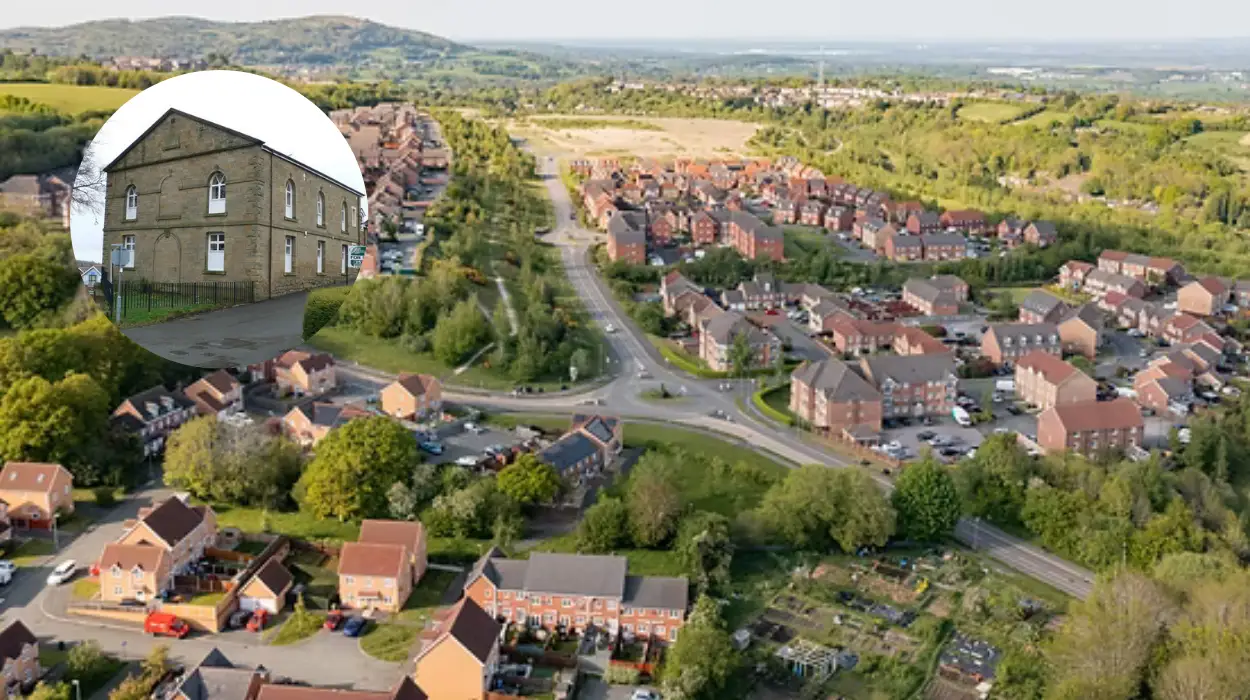
Post-1974, it shifted from Denbighshire to Clwyd, then Wrexham County Borough in 1996. The council, via brymbo.org, shares news, events, minutes, and contact for issues, chaired by figures like Paul Rogers. Churches evolved too: St John’s (1838, closed 1869 from subsidence), replaced by St Mary’s (1872, by Thomas Henry Wyatt), and a Welsh St John’s (demolished 1970s). Surviving are St Mary’s and the Wesleyan “Tin Chapel”; closed Nonconformist chapels like Engedi (1820-2003) dot the landscape.
Population and Demographic Shifts
At the 2001 Census, Brymbo community tallied 3,482 residents, rising to 4,836 by 2011; the Brymbo-Tanyfron ward hit 3,981. The 2021 ward census recorded 4,261, with 2024 estimates at 4,316 over 7.015 km² (density 615.3/km²). Growth persists amid post-industrial transition.
Modern Brymbo: Regeneration and Attractions
Steelworks closure spurred renewal. Taylor Wimpey’s 2007 Plas Brymbo (aka Mountain View) estate offers Hope Mountain vistas; Phoenix Drive linked it in 2017. Brymbo Heritage Trust’s £1.1m in 2018 renovated buildings for Stori Brymbo, opening 2026 as a museum-visitor center celebrating natural, industrial, and social heritage.
Brymbo Sports & Social Complex, over 45 years old in Tanyfron, blends sports, leisure, entertainment, fostering generations. Brymbo Park proposes mixed-use with a 2FE primary school, community facilities, shops, leisure, and heritage zones, funding secured including £9m Lottery for heritage. Surrounded by farmland, it draws day-trippers for fossil digs, steel ruins, volunteer talks.
The Prehistoric Marvel: Brymbo Fossil Forest
Beneath the steelworks’ slag lies Brymbo Fossil Forest, a 0.52-hectare Site of Special Scientific Interest (SSSI) notified in 2015 by Natural Resources Wales. Discovered in 2003 during site redevelopment, this Early Carboniferous gem (300+ million years old) preserves over 20 fossilized trees—giant clubmosses (Lepidodendron) and horsetails (Calamites)—in growth position as sandstone casts.
Coal seams sandwich shales, mudstones, and ironstone nodules with plant fossils and traces, remnants of equatorial wetlands buried by flash floods on a river delta. No flowering plants existed; this hot, humid forest predates dinosaurs by 70 million years, offering palaeobotanical insights. Fossils at National Museum Wales may return for display.
The Brymbo Heritage Group, including ex-steelworkers, secured SSSI status, paving for Stori Brymbo—a 2026 heritage hub in repurposed steel buildings for tourists, potentially a World Heritage contender.

Cultural Legacy and Notable Figures
Brymbo’s spirit shines in notables: photojournalist Geoff Charles, Labour politician Sandy Mewies, South Australian premier Thomas Price, and MP Christmas Price Williams. Its patchwork of industry over agriculture shaped a tight-knit identity, now blending past with future.
Visiting Brymbo Today
Approach via A5156 from Wrexham, parking near heritage sites. Explore fossil forest trails, steel remnants, Cold Pool walks, Penrhos Engine House. Stori Brymbo promises immersive exhibits by 2026. Pair with Wrexham Museum’s Brymbo Man model. Brymbo endures as Wales’ testament to resilience—from prehistoric roots to industrial peaks and green rebirth—inviting timeless discovery.