
Key Points
- The Welsh Government mistakenly used a photo of an Iranian Shahed-136 combat drone—used by Russia against Ukraine—to illustrate its new £50m Defence Growth Deal.
- The error drew criticism online after a technology author identified the image on social media.
- The £50m deal, signed at Cardiff Castle, aims to make Wales a UK hub for autonomous defence technologies.
- The Government later admitted the incorrect image was “a genuine mistake” sourced from an external stock library.
- The Shahed-136, also known as Geran-2, is made by Iran’s HESA and used by Russian forces in Ukraine.
- The gaffe sparked debate about the importance of image verification in official communications.
- Despite the mix-up, the new Defence Growth Deal is expected to boost innovation, engineering, and economic growth across Wales.
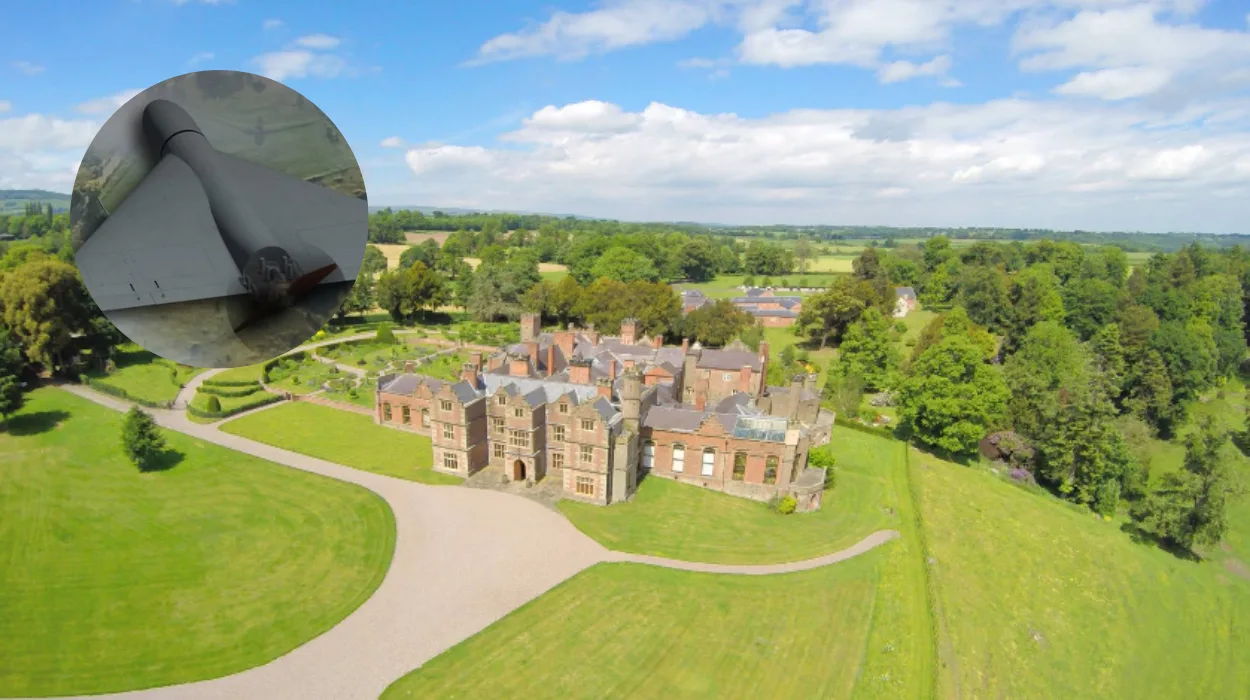
Wales (The Wales Times), February 25, 2026 — The Welsh Government has faced an embarrassing communications blunder after it mistakenly used a picture of an Iranian-made combat drone — the same type deployed by Russia in Ukraine — to illustrate its latest £50 million Defence Growth Deal.
- Key Points
- What is the £50 million Defence Growth Deal?
- How did the image error occur?
- What was the Government’s response?
- Why is the mistake considered sensitive?
- What is known about the Shahed-136 drone?
- What are the consequences of the Welsh Government mix‑up?
- How important is visual accuracy in government communication?
- What impact could this have on the Defence Growth Deal?
- Could the mistake harm the Government’s credibility?
The image, published on the Government’s Business Wales website, was intended to promote a high-value defence investment but instead depicted a weapon known globally for its controversial use in modern warfare. The mistake quickly prompted online criticism and forced an official apology from the Welsh Government.
What is the £50 million Defence Growth Deal?
The new Defence Growth Deal, jointly announced by Defence Secretary John Healey, First Minister Eluned Morgan, and Welsh Secretary Jo Stevens, represents a partnership between uk/local/cardiff/">Cardiff and Westminster designed to boost economic and technological growth in defence and aerospace sectors.
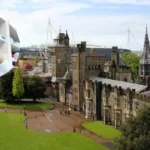
Under the agreement, signed at Cardiff Castle, the deal will
“maximise Wales as a UK launchpad for autonomous technology and uncrewed systems, such as for use in intelligence, surveillance, reconnaissance, and one-way drones.”
It is part of broader efforts to position Wales as a leader in innovation and manufacturing within the UK defence landscape.
Officials said the investment would help small and medium enterprises across Wales develop next-generation defence systems, create skilled jobs, and attract global partners working on emerging technologies such as AI-guided vehicles, advanced robotics, and remote monitoring systems.
How did the image error occur?
The controversy began shortly after the announcement when online observers noticed that the photograph used in promotional material showed a HESA Shahed-136, a loitering munition produced in Iran. The drone — recognisable by its delta-wing design — has been used by Russian forces under the name Geran-2 in extensive attacks on Ukrainian cities.
The error was first flagged by a Welsh technology author on X, who pointed out the irony of using the image of a combat drone linked to a currently warring nation. The post rapidly drew attention from the public and defence enthusiasts, who described the blunder as “tone-deaf,” particularly given the presence of thousands of Ukrainian refugees now living in Wales.
The image was promptly removed from the website once the issue was identified.
What was the Government’s response?
A Welsh Government spokesperson acknowledged the error, describing it as an honest oversight:
“This was a genuine mistake. A stock image from an external library was used on a business support social media platform and was removed as soon as the site became aware.”
Officials clarified that the photo had been selected from a third-party image bank and had not been verified before publishing. The government stressed that it has no connection whatsoever with Iranian or Russian defence manufacturers and that the drone image bore no relation to any UK defence project or contract.
The spokesperson added that internal checks are being reviewed to prevent similar incidents in future government communications.
Why is the mistake considered sensitive?
The choice of image carried unfortunate connotations given current international tensions. The Shahed-136, also known by its Russian designation Geran-2, is a weapon synonymous with Russia’s campaign against Ukrainian infrastructure.
Since its introduction in the Russo-Ukrainian war, the drone has been used in “kamikaze” fashion — flying directly into targets at high speeds with explosive payloads. The drones have repeatedly struck civilian energy facilities, causing blackouts across Ukrainian cities.
In Wales, where communities have welcomed displaced Ukrainian families since 2022, the appearance of such an image in government communication was viewed by many as an insensitive oversight. Social media users and commentators noted the emotional impact of associating a symbol of conflict with a message about national growth and innovation.
What is known about the Shahed-136 drone?
The Shahed-136 is an Iranian-designed loitering munition developed by HESA in collaboration with Shahed Aviation Industries. It is unmanned, single-use, and programmed to detonate upon impact with a target.
The drone is typically launched in groups from rack systems and can travel significant distances, guided by GPS-based navigation systems. Reports from Eastern Europe have described how Russian forces adapted versions of the drone for use as Geran-2, incorporating newer guidance systems and jamming protection features.
Investigations into recovered debris from attacks indicate that some versions of the aircraft include tungsten shrapnel warheads, designed to maximise fragmentation damage. Ukrainian air defences have intercepted many of these drones but not all, meaning the weapon remains a major threat to civilian infrastructure.
The drone’s relatively low cost and simplicity make it attractive for mass production, which is one reason Russia continues to deploy it despite its limited accuracy. Military analysts have often described it more as a weapon of psychological warfare than of tactical precision—its wailing engine noise and unpredictable flight path causing fear and panic in populated areas.
What are the consequences of the Welsh Government mix‑up?
Critics have said the mix-up underscores the importance of verifying visual material used in official announcements, especially when communicating about defence and security.
While the error did not impact the content or validity of the Defence Growth Deal itself, it risked undermining the government’s professional image at the very moment it sought to highlight Wales’s leadership potential in cutting-edge military and civilian technologies.
Communication specialists have noted that such visual mistakes can quickly overshadow significant policy advances, as public attention shifts from the substance of the initiative to the perceived incompetence of its presentation. The incident has sparked internal conversations in Cardiff Bay about implementing stricter cross-checks for all digital materials before release.
How important is visual accuracy in government communication?
Experts commonly note that imagery often carries emotional weight beyond the written message — and in contexts involving warfare and international diplomacy, those visuals must be handled with particular care.
In this case, the use of a drone image linked to active conflict reminded viewers of ongoing civilian suffering in Ukraine, a stark contrast to the cooperative and forward-looking tone of the Defence Growth Deal.
Communications analysts suggest that increased training, deeper content vetting, and use of accredited image libraries could reduce the chance of such errors repeating, especially on public-facing websites like Business Wales.
What impact could this have on the Defence Growth Deal?
Despite the temporary controversy, the Defence Growth Deal itself remains an important milestone for Wales’s technology and manufacturing sectors.
Officials emphasise that the £50m partnership reflects a long-term commitment to defence innovation. Funds will support new research partnerships, specialised training programmes, and local supply opportunities designed to strengthen Welsh participation in national security industries.
By encouraging collaboration between the public sector, universities, and tech start-ups, the initiative could position Wales as a regional leader in automation and advanced engineering — areas essential to the UK’s strategic competitiveness.
Could the mistake harm the Government’s credibility?
While embarrassing, the incident is unlikely to leave lasting damage if managed transparently. The Welsh Government’s quick removal of the image and clear public acknowledgment of fault demonstrated accountability and an understanding of public sensitivity.
Observers note that the most significant lesson lies in the need for meticulousness in digital content selection. In the age of instant communication, a single misplaced photo can spread faster than the message it was meant to accompany.