
Key Points
- Natural Resources Wales has launched a year-long investigation into poor water quality at Ogmore-by-Sea and Watch House Bay in Barry.
- Both bathing waters were classified as “poor” under the Bathing Water Regulations.
- The South Central Bathing Waters Project will examine rivers, streams and drainage systems feeding the beaches.
- Officers will look beyond the shoreline, tracing pollution sources across wider river catchments.
- The investigation will include water testing after heavy rainfall, ecological surveys and checks for drainage problems.
- NRW says tiny insects living under river stones can help reveal long-term river health.
- The project involves NRW, Dŵr Cymru Welsh Water, Bridgend County Borough Council, the Vale of Glamorgan Council and Shared Regulatory Services.
- The work will continue until March 2027.
- NRW is asking the public to report suspected pollution incidents, including sewage odours, discoloured water, dead fish, toilet waste and agricultural runoff.
Wales (Wales Times) June 27, 2026 – Natural Resources Wales has begun a year-long investigation into the causes of poor water quality at Ogmore-by-Sea and Watch House Bay, with environment officers examining the rivers, streams and drainage systems that feed into the two South Wales bathing waters.
What has NRW launched?
Natural Resources Wales has started the South Central Bathing Waters Project to identify where pollution is entering local waterways and to build evidence for long-term improvements. The agency said the investigation will not focus only on the beaches themselves, but on the wider catchments upstream. Officers will test water quality, trace pollution sources and assess river health through the insects and other wildlife supported by the waterways.
Why are these beaches under investigation?
Both Ogmore-by-Sea and Watch House Bay received “poor” classifications under the Bathing Water Regulations. That rating prompted NRW to examine possible reasons for the decline in water quality. The agency says bathing water conditions can be affected by several factors, including heavy rainfall, overloaded drainage systems, pollution from urban areas, incorrectly connected wastewater pipes and agricultural runoff.
What will officers examine?
The investigation will include monitoring water quality after heavy rainfall, identifying drainage faults such as incorrectly connected pipes, tracing sources of harmful bacteria and carrying out ecological surveys across the catchments. NRW says these checks are needed because pollution can enter rivers and streams long before it reaches the coast, making the shoreline only the final point of a much wider environmental problem.
What did NRW officers say?
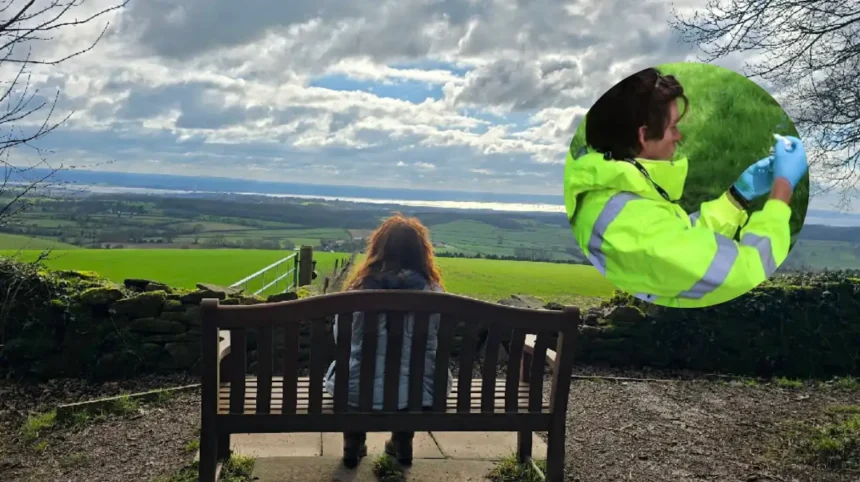
NRW environment officer Leon said understanding pollution means looking far beyond the coastline. He said:
“Most people experience the sea at the end of the journey. But what affects water quality starts much further upstream. We are trying to connect all those pieces. Every sample, every test and every conversation helps us build a clearer picture of what is really going on.”
Karen, an NRW environment officer specialising in ecology, said the insects living beneath river stones can act as a record of river health over months rather than just on the day samples are taken. She said: “These insects are like a living record of the river. Some can only survive in really clean water, while others can tolerate different types of pollution. Where water chemistry can tell you what is happening in the river at that moment, looking at these insects can tell us if pollution has gone into the river over the last few months.”
How will communities be involved?
As well as scientific surveys, NRW officers will spend the summer meeting residents, swimmers, surfers, anglers and other local groups. The aim is to gather information about pollution incidents, drainage issues and other local concerns that may help identify the source of contamination. NRW says this community input will support the wider evidence-gathering work being carried out across the catchments.
Which organisations are involved?
The project brings together NRW, Dŵr Cymru Welsh Water, Bridgend County Borough Council, the Vale of Glamorgan Council and Shared Regulatory Services. Dav Letellier, NRW’s Head of Operations for South Wales Central, said the problem cannot be solved by one organisation alone. He said improving bathing water quality at Ogmore-by-Sea and Watch House Bay is a challenge that requires shared knowledge, cooperation and involvement from local communities and other stakeholders.
What is the public being asked to do?
NRW is encouraging members of the public to report suspected pollution incidents so officers can identify possible sources more quickly. The agency specifically mentioned sewage odours, discoloured water, dead fish, toilet waste and agricultural runoff entering rivers and streams. Reports from residents and beach users may help connect pollution events with the wider catchment evidence gathered during the investigation.
Background of the development
Bathing water quality in South Wales has faced ongoing concern because pollution can come from multiple sources at once, including rainfall-driven runoff, drainage faults and wastewater problems. The current investigation is part of a broader effort to move beyond beach-only monitoring and understand the full journey of pollution from inland catchments to the coast. By running the project until March 2027, NRW is aiming to gather enough evidence to identify patterns and guide future improvements at both beaches.
Prediction
For local residents, swimmers, surfers and anglers, the investigation could lead to a clearer understanding of why water quality has fallen and what needs to change. If NRW and its partners identify specific pollution pathways, that could support targeted fixes to drainage systems, wastewater connections or runoff management. If the findings show repeated problems after heavy rain, the beaches may face continued scrutiny during wet periods, which could affect public confidence and local visitor activity.