

Key Points
- Elis Jones, a photography student from Blaenau Ffestiniog in Gwynedd, was unable to attend his University of South Wales graduation on 14 July 2026 because he was in hospital after a road accident.
- He was being treated at the University Hospital of Wales in Cardiff by the major trauma team.
- During a conversation with a major trauma practitioner, Elis mentioned that his graduation was taking place that day.
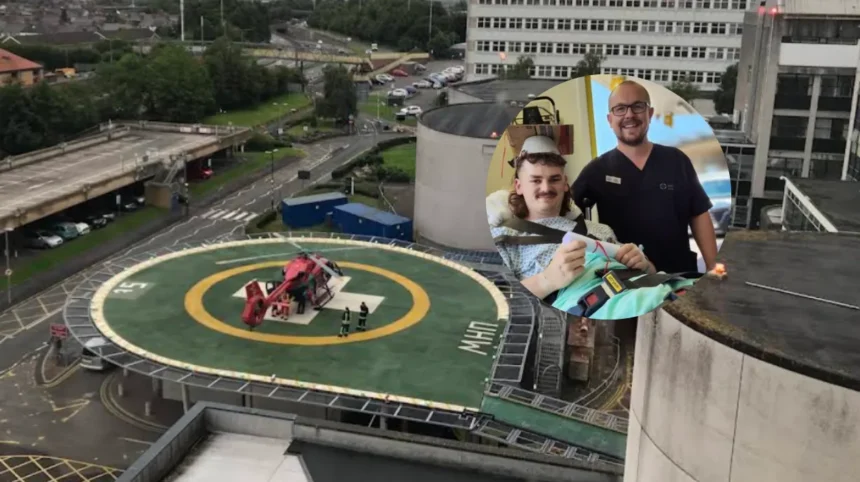
- Hospital staff arranged a small graduation-style celebration for him, including a mortar board with a tassel and a congratulatory scroll.
- Elis later received further treatment after being transferred to Morriston Hospital in Swansea.
- He said he was grateful for the care and compassion shown by staff.
- Cardiff and Vale University Health Board congratulated him publicly and wished him a speedy recovery.
Cardiff (Wales Times) July 17, 2026 – Elis Jones, a photography student from Blaenau Ffestiniog in Gwynedd, was given an improvised graduation ceremony in hospital after a road accident prevented him from attending his university celebration in person. The student was receiving treatment at the University Hospital of Wales in uk/local/cardiff/">Cardiff on 14 July, the same day he had been due to graduate from the University of South Wales.
What happened to Elis Jones?
Elis had been cared for by the major trauma team after the accident, before being transferred to Morriston Hospital in Swansea for further treatment. During a conversation with a major trauma practitioner, he explained that he was supposed to be at his graduation ceremony that day, but injuries and hospital admission had kept him away from the event.
That conversation prompted staff to organise a simple celebration on the ward. They made a mortar board complete with a tassel and presented him with a congratulatory scroll to recognise the completion of his photography degree.
The gesture turned a difficult day into a memorable one for a patient who had expected to mark an important milestone surrounded by friends, family and classmates. Hospital staff said they wanted to do something small to help make the situation better while he was recovering.
Why did hospital staff step in?
According to major trauma practitioner Andy, graduation is normally a major personal occasion because it reflects years of study and effort. He said he remembered his own graduation day as a special moment and wanted Elis to have something similar, even while he was being treated after serious injuries.
Andy said the team wanted to make the day memorable for Elis and help brighten what was otherwise a difficult time. The remarks show how staff responded not just to the medical emergency, but also to the emotional impact of missing a major life event.
The hospital’s response was informal, but it carried clear symbolic value. A mortar board, a tassel and a scroll were enough to mark the achievement and acknowledge that the student had reached an important academic stage despite the setback.
How did Elis respond?
Elis Jones said he was grateful for the thoughtful gesture and for the care and compassion shown by the staff treating him. That reaction suggests the celebration had meaning beyond the physical items handed to him, because it recognised both his achievement and the circumstances surrounding his recovery.
For a student who had expected to be celebrating on campus, the hospital tribute offered a substitute moment of recognition. It also placed the focus briefly on his success rather than on the accident and treatment.
The university health board later publicly congratulated him and wished him a speedy recovery. That message reinforced the supportive tone of the day and underlined that staff saw the moment as one worth acknowledging.
What did the health board say?
Cardiff and Vale University Health Board shared a congratulatory message for Elis and wished him well in recovery. The message was short, but it confirmed the organisation’s support for the student and the team’s recognition of his graduation.
The health board’s involvement also shows how hospitals sometimes respond to patients’ personal milestones when those milestones are discovered during treatment. In this case, the celebration was not planned in advance, but it was created quickly once staff learned what the day meant to him.
The incident is a reminder that hospital staff often deal with both urgent medical needs and the personal circumstances of patients. In Elis’s case, that meant his graduation was not forgotten, even though he could not attend the ceremony itself.
Why does this story matter?
This story stands out because it combines a medical emergency with a personal academic achievement. The accident prevented Elis from taking part in a normal graduation ceremony, but the hospital team still found a way to recognise the moment.
It also highlights the role of frontline healthcare staff in supporting patients emotionally as well as clinically. The celebration was simple, but it helped preserve the significance of the day at a time when that milestone could easily have been lost in the wider stress of injury and treatment.
For students, graduations are often treated as one of the most important days of university life. Elis’s experience shows how that moment can still be acknowledged even when life takes an unexpected turn.
Background
Graduation ceremonies are usually designed to mark the end of years of study with formal recognition, family attendance and public celebration. When illness or injury prevents a student from attending, that milestone can feel postponed or incomplete.
Hospitals sometimes make small adjustments for patients facing major life events during treatment, especially when staff learn that a particular day has added emotional significance. In this case, the improvised ceremony reflected a personal response from the trauma team rather than a formal event organised by the university.
The story also illustrates the role of Welsh healthcare services in supporting patients across different hospitals, as Elis was treated in Cardiff before being transferred to Swansea. While the medical details were limited in the report, the emotional detail of the hospital tribute became the central focus.
Prediction
For students and families, stories like this are likely to strengthen public appreciation of hospital staff who go beyond routine care to support patients personally. It may also encourage other institutions to think more carefully about how to recognise missed milestones during treatment.
For the wider audience, the story is likely to be remembered as a human-interest example of compassion inside the NHS setting. It may also resonate with people who have experienced major life events disrupted by illness, injury or unexpected change.
For universities and health boards, the development could reinforce the value of simple gestures that show respect for personal achievement. Even a small celebration can leave a lasting impression when it arrives at exactly the right moment.