

Key Points
- A significant wildfire in the Rhondda has grown to approximately 150 hectares, equivalent to around 200–210 football pitches, by Monday morning.
- Emergency services were first called to the Llanwonno area of Rhondda Cynon Taf at around 4.30pm on Saturday, with crews working continuously since.
- South Wales Fire and Rescue Service (SWFRS) has deployed eight fire engines, three water bowsers and specialist wildfire teams, with up to 20 appliances reported at the scene at times.
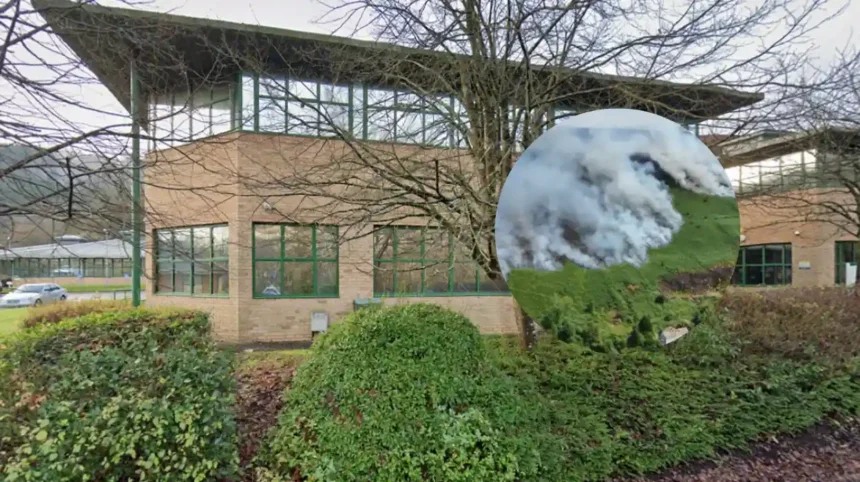
- Drone footage released by SWFRS shows smoke and flames close to homes in Blaenllechau, though officials say there is no immediate threat to residents.
- The Met Office has confirmed that July 2026 was the driest on record for England and Wales since 1836, with Wales receiving just 9% of average rainfall.
- Rhondda Cynon Taf Council has opened a rest centre at a local sports centre for residents affected by poor air quality, although no evacuations have been ordered.
- Local residents have been bringing refreshments to firefighters, but SWFRS has asked people to avoid the scene and not to fly private drones.
Wales Fire (Wales Times) August 03, 2026 – Firefighters are battling a large wildfire on Llanwonno Mountain in the Rhondda that has expanded rapidly over the weekend, growing from about 20 hectares on Sunday to roughly 150 hectares – the size of more than 200 football pitches – by Monday morning. The incident has drawn a multi-agency response and prompted warnings for residents to stay indoors, keep windows and doors closed, and avoid the area while emergency crews work.
- Key Points
- Scale of the Fire and Emergency Response
- Safety Warnings and Advice for Residents
- Community Support and Appeals from Fire Service
- Record Dry Weather and Wildfire Risk
- What caused the Rhondda wildfire to grow so quickly in August 2026?
- Background to the Rhondda Wildfire Development
- Predictions for Local Communities and Future Wildfire Risk
Scale of the Fire and Emergency Response
The wildfire, centred on Llanwonno Mountain near Blaenllechau and Ferndale in Rhondda Cynon Taf, was first reported to emergency services at around 4.30pm on Saturday after smoke and flames were seen on the Welsh Government Woodland Estate. By Sunday, SWFRS said crews had been working “around the clock in challenging conditions on steep terrain” to contain the blaze and protect nearby communities, with 20 fire engines at the scene supported by specialist wildfire teams and partner agencies.
As of Monday morning, SWFRS reported eight fire engines, three water bowsers, specialist wildfire crews and officers actively responding, as the fire had spread to approximately 150 hectares, equivalent to about 210 football pitches. Drone footage released by the service showed smoke and flames close to homes in the hillside village of Blaenllechau, underlining the proximity of the blaze to residential areas.
Natural Resources Wales (NRW), which manages the affected land, said its teams have been on site throughout the weekend and returned on Monday to support firefighting operations. An NRW representative stated:
“Our teams have been on site throughout the weekend, and are back on site again today, working closely with fire and rescue service colleagues to provide local knowledge of the site and landscape, as well as providing practical support on the ground. This includes creating firebreaks and providing tractor bowsers to support firefighting operations.”
Safety Warnings and Advice for Residents
SWFRS has emphasised that there is currently “no immediate threat to residents”, but has warned that people in the area may experience smoke over the coming days and should keep windows and doors closed if affected. In a statement, the service said:
“Our firefighters continue to work tirelessly to tackle a significant wildfire in the Rhondda. Since Saturday, crews have been working around the clock in challenging conditions on steep terrain to contain the fire and protect nearby communities.”
The service also urged the public to avoid travelling to the area while emergency crews deal with the incident, and to stay indoors where possible to reduce exposure to smoke. In addition, SWFRS specifically asked members of the public “to avoid flying their own drones above the incident ground”, as private drone flights could interfere with the work of the fire service’s specialist drone team, which is being used to monitor and help fight the fire.
Rhondda Cynon Taf Council has established a rest centre at a local uk/sports/">sports centre for residents who wish to leave their homes due to poor air quality, although no formal evacuations have been ordered. Earlier in the incident, South Wales Police confirmed road closures between Llanwonno Road and the mountain area as part of safety measures.
Community Support and Appeals from Fire Service
In line with previous incidents in South Wales, local residents have been bringing refreshments and meals to firefighters working on the frontline. During the Blaenavon wildfires last month, communities provided three meals a day for five days to crews tackling out-of-control fires, and similar gestures have been reported in the current incident.
However, SWFRS has asked people not to bring donations or refreshments to the scene. In a public message, the service said: “While we greatly appreciate the kindness shown to our crews, there is no need to bring refreshments or donations to the scene. We would prefer it if you avoided the scene and stayed safe.” The appeal reflects concerns about congestion and safety around the incident ground, as well as the need to allow emergency vehicles and personnel unimpeded access.
Record Dry Weather and Wildfire Risk
The rapid spread of the Llanwonno Mountain fire comes as the Met Office confirmed that July 2026 was the driest July on record for England and Wales since national records began in 1836. Provisional statistics show that England received just 6.5mm of rainfall during the month only 10% of the long-term average while Wales recorded 9.3mm, or 9% of average. Both figures are less than half the previous record dry July in 1911.
Southern England also experienced its hottest July on record, while Wales had its joint hottest July on record, and the UK and England recorded their second hottest July overall. In addition, the UK, England and Wales all registered their sunniest Julys on record, with England and Wales experiencing the sunniest calendar month ever observed.
Firefighters tackled close to 400 wildfires in England and Wales in July alone, making it the busiest month on record for such incidents. The South Wales countryside has been particularly vulnerable due to usually wet land drying out significantly, with dried heather acting as kindling to the peat underneath – a major carbon store – meaning any spark can have a “colossal impact”.
What caused the Rhondda wildfire to grow so quickly in August 2026?
The rapid expansion of the Llanwonno Mountain fire has been attributed to a combination of exceptionally dry vegetation, peat-rich ground and challenging terrain, all exacerbated by the record-breaking heat and drought of July 2026. SWFRS has highlighted the difficulty of operating on steep slopes, while NRW has pointed to the significant area already affected and the need to limit further spread through firebreaks and targeted suppression.
As reported by journalists covering the incident for ITV News Wales, the blaze grew from just over 20 hectares on Sunday to around 150 hectares by Monday morning, driven by dry heather and peat that ignite easily and burn intensely once alight. The Met Office data underscores the broader context: with Wales receiving only 9% of its average July rainfall and large parts of England and Wales officially in drought, conditions have been primed for wildfires to start easily and spread rapidly.
Background to the Rhondda Wildfire Development
Wildfires in the South Wales Valleys are not unprecedented, but the scale and frequency of incidents in summer 2026 have been unusual. In July alone, fire services across England and Wales responded to nearly 400 wildfires, the highest monthly total on record, with South Wales particularly affected. The Blaenavon wildfires in July 2026 saw firefighters from across the region working together for several days, with local communities providing sustained support in the form of meals and refreshments.
The Llanwonno Mountain incident follows a pattern seen in recent years, where prolonged dry spells turn normally damp upland areas into high-risk zones. Dried heather and exposed peat, which normally retain moisture, have become highly combustible, allowing small ignitions whether from human activity or natural causes to develop into large, persistent fires. NRW’s involvement reflects the environmental stakes: the affected Welsh Government Woodland Estate includes habitats and landscapes of ecological importance, and the agency has indicated it will assess longer-term impacts on wildlife and vegetation once the fire is under control.
Predictions for Local Communities and Future Wildfire Risk
For residents in Blaenllechau, Ferndale and surrounding villages, the immediate effect of the Llanwonno Mountain wildfire is likely to be ongoing smoke and reduced air quality, even if the fire does not directly threaten homes. The council’s decision to open a rest centre indicates that authorities anticipate periods when vulnerable people – particularly those with respiratory conditions – may need temporary relief from smoky conditions.
In the longer term, the combination of record dry weather, high temperatures and repeated wildfire activity points to an elevated risk profile for upland communities in South Wales. As reported by multiple outlets citing Met Office data, the exceptionally dry and sunny July of 2026 has set a new benchmark for extreme weather conditions in the region. If such summers become more frequent, local fire services, land managers and councils may need to invest further in wildfire prevention measures, including public awareness campaigns, vegetation management and enhanced monitoring of high-risk areas.
For the particular audience of residents in the Rhondda and similar valleys communities, this development could mean more frequent disruptions from smoke, increased restrictions on access to upland areas during dry spells, and greater reliance on emergency services during summer months. It may also prompt more detailed local planning around evacuation routes, rest centres and air-quality guidance, as authorities adapt to a climate in which large wildfires are no longer rare anomalies but a recurring seasonal hazard.