

Key Points
- An Albanian national has been ordered to undergo voluntary deportation following his appearance in court regarding a case involving a cannabis operation.
- Hada Edisona, aged 23, was said to have made his way from Stoke to Carmarthen with some other men.
- It was alleged that the group had been dissembling a cannabis cultivation site.
- Residents in the area observed the men and took note of the details of the vehicle.
- The police had been informed after identification of the vehicle, according to the court document.
- His barrister stated that the individual had entered the UK illegally via the back of a truck in 2023.
- It was revealed that Hada had come to the UK “seeking a better future for himself”.
- His wife who had been with him for 18 months was still in Albania.
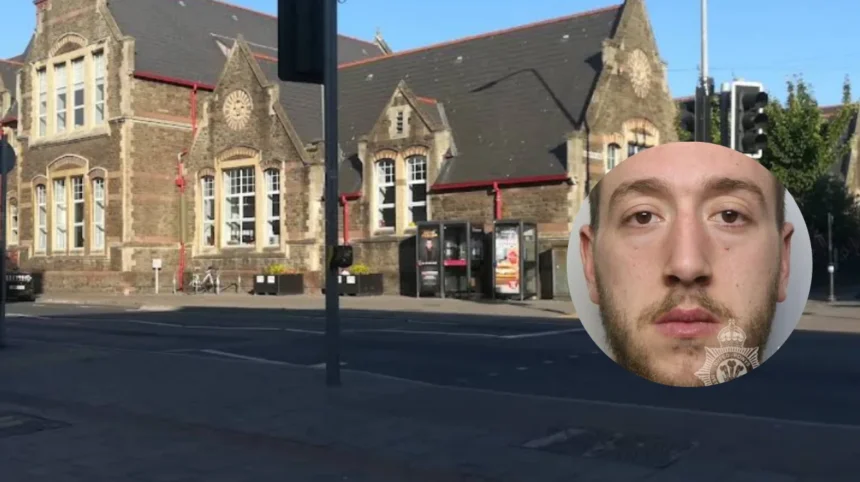
Wales Crime (Wales Times) August 19, 2026 — Edison Hadaa, a 23-year-old Albanian man linked to a cannabis clean-up crew, accepted voluntary deportation after police became aware of a vehicle connected with the group. The case was heard in court after Hadaa and others travelled from Stoke to Carmarthen to dismantle a cannabis-growing operation.
- Key Points
- Why did Edison Hadaa agree to voluntary deportation?
- How was the group linked to the cannabis operation?
- What did the court hear about Hadaa’s background?
- What is known about the police investigation?
- What does voluntary deportation mean in this case?
- What did the defence say about his family?
- What remains unclear from the report?
- Background: cannabis-growing operations and court cases
- Prediction: how could this affect local residents?
According to the report by WalesOnline, local people became suspicious after noticing the men and recording details of their vehicle. The information was then passed to police, who were able to identify and stop the vehicle. The circumstances formed part of the prosecution case presented to the court.
The report said Hadaa was not described as the organiser of the operation. Instead, he was presented as one of the men involved in travelling to the location to remove equipment or dismantle the growing set-up. The precise extent of his role, and the outcome of any separate proceedings involving other individuals, was not fully detailed in the available account.
Why did Edison Hadaa agree to voluntary deportation?
Hadaa agreed to return voluntarily to Albania, according to evidence and submissions reported by WalesOnline. The decision means that he accepted removal to his home country rather than remaining in the United Kingdom to continue living here after the court proceedings.
His barrister told the court that Hadaa had entered Britain illegally in 2023. The lawyer said he had travelled in the back of a lorry while “searching for a better life”. The statement provided context about Hadaa’s arrival in the country, but it did not remove the seriousness of the criminal allegations connected with the cannabis operation.
The report also stated that Hadaa’s wife of 18 months continues to live in Albania. Her location was raised in court as part of the background presented on behalf of the defendant. Hadaa’s decision to accept voluntary deportation would therefore return him to the country where his wife remains.
The available report does not state whether the court imposed a separate custodial sentence, a suspended sentence, or another specific penalty. It also does not provide full details of Hadaa’s immigration history beyond the barrister’s account of his arrival in 2023.
How was the group linked to the cannabis operation?
The men were reported to have travelled from Stoke to Carmarthen to dismantle a cannabis grow. A cannabis-growing operation can involve the conversion of residential or commercial premises, electrical alterations and the installation of equipment used to cultivate plants indoors.
In this case, the group’s presence reportedly came to the attention of local residents. Their decision to note the vehicle’s details was significant because it gave police information that could be used to trace or identify those involved.
WalesOnline reported that police action followed the observations made by local people. The account highlights the role that residents can play in reporting unusual activity, particularly when a vehicle or group of people appears to be connected with a property or premises.
However, the available information does not provide a complete inventory of what officers found in the van. The headline refers to a police discovery in the vehicle, while the report’s available details focus on the vehicle being noticed and identified during the investigation. It would be inappropriate to add specific items or quantities that have not been confirmed in the published account.
What did the court hear about Hadaa’s background?
The court heard that Hadaa was 23 years old and from Albania. His barrister said that he entered the UK illegally in 2023 by hiding in the back of a lorry.
The defence description that he was “searching for a better life” was included in the WalesOnline report as part of the mitigation presented to the court. Mitigation is information put forward on behalf of a defendant that may help the court understand their personal circumstances, background or reasons for particular decisions.
The report also mentioned Hadaa’s marriage. His wife of 18 months remains in Albania, and this was relevant to the account of his personal circumstances and his decision to accept voluntary deportation.
The court’s consideration of personal background does not determine the facts of the alleged offence. Those facts must be established through the legal process, and any findings of guilt should be distinguished from allegations or evidence presented during proceedings.
What is known about the police investigation?
The police investigation developed after local residents noticed the group and recorded the vehicle’s details. That information reportedly enabled officers to respond to the vehicle and connect the men with the reported cannabis-related activity.
The published account does not include every operational detail of the investigation. It does not state how long officers had been monitoring the property, whether the cannabis-growing site was occupied at the time, or the full number of people arrested or questioned.
It also does not set out the complete evidence relied upon against each defendant. As a result, the available details should be read as a report of the court hearing and not as a complete account of the entire police operation.
The information does establish that local observations played an important part in bringing the vehicle to police attention. It also shows that the case involved people travelling from Stoke to Carmarthen in connection with the removal or dismantling of equipment associated with a cannabis grow.
What does voluntary deportation mean in this case?
Voluntary deportation generally refers to an individual agreeing to leave the country and return to their home country, rather than being forcibly removed by immigration authorities. In Hadaa’s case, the court heard that he had accepted voluntary deportation to Albania.
The exact legal arrangements, including the timing of departure and any restrictions connected with the decision, were not provided in the available WalesOnline report. The consequences can depend on the person’s immigration status, criminal case and any order made by the relevant authorities.
It is also important to distinguish voluntary deportation from voluntary return schemes. The terms may be used differently depending on the legal context, and the specific order or arrangement in an individual case determines what happens next.
The report confirms Hadaa’s stated acceptance of deportation to Albania but does not provide a detailed explanation of the immigration procedure that will follow.
What did the defence say about his family?
Hadaa’s barrister told the court that his wife remains in Albania. The report said the couple had been married for 18 months.
The reference to his wife formed part of the personal information provided to the court. It also placed his agreement to return to Albania in a family context, since deportation would take him back to the country where his spouse lives.
No further details about his wife, their relationship or any arrangements for their future were included in the report. There is also no information in the published account about whether Hadaa has other family members in the UK or Albania.
What remains unclear from the report?
Several details remain unavailable from the published account. The report does not provide the full charge sheet, the names of the other men, the precise address of the cannabis-growing operation or the full outcome of proceedings against other defendants.
It also does not specify exactly what police found in the van, despite the vehicle being central to the case. The available information says local people recorded details of the vehicle and police later became involved, but it does not justify adding unconfirmed details.
The final legal outcome for Hadaa beyond his acceptance of voluntary deportation is also not set out in the material available. Readers should therefore avoid assuming that every allegation mentioned in connection with the operation resulted in a conviction.
Background: cannabis-growing operations and court cases
Cannabis-growing operations are often investigated through a combination of police intelligence, information from residents and evidence gathered at properties or in vehicles. In some cases, people connected with an operation are alleged to have carried out different tasks, including setting up equipment, tending plants, transporting materials or clearing premises.
A person’s alleged presence at a property or in a vehicle does not, by itself, establish the precise role they played. Courts consider the evidence against each defendant separately, and the prosecution must prove the relevant criminal charges to the required legal standard.
Immigration consequences can arise alongside criminal proceedings where a defendant is not a British citizen. The outcome may depend on the person’s immigration status, the seriousness of any offence, court orders and decisions by immigration authorities.
In this case, the published report focused on Hadaa’s acceptance of voluntary deportation, his reported journey to Carmarthen and the role of local residents in bringing the vehicle to police attention. Further details would need to come from court records, police statements or later reporting.
Prediction: how could this affect local residents?
For people living in Carmarthen and nearby communities, the development may reinforce the importance of reporting unusual activity through appropriate channels. Residents who observe suspicious vehicles, repeated visits to a property or activity that appears out of place may provide useful information by recording lawful, relevant details and contacting the police.
The case may also increase public attention on cannabis-growing operations and the way people are recruited or transported to carry out work at suspected sites. However, local residents should not confront suspected offenders or attempt to investigate properties themselves, as doing so could create safety risks and interfere with a police investigation.
For Albanian nationals or other non-UK citizens facing criminal proceedings, the case may highlight that criminal allegations can have potential immigration consequences. Those consequences depend on the individual circumstances and should be explained by a qualified solicitor or immigration adviser.
The immediate impact on the wider community is likely to be limited to the court and immigration outcome unless police announce further arrests, charges or information about the suspected cannabis operation. Any future development should be assessed using confirmed statements from the police, the court or the individuals’ legal representatives rather than speculation.