
Key Points
- Promises Auction was organized by Whitford Young Farmers Club.
- It helped to raise £2,000 for an all-Wales lifesaving charity.
- This news story has been covered by Herald Wales under North Wales/Flintshire.
- The all-Wales lifesaving charity is the beneficiary of this charity.
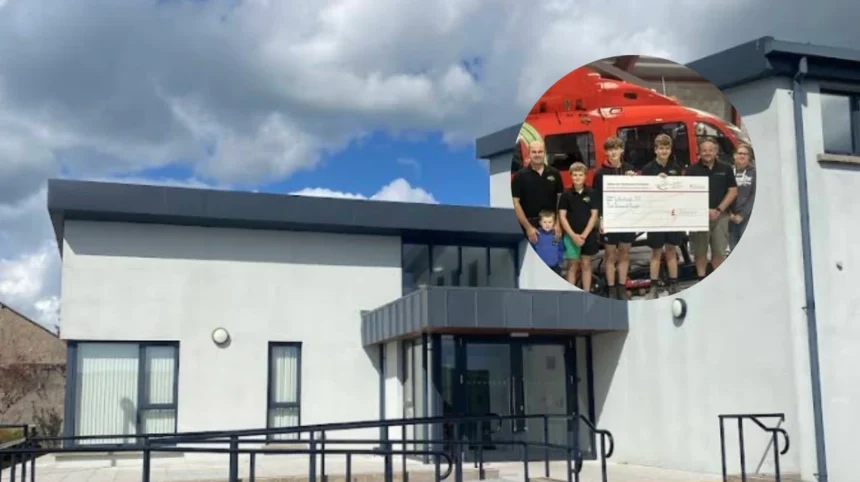
Wales (Wales Times) September 03, 2026 – A rural community fundraising effort in north-east Wales has generated £2,000 for a lifesaving all-Wales charity after the club staged an auction of promises. The event, organised by the local Young Farmers branch in Whitford, was highlighted by Herald Wales in its Flintshire news section on 3 September 2026, which reported the total raised and the charitable purpose of the proceeds.
- Key Points
- What is an auction of promises and how does it work?
- Who benefits from the £2,000 raised in Whitford?
- How Young Farmers Clubs support rural communities
- What happens next after the auction?
- Background: Development of community fundraising for lifesaving services in Wales
- Prediction: How this development may affect Young Farmers members and rural communities
According to Herald Wales, the money will support a lifesaving service operating across Wales, though the article snippet does not name the specific charity. The format of the fundraiser—an auction of promises—typically involves members and supporters offering services, experiences, or goods that are bid on by attendees, with all proceeds directed to the chosen cause.
What is an auction of promises and how does it work?
An auction of promises is a fundraising method in which individuals pledge items or services rather than donating physical goods. Common examples include offers to cook a meal, provide gardening help, give photography sessions, or host small events. Bidders compete to win these pledged “promises,” and the highest bids determine who receives each item or service.
This approach is popular with community groups such as Young Farmers Clubs because it relies on members’ time and skills rather than requiring expensive donated stock. It also encourages repeat engagement, as promise-fulfilment often creates further contact between the club and local supporters.
Who benefits from the £2,000 raised in Whitford?
The funds raised by Whitford Young Farmers Club are destined for a lifesaving all-Wales charity, as reported by Herald Wales. While the snippet does not specify the organisation, several all-Wales charities provide emergency or critical care services, including air ambulance provision and other frontline medical support. In recent months, multiple Welsh community groups have directed fundraising towards such services, reflecting their high visibility and reliance on voluntary donations.
By channelling the £2,000 to a lifesaving provider, the club’s effort contributes to operational costs that may include equipment, training, or community-based emergency response capacity. Charities of this type frequently state that donations help sustain 24/7 coverage across both urban and remote parts of Wales.
How Young Farmers Clubs support rural communities
Young Farmers Clubs (YFCs) are longstanding voluntary organisations that bring together young people in rural areas for social, educational, and charitable activities. Beyond skills development and networking, many clubs prioritise fundraising for local and national causes. Auctions, sponsored challenges, and agricultural shows are common methods used to generate funds while strengthening community ties.
The Whitford branch’s decision to host an auction of promises aligns with this tradition, allowing members to mobilise personal networks and local goodwill. Such events also raise awareness of the beneficiary charity’s work among attendees who might not otherwise engage with emergency service fundraising.
What happens next after the auction?
Following the auction, the club will transfer the £2,000 to the designated all-Wales lifesaving charity. In typical practice, the receiving organisation will acknowledge the donation and may publicise the contribution through its own channels. For the club, the next steps usually involve fulfilling the promises sold at auction—such as scheduling services or delivering pledged experiences—to maintain trust with supporters and lay groundwork for future events.
Clubs often use successful fundraisers as case studies when planning subsequent activities, refining formats that resonate with local audiences. An auction of promises that reaches a four-figure total can serve as a template for other branches seeking to replicate the model.
Background: Development of community fundraising for lifesaving services in Wales
Community-led fundraising for emergency and medical charities has grown steadily across Wales over the past decade, driven by the high profile of services such as air ambulance provision and the reliance of many providers on voluntary income. Rural organisations, including Young Farmers Clubs, have become regular contributors to this ecosystem, using agricultural shows, charity matches, and novelty challenges to generate donations.
The use of “auction of promises” specifically reflects a shift towards low-overhead, skills-based fundraising that does not depend on physical donations. This model has been adopted by churches, schools, and voluntary groups nationwide, with guidance often circulated through national YFC networks and local community foundations. In recent years, several Welsh fundraisers have explicitly targeted all-Wales lifesaving charities, citing the need to sustain coverage in remote and mountainous areas where response times are critical.
Prediction: How this development may affect Young Farmers members and rural communities
This development is likely to encourage other Young Farmers Clubs in Wales to consider similar auctions, particularly where members have strong local networks and marketable skills. A £2,000 result from a single-club event demonstrates that modest-scale, skills-based fundraising can produce meaningful sums for large charities without requiring major sponsorship deals.
For rural communities, repeated events of this kind can normalise the idea that local social gatherings directly support emergency services. Over time, this may increase the proportion of charitable income that originates from small, distributed community actions rather than occasional large campaigns. For the Whitford club and its peers, success here could also strengthen relationships with the beneficiary charity, potentially leading to joint awareness activities, volunteer opportunities, or invited talks at future club meetings.