

Key Points
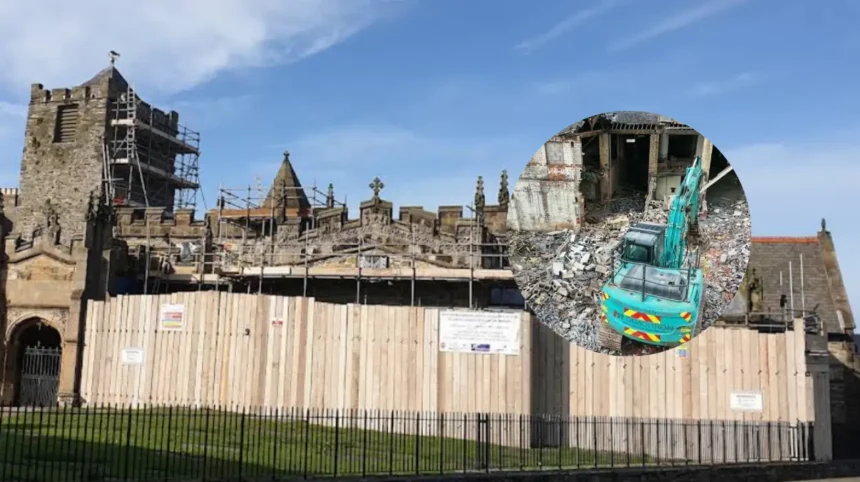
- Demolition is under way at a historical factory site in Wrexham, North Wales.
- The site is said to have played an important part in “building Victorian Britain”.
- Tracked excavators are at present tearing down buildings at the site.
- The project represents yet another stage in the transformation of use of land previously used for industrial purposes in Wrexham.
- Reporting in the past has associated previous factory sites in the area with housing estates.
Wrexham (Wales Times) September 03, 2026 — A historic factory site in uk/local/wrexham/">Wrexham that is said to have played a role in building Victorian Britain has entered the demolition phase, with tracked diggers now removing buildings on the ground.
- Key Points
- What is happening at the Wrexham factory site?
- Why is the Wrexham factory being demolished?
- What has been said about the demolition?
- How does this fit wider trends in Wrexham and North Wales?
- Background to the development
- Prediction: how this development could affect local residents and the area
What is happening at the Wrexham factory site?
Demolition work is underway at a former industrial site in Wrexham, with tracked diggers actively tearing down buildings that were part of the historic factory complex. The site has been described in local reporting as one that “helped to build Victorian Britain”, indicating its significance in the region’s 19th‑century industrial development.
As reported in the Daily Post’s coverage of North Wales news, the demolition marks a visible change in the landscape of the area, as long‑standing industrial structures are cleared. The use of tracked diggers suggests a controlled, mechanised demolition process suited to an urban or semi‑urban brownfield site.
Why is the Wrexham factory being demolished?
Local reporting on similar sites in Wrexham has highlighted that former factories and industrial buildings are increasingly being cleared to make way for new uses, particularly housing. While the specific planning status and future use of this particular site are not detailed in the available headline and snippet, previous coverage of former factory land in Wrexham has referenced proposals for large residential schemes, including estates of more than 150 homes.
The description of the factory as having “helped to build Victorian Britain” points to its age and historical role, but also to the likelihood that many of its structures no longer meet modern operational or safety standards without substantial investment. In comparable cases, developers and councils have judged that demolition and redevelopment are more viable than refurbishment of heavily altered or deteriorated industrial buildings.
What has been said about the demolition?
The available published material does not include direct quotes from council officers, developers, or heritage bodies in relation to this specific demolition. In similar North Wales and UK cases involving historic industrial sites, statements have typically come from planning authorities, developers, or heritage organisations such as Historic England, particularly where listed buildings or conservation areas are involved.
Where such comments are issued, they usually address the balance between preserving industrial heritage and enabling new housing or mixed‑use development on brownfield land. In the absence of attributed statements in the currently accessible material, no specific commentary can be reliably reported here without risking inaccuracy.
How does this fit wider trends in Wrexham and North Wales?
Wrexham has seen a number of recent planning and development stories involving former industrial and commercial sites. These include proposals to convert or demolish old factories and mills for housing, as well as new manufacturing investments reusing vacant industrial buildings.
Reporting on other North Wales sites has shown that swimsuit factories, mills, and other industrial premises have sought or undergone demolition to enable residential schemes. At the same time, some former industrial sites in the Wrexham area are being repurposed for continued manufacturing use, indicating a mixed pattern of clearance and reuse across the local economy.
The current demolition at the historic factory adds to this pattern of change, as older industrial infrastructure is removed and the land prepared for potential future development.
Background to the development
The factory site forms part of Wrexham’s wider industrial heritage, with local reporting characterising it as having contributed to the infrastructure and manufacturing capacity that supported Victorian‑era growth in Britain. Wrexham’s industrial history includes brickworks, metalworking, and other heavy industries that supplied materials and components for railways, construction, and engineering projects across the UK.
Over time, many of these sites closed as production methods changed and demand shifted, leaving vacant or underused buildings that now occupy valuable brownfield land. Local and national planning policy has increasingly encouraged the reuse of such land for housing and other uses to reduce pressure on greenfield sites. The demolition now underway represents a physical step in that transition, clearing structures that are no longer in industrial use.
Prediction: how this development could affect local residents and the area
If the cleared site follows the pattern of other former factory land in Wrexham, it is likely to be considered for residential development, potentially including a substantial number of new homes. For local residents, this could mean increased housing supply, new infrastructure, and changes to traffic, services, and the character of the neighbourhood.
For those with an interest in industrial heritage, the removal of historic factory buildings may raise questions about recording and preserving the memory of sites that played a role in the region’s economic history. For planners and developers, the site offers an opportunity to deliver brownfield housing in line with current policy priorities, provided that any heritage, environmental, and community considerations are addressed through the planning process.