

The National Showcaves Centre for Wales is a major limestone cave complex located in the Tawe Valley within Bannau Brycheiniog National Park. The site encompasses three distinct show caves known as Dan yr Ogof, Cathedral Cave, and Bone Cave, alongside multiple above ground visitor attractions.
- What is the history of the National Showcaves Centre for Wales?
- What are the primary cave systems at the National Showcaves Centre for Wales?
- How does the geology of the National Showcaves Centre for Wales form?
- What above ground attractions exist at the National Showcaves Centre for Wales?
- What ecological and conservation efforts protect the National Showcaves Centre for Wales?
- How can visitors plan a trip to the National Showcaves Centre for Wales?
- Frequently Asked Questions
- How long does it take to walk through the National Showcaves Centre for Wales?
- Are the caves at the National Showcaves Centre for Wales accessible for strollers and wheelchairs?
- What should you wear when visiting the National Showcaves Centre for Wales?
- Can you bring dogs to the National Showcaves Centre for Wales?
- Is the National Showcaves Centre for Wales open all year round?
What is the history of the National Showcaves Centre for Wales?
The National Showcaves Centre for Wales was discovered in 1912 by brothers Edwin, Tommy, and Jeff Morgan using candles for light. It opened as a commercial tourist attraction in 1939 and expanded into a major national site.
The discovery of the cave system occurred when the Morgan brothers explored the entrance on their farm using primitive equipment and a coracle to cross underground lakes. Commercial operations began in 1939 after basic walkways and electric lighting systems were installed to allow public access. Exploration continued over subsequent decades, leading to the discovery of extensive cave passages extending more than 17 kilometers through Carboniferous limestone. In 1977, additional chambers were developed for public viewing, including Cathedral Cave with its vast dome structure.
The site gradually incorporated surface attractions to transform the geological location into a comprehensive educational facility. Modern infrastructure developments have added hydro-electric generators and solar power systems to supply clean energy across the entire complex. Today, the centre operates as both an award-winning tourist venue and a protected geological area designated as a Site of Special Scientific Interest. The site preserves vital karst topography while educating thousands of visitors annually regarding local speleology and ancient human occupation.
What are the primary cave systems at the National Showcaves Centre for Wales?
The complex contains three main public caves: Dan yr Ogof featuring passage subterranean walks, Cathedral Cave containing 40-foot underground waterfalls, and Bone Cave housing archaeological remains of 42 prehistoric human skeletons.
Dan yr Ogof forms the primary cave section, extending nearly 1 kilometer along paved pathways surrounded by intricate stalactites, stalagmites, and flowstone formations. Visitors walk through passage networks carved over 315 million years ago by subterranean water flow. Cathedral Cave represents a vast cavernous chamber dominated by the Dome of St Paul’s, where twin 40-foot waterfalls cascade into underground pools. The acoustic and spatial properties of Cathedral Cave make it one of the most distinctive natural underground chambers in the United Kingdom.
Bone Cave holds significant archaeological value due to the discovery of 42 human skeletons alongside animal bones dating back to the Bronze Age. Exhibits inside Bone Cave illustrate how ancient humans utilized natural limestone shelters for burial and protection. Beyond the accessible public pathways lies an extensive wilderness system reserved exclusively for qualified speleologists. These three distinct environments provide a comprehensive overview of karst landscape evolution, underground hydrology, and regional archaeology.
How does the geology of the National Showcaves Centre for Wales form?
The cave systems formed through chemical weathering of Carboniferous limestone by acidic groundwater over 315 million years. Dissolved calcium carbonate precipitated over millennia to construct speleothem features like stalactites.
Karstification began during the Carboniferous period when marine deposits settled to form thick beds of calcium carbonate limestone. Tectonic uplift created fractures and joint lines through which slightly acidic rainwater percolated, gradually dissolving the rock structure. As underground streams flowed through these expanding fissures, vast conduits and chambers eroded into the bedrock over millions of years. When groundwater holding dissolved calcium carbonate entered air-filled chambers, carbon dioxide degassed from the liquid droplets. This chemical reaction caused calcite to deposit in minute increments, growing at an average rate of one cubic millimeter every decade.
Over extensive timeframes, these calcite deposits formed hung stalactites, rising stalagmites, solid pillars, and delicate curtain formations. The persistent hydrogeological processes continue today, nourished by surface rainfall draining down from the surrounding Black Mountain range. The active underground river system actively sculpts lower cave levels while preserving upper relict passages. Understanding these dynamic geological mechanisms highlights the fragile balance required to maintain subterranean karst environments across Great Britain.
What above ground attractions exist at the National Showcaves Centre for Wales?
The centre features multiple outdoor attractions including a Dinosaur Park with over 220 life-sized models, a Shire Horse Centre, an Iron Age Village replica, and an interactive geological museum.
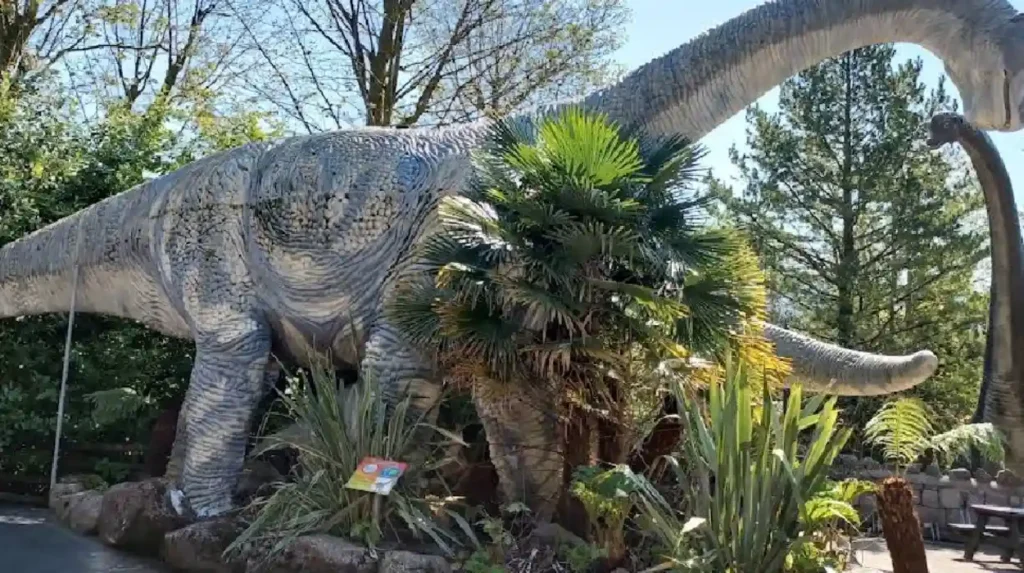
The outdoor Dinosaur Park contains over 220 life-sized static models ranging from Tyrannosaurus Rex to massive Brachiosaurus figures situated along paved walking trails. These educational models depict prehistoric life eras, explaining evolutionary adaptations and mass extinction theories through descriptive signage. The Shire Horse Centre preserves traditional agricultural heritage by housing working heavy horses and farm animals within dedicated stables. Visitors learn about historical draft animals alongside modern farm management practices at the adjacent farmyard.
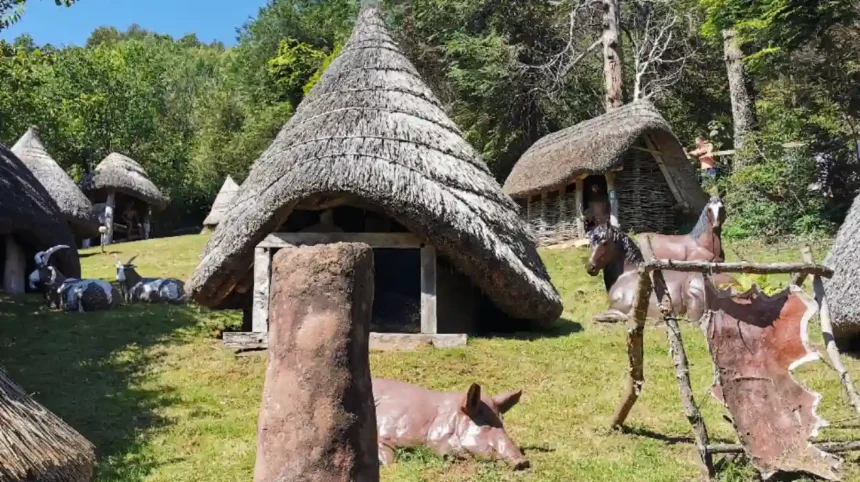
An authentic Iron Age Village reconstructs circular roundhouses based on local archaeological evidence from ancient South Wales settlements. This living history area illustrates pre-Roman building techniques, domestic life, and thatched roof construction methods. The interactive museum provides digital displays detailing speleological expeditions into unexplored cave reaches. Together, these surface installations complement the subterranean tours by providing extensive archaeological, paleontological, and cultural context for visitors of all ages.
What ecological and conservation efforts protect the National Showcaves Centre for Wales?
The complex operates under strict Site of Special Scientific Interest regulations, using hydro-electric power and solar energy to eliminate local carbon emissions and protect cave ecology.
Environmental management at the site focuses on preserving delicate subterranean ecosystems while minimizing surface environmental footprints. The cave environment hosts rare troglobitic invertebrates and roosting bat species that require stable humidity and temperature conditions. Public access is carefully managed along sealed pathways to prevent physical damage to fragile speleothem structures and sensitive cave flora. The entire commercial site relies on renewable energy produced by on-site hydro-electric turbines driven by natural water outflows from the cave system.
Supplementary solar photovoltaic arrays generate additional electricity to supply light, heat, and visitor services without fossil fuels. Water conservation practices ensure that runoff from parking facilities does not contaminate groundwater feeding the underlying limestone aquifers. Conservation advisory panels consisting of geologists and speleologists continuously monitor humidity, airflow, and structural stability. These sustainable operational strategies safeguard a nationally important geological asset for future educational and scientific research.
How can visitors plan a trip to the National Showcaves Centre for Wales?
Visitors should reserve tickets online, allocate three to four hours for a full visit, wear sturdy footwear, and prepare for constant cave temperatures around 10 degrees Celsius.
Planning a visit requires preparing for variable underground environmental conditions regardless of the outside weather. Cave temperatures remain constant at approximately 10 degrees Celsius year-round, requiring warm clothing and waterproof jacket layers. Sturdy walking shoes or boots with deep traction soles are essential due to wet, slippery concrete walkways inside the caverns. The site opens daily from spring through autumn, with last admissions typically scheduled in the mid-afternoon.
Ticket purchases include access to all three show caves and every above ground attraction on the site. On-site amenities include a coffee shop serving light refreshments, picnic areas, covered playgrounds, and a gift shop selling minerals. An environmentally friendly camping and caravan park offers overnight accommodation adjacent to the main entrance grounds. The attraction sits along the A4067 road between uk/local/swansea/">Swansea and Brecon, offering free parking facilities for cars and coaches.
Frequently Asked Questions
How long does it take to walk through the National Showcaves Centre for Wales?
A thorough visit to all three caves and surface attractions takes approximately three to four hours. Walking through Dan yr Ogof, Cathedral Cave, and Bone Cave requires roughly ninety minutes in total. The remaining time allows visitors to explore the Dinosaur Park, Iron Age Village, and museum at a comfortable pace.
Are the caves at the National Showcaves Centre for Wales accessible for strollers and wheelchairs?
Due to natural limestone steps and steep gradients, wheelchair and stroller access is limited inside the caves. Outdoor attractions like the Dinosaur Park and main pathways offer flatter terrain suitable for pushchairs. Visitors with mobility constraints should consult staff regarding specific pathway inclines before entering.
What should you wear when visiting the National Showcaves Centre for Wales?
Visitors should wear warm layers and a rain-jacket because subterranean temperatures stay around 10 degrees Celsius constantly. Footwear must feature good rubber grips to prevent slipping on wet stone walkways inside the chambers. Taking a light backpack helps store extra layers when moving between outdoor trails and chilly caverns.
Can you bring dogs to the National Showcaves Centre for Wales?
Dogs are permitted on the surface areas of the site provided they remain on short leads at all times. However, dogs are strictly prohibited inside the underground caves due to safety regulations and fragile ecosystem protection. Designated waiting zones and outdoor seating allow pet owners to rotate cave visits.
Is the National Showcaves Centre for Wales open all year round?
The main attraction operates seasonally from April through October each year, welcoming visitors seven days a week. Winter closures allow maintenance teams and conservationists to perform vital repair work on underground walkways and lighting. Checking official schedule updates prior to travel ensures accurate opening time information.