Key Points
- Over 30 vehicles have been stopped by the recent Operation Tramline exercise in North Wales.
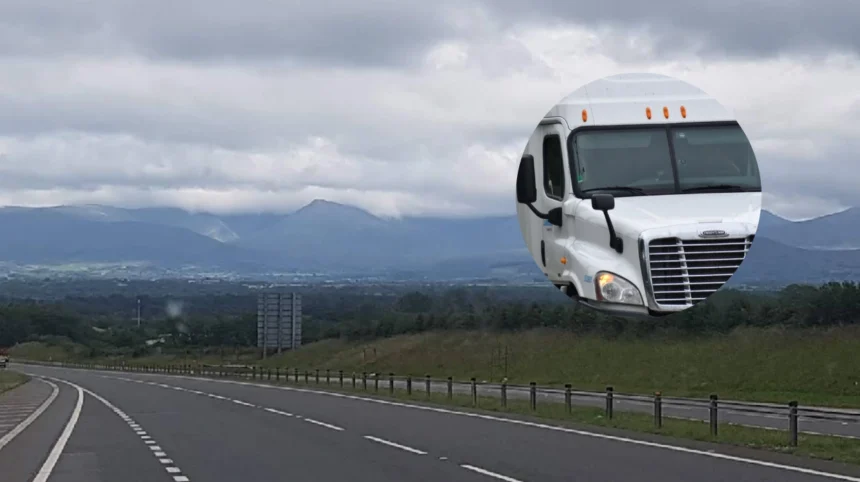
- An elevated cab of a heavy goods vehicle was utilised by the North Wales Police to monitor the activities of the drivers from an elevated position.
- Some of the monitored routes included A55, A483 and A494.
- Offences included using mobile phones while driving, not wearing a seat belt and transporting unsecured loads.
- Police stated that the misuse of mobile phones by HGV and LGV drivers continues to be a great problem.
- According to Sergeant Danny Rees, the police will continue their operations against people whose actions put road users at risks.
- National Highways states that Operation Tramline has stopped over 55,000 vehicles and found over 60,583 offences since its start in 2015.
Wales (Wales Times) September 21, 2026 — North uk/police/">Wales Police stopped more than 30 vehicles during the latest phase of Operation Tramline, a road safety operation using an elevated HGV cab to identify driving offences on some of the region’s busiest roads. The activity focused on the A55, A483 and A494, where officers observed motorists from a higher position before colleagues stopped vehicles suspected of committing offences.
- Key Points
- What offences were identified on the A55, A483 and A494?
- Why are police concerned about mobile phone use by professional drivers?
- What has Operation Tramline found nationally?
- How does the HGV camera operation work?
- What have previous North Wales operations found?
- What are drivers being asked to do?
- Background: What is Operation Tramline?
- Prediction: How could this affect North Wales drivers and commercial operators?
The operation identified drivers using mobile phones behind the wheel, motorists failing to wear seatbelts and vehicles carrying unsecured loads. North Wales Police also reported continued concern about mobile phone use among drivers of larger commercial vehicles, including heavy goods vehicles and large goods vehicles.
The elevated cab gives officers a wider and higher view into nearby vehicles than is normally available from a conventional patrol car. That viewpoint can allow police to see behaviour inside cars, vans and lorries, including actions that may be hidden by the vehicle’s bodywork or difficult to observe from a lower position.
The latest enforcement activity forms part of a wider partnership between North Wales Police, National Highways and other policing bodies. Operation Tramline is intended to identify unsafe driving, address offences and encourage motorists to reconsider behaviour that could endanger themselves or other road users.
What offences were identified on the A55, A483 and A494?
The specific total for each individual offence was not published in the reports covering this latest North Wales activity. However, reports by Gavin Rutter for Greatest Hits Radio and by the Leader Live stated that the offences included:
- Using a mobile phone while driving.
- Failing to wear a seatbelt.
- Carrying loads that were not properly secured.
- Mobile phone use by HGV and LGV drivers.
The Leader Live reported that officers from North Wales Police’s Roads Crime Unit stopped more than 30 vehicles and issued tickets and graduated fixed penalty notices for a range of road safety violations. The report said the offences were detected earlier in September on the A55, A483 and A494.
A graduated fixed penalty notice can involve a financial penalty and penalty points, depending on the offence and the driver’s circumstances. More serious matters may be dealt with through court proceedings or other enforcement action. National Highways says Operation Tramline consequences can range from warnings and fixed penalty notices to court summonses or arrest.
The reports did not state that every vehicle stopped resulted in the same type of enforcement. Police activity can include stopping drivers to investigate suspected offences, issuing notices, providing warnings or taking further action where the evidence and seriousness of the conduct require it.
Why are police concerned about mobile phone use by professional drivers?
Sergeant Danny Rees of North Wales Police’s Roads Crime Unit said the continued use of mobile phones by drivers was particularly concerning because it affected both private motorists and professional drivers.
As reported by Gavin Rutter of Greatest Hits Radio, Rees said: “It is disappointing that we continue to see drivers putting themselves and other road users at risk through behaviour that is entirely avoidable.” He added that officers were concerned to see professional drivers, including HGV and LGV drivers, using mobile phones while driving.
Rees said drivers should keep their attention on the road and that a phone call, message or notification could wait. He also said Operation Tramline provided officers with an effective vantage point for identifying dangerous behaviour and that police would continue to act when drivers put themselves or others at risk.
The Leader Live published the same comments from Rees and reported that phone use could distract drivers at the moment they needed to concentrate most on traffic, road conditions and the actions of other motorists.
The concern is especially significant on roads used by heavy goods vehicles and other commercial traffic. A distracted lorry or van driver may have limited time to respond to braking traffic, lane changes, hazards or vulnerable road users. The reports, however, did not attribute any specific collision to the latest operation.
What has Operation Tramline found nationally?
National Highways describes Operation Tramline as a joint initiative with police forces designed to identify unsafe driving and encourage better behaviour. The programme uses specialist HGV camera cabs, with the higher viewpoint allowing officers to record behaviour that may not be visible from standard patrol vehicles.
According to National Highways, police forces have stopped more than 55,000 vehicles since the operation began in 2015. The vehicles stopped have included HGVs, vans and cars. National Highways lists the approximate vehicle breakdown as 39 per cent HGVs, 22 per cent vans and 35 per cent cars.
The organisation also says the initiative has identified more than 60,583 offences. It reports that more than half of the recorded offences involved either failing to wear a seatbelt or using a mobile phone while driving. The figures listed by National Highways include 16,786 seatbelt offences and 16,388 mobile phone offences.
National Highways says people not wearing a seatbelt are twice as likely to die in a collision, while drivers using a phone are four times more likely to be involved in a collision. Those figures are presented by National Highways as part of its road safety case for the initiative.
Marie Biddulph, National Highways’ Regional Safety Programme Manager, told the Leader Live that most people using the roads drive safely but that a minority continue to place themselves and others at risk. She said National Highways would continue working with police partners through initiatives such as Operation Tramline to encourage road users to think about their driving behaviour.
How does the HGV camera operation work?
Operation Tramline uses an HGV cab equipped to provide officers with a raised observation point. From inside the cab, trained officers can monitor traffic and identify suspected offences involving different types of vehicles.
When an offence is seen, it can be recorded and communicated to police colleagues in marked or unmarked vehicles. Those officers can then stop the vehicle and deal with the suspected violation. A higher vantage point is particularly useful for observing whether drivers are holding mobile phones, wearing seatbelts or carrying out other distracting activities.
National Highways says specialist HGV camera cabs are loaned to 36 police partners across England and Wales. The organisation supports the initiative but makes clear that enforcement is carried out by the relevant police forces.
The operation is not limited to lorries. National Highways says the camera cabs are used to identify unsafe behaviour regardless of vehicle type. The North Wales reports similarly reminded drivers that the rules apply to cars, vans, LGVs and HGVs.
What have previous North Wales operations found?
The latest activity follows earlier Operation Tramline deployments in North Wales. North Wales Police said a December 2025 operation uncovered 57 offences, including mobile phone use, driving without a seatbelt and drug driving. A further operation in February 2026 identified 48 offences.
A February report said officers stopped almost 50 drivers, including HGV and van drivers, during five days of enforcement on the region’s busiest roads. The offences included 20 drivers not wearing seatbelts, 18 drivers using mobile phones while driving, three insecure loads and other road traffic violations.
The 2025 operation recorded a broader range of offences, including 31 seatbelt offences, 17 mobile phone offences, two speeding offences, two insecure loads, two number-plate offences, two careless-driving cases and one arrest for drug driving.
Those earlier figures are separate from the more than 30 vehicles stopped during the latest activity and should not be combined with the new total. The available reports on the latest operation did not provide a complete numerical breakdown of all offences.
What are drivers being asked to do?
North Wales Police reminded motorists to wear seatbelts, secure loads correctly and put mobile phones away before setting off. The force said the guidance applies to drivers of all vehicle types, from private cars to commercial lorries.
Drivers transporting tools, equipment, parcels or other goods are expected to ensure that loads cannot shift, fall or create a danger to other road users. A load that appears stable at the start of a journey may become unsafe if it is not restrained properly or if the vehicle brakes suddenly.
Police and National Highways also urged motorists to avoid handling mobile phones while driving. The warning applies whether a driver is making a call, reading a message, checking a notification or using a device for another purpose.
Background: What is Operation Tramline?
Operation Tramline is a national road safety initiative involving National Highways and police forces across England and Wales. It began in 2015 and uses elevated HGV camera cabs to give officers a clearer view of driver behaviour on strategic road networks.
The programme combines enforcement with engagement and education. Officers can identify offences and take enforcement action, while the wider purpose is to encourage people to think about how their conduct affects other road users.
National Highways’ published 2026 schedule lists a North Wales deployment on August 31. The schedule also includes operations in other regions, including Durham, Cumbria, Cheshire, South Wales, Kent, West Mercia and several police areas across England.
The initiative is part of a broader road safety approach that includes police patrols and mobile camera technology. National Highways says cameras may be mounted on trailers or vans and moved between locations agreed by police, local road safety partnerships and the highways authority.
Prediction: How could this affect North Wales drivers and commercial operators?
The latest Operation Tramline activity is likely to increase caution among drivers using the A55, A483 and A494, particularly those travelling in cars, vans and HGVs. Motorists may also expect continued targeted enforcement on major routes rather than relying only on visible marked police vehicles.
For commercial drivers and fleet operators, the reports reinforce the need for clear policies on mobile phone use, seatbelt compliance and load security. Employers may review driver briefings, vehicle checks and delivery procedures to reduce the risk of offences and enforcement action.
The available reporting does not establish that the latest operation will lead to a permanent increase in patrols or penalties. It does show that North Wales Police and National Highways intend to continue using elevated HGV observation as part of road safety work, with the stated aim of reducing dangerous behaviour and encouraging safer driving.