Key Points
- Michael Davies, 58, a former soldier living at Cefn Road, Bridgend, received a life sentence with a minimum term of 14 years for the murder of his wife, Tracey Davies, aged 48.
- The murder occurred on 18 April 2025, when Davies killed Tracey in their bedroom by strangling her and injuring himself with stab and cut wounds at their residence on Bryn Terrace, Cefn Cribwr, Bridgend.
- Davies had admitted to manslaughter by diminished responsibility charges but was found guilty of murder by a jury during his trial held at Newport Crown Court on 11 September 2026 when the defence of diminished responsibility was withdrawn by the judge.
- Judge Daniel Williams stated that Michael Davies’ anger caused by his insecurity and mental illnesses drove him to murder his wife, and there is no sentence which can bring peace to her family members.
- Danielle Young, Tracey’s daughter, and her sister, Julie Reeve, gave victim impact statements which talked about trauma, nightmares and betrayal feelings, describing Davies as a “coward” and not showing any remorse.
- A spokesperson for South Wales Police expressed that the death of Tracey had deeply hurt her family and the whole community.
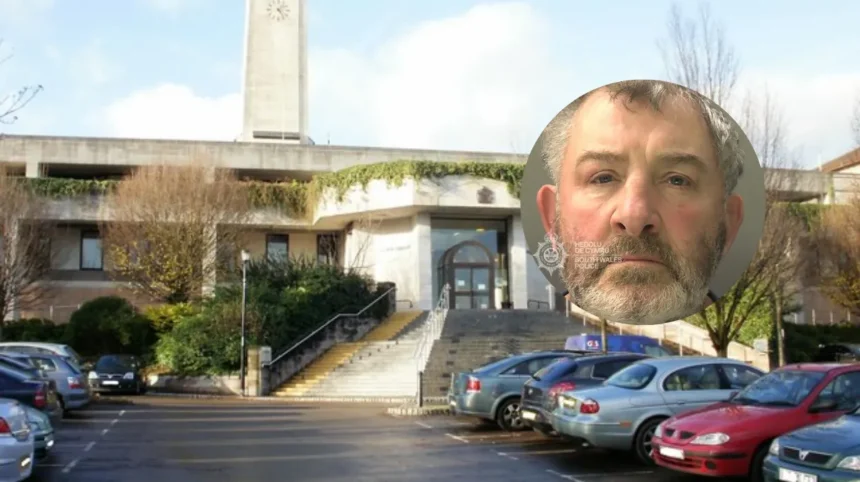
Wales Crime (Wales Times) October 02, 2026 – A former soldier who strangled his wife in their bed after becoming paranoid that she would leave him has been jailed for life with a minimum term of 14 years. Michael Davies, 58, of Cefn Road, Bridgend, was sentenced at uk/local/newport/">Newport Crown Court on Friday after a jury rejected his defence of diminished responsibility and convicted him of the murder of 48-year-old Tracey Davies on 18 April 2025.
- Key Points
- What happened in the Michael Davies murder case?
- How did the trial at Newport Crown Court unfold?
- What did the judge say at sentencing?
- What did Tracey Davies’s family say in victim impact statements?
- What did the defence and police say?
- Background to the development
- Prediction: how this development may affect audiences
What happened in the Michael Davies murder case?
Tracey Davies was found dead in the couple’s home on Bryn Terrace, Cefn Cribwr, after relatives grew concerned when they could not contact her or her husband. A family member gained entry to the property and discovered Tracey’s body in the bedroom, with Davies found on the floor injured and covered in blood. Emergency services were called and Davies was taken to the University Hospital of Wales in Cardiff for treatment before being arrested on suspicion of murder.
Prosecutor Mark Cotter KC told Newport Crown Court that Davies killed his wife by strangling her on the bed before stabbing himself. The court heard that in the days before the killing, Davies had confided in family and friends about mental health struggles and had shown signs of jealousy towards his wife. His internet search history included terms such as “paranoia” and “how to fight paranoia”, reflecting his deteriorating state of mind.
How did the trial at Newport Crown Court unfold?
Davies initially pleaded guilty to manslaughter by reason of diminished responsibility but denied the charge of murder, leading to a trial to determine whether the partial defence applied. Three forensic psychiatrists assessed Davies, with the court hearing that he was suffering from a depressive disorder with anxiety, though experts disagreed on the severity and whether it met the threshold for diminished responsibility.
After deliberating for several hours on 10 September, the jury returned on 11 September and convicted Davies of murder, rejecting the defence of diminished responsibility. Judge Daniel Williams told Davies that the only sentence available was life imprisonment and that the court would determine the minimum period he must serve before the Parole Board could consider release.
What did the judge say at sentencing?
In passing sentence on 2 October, Judge Williams said Davies’s mental health had declined after he learned his security work in Abu Dhabi would end, triggering fears about finances and his relationship. The judge said Davies ruminated on the consequences of being out of work, feared he would become less attractive to Tracey, and grew insecure and jealous about her working with other men.
“I’m sure that there was a trigger. Whether something was said or done or whether that trigger, external or in your mind, is something that only you know. And you’re keeping that to yourself,”
Judge Williams said. He added:
“The fact is that your anger, born of insecurity, and exacerbated by mental illness, got the better of you. And you strangled Tracey to death.”
The judge acknowledged that no sentence expressed in years and days would reconcile Tracey’s family and friends to their loss, stating: “Their grief has no release date.”
What did Tracey Davies’s family say in victim impact statements?
Tracey’s daughter, Danielle Young, told the court that losing her mother in such a violent way had affected the family’s everyday lives and that the knowledge of her fear and confusion during the killing would continue to haunt them. “To hear and see the graphic details of how she was killed by the person she loved has been a complete torment to us,” she said. She added that the family did not believe Davies had shown genuine remorse and that “not one ounce of emotion came from him in the courtroom”.
Julie Reeve, Tracey’s younger sister, described her as the anchor that held the family together and said the last 18 months had brought flashbacks and nightmares of what her sister experienced. “Michael, I think you’re a coward for doing what you did,” she told the court. She said Davies’s actions had taken a mother from her children, a sister from her siblings, an aunt from her nieces and nephews, and a friend from those who knew and loved her.
What did the defence and police say?
David Elias KC, defending, said Davies had shown remorse by accepting in police interviews that he killed his wife and explained that the trial proceeded because two psychiatrists had initially indicated the partial defence of diminished responsibility was available. He described Davies as a man who had served his country with distinction in the armed forces and who, before the offending, was regarded by those who knew him as kind, considerate and a family man.
Detective Chief Inspector Claire Lamerton, of South Wales Police, said Tracey’s death and the manner in which she was killed had deeply affected not only the immediate family but also the wider community who knew her.
“We hope that today’s sentencing will provide some comfort to Tracey’s family and friends, though acknowledge their grief may never be overcome,”
she said.
Background to the development
The case emerged against a backdrop of growing scrutiny of domestic homicide and the role of mental health in such incidents. Tracey and Michael Davies met in 2021, each with two children from previous relationships, and married in 2024. Davies had been working for a security company in Abu Dhabi but returned to the UK on 11 April 2025 after his mental health deteriorated. A week later, on 18 April, he killed Tracey at their home.
The prosecution said Davies became increasingly paranoid after losing his job and feared his wife of one year would leave him. Family members had raised concerns about his mental state, noting reports of depression and anxiety. The jury’s rejection of diminished responsibility meant the mandatory life sentence for murder applied, with the minimum term set at 14 years.
Prediction: how this development may affect audiences
For families and communities in South Wales, the sentencing is likely to reinforce awareness of the warning signs of coercive control, jealousy and escalating paranoia in relationships, particularly where employment stress and mental health difficulties intersect. Domestic abuse charities may cite the case when urging earlier intervention, while criminal justice practitioners could reference the jury’s approach to diminished responsibility in future murder trials involving psychiatric evidence. For Tracey’s family, the 14-year minimum term provides a formal marker of accountability, though their statements indicate the emotional impact will endure regardless of the sentence length.