Key Points
- Four special trains will be put into use by Network Rail in order to eliminate the effects of leaf fall on the Wales and Borders railway network.
- The number of train trips in the process is expected to exceed 54,400 miles in 224 circuits based on Nation.Cymru and North Wales Pioneer publications.
- Temporary changes to the TfW timetables have been introduced since 10 October and lasting until 4 December 2026 with some train routes being re-timed as well as specific routes experiencing changes.
- Most of the Wrexham–Bidston trains will start and end at Wrexham General station; four peak-time trains might continue to travel via Wrexham Central if possible; and there will be no temporary replacement between the two stations.
- According to Network Rail, improved drainage has been done at the flood-prone sites, ten autumn response teams have been deployed and ten weather stations providing local information were installed.
- An increase in rainfall and winds is expected during late autumn and early winter season due to the outlook by the Met Office, although seasonal predictions do not forecast any specific events.
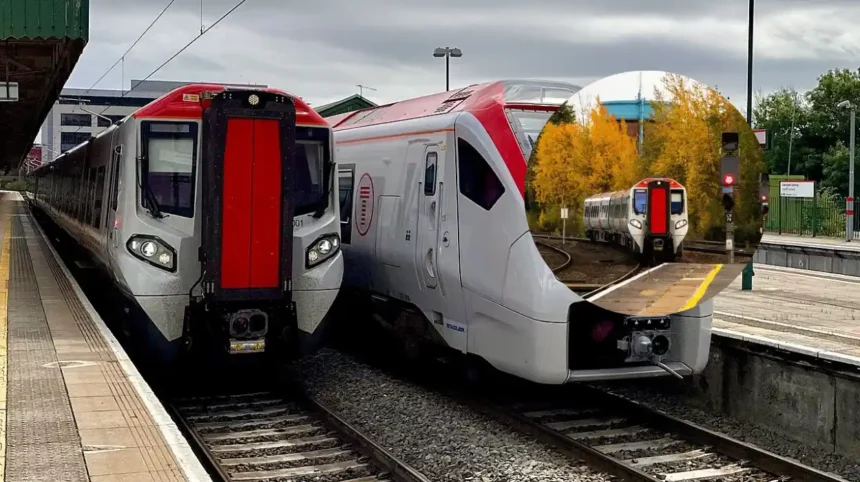
Wales (Wales Times) October 12, 2026 – Welsh rail treatment trains are being deployed as Network Rail and Transport for Wales prepare for leaf fall and potentially unsettled weather across Wales and the Borders. The four specialist trains are scheduled to cover more than 54,400 miles over 224 circuits, while temporary timetable changes aim to give services additional time on routes affected by autumn conditions. The measures are planned to run alongside drainage work, response teams and new weather-monitoring equipment.
Why are treatment trains being deployed across Wales?
The trains will remove leaf residue from rails on key routes and apply material to improve grip at selected locations, according to Nation.Cymru and North Wales Pioneer. Their deployment is part of wider preparations by Network Rail and TfW to maintain services during the autumn leaf-fall season.
Fallen leaves can be crushed against the rail by passing trains. Network Rail explains that leaf contamination can reduce wheel-to-rail grip, affecting a train’s ability to start, accelerate, climb gradients and stop. It can also interfere with track circuits used by signalling systems.
Network Rail’s general description of its autumn fleet says its rail-head treatment trains and multipurpose vehicles use high-pressure water jets. Where needed, they can also apply an adhesion modifier made with sand and metal shot to help wheels grip and push through contamination. The operator’s general fleet information describes its equipment and methods; the four-train deployment and route coverage reported for this autumn are specific to Wales and the Borders.
The scale reported for the Welsh operation is more than 54,400 miles of treatment over 224 circuits. These are planned coverage figures, not a claim that every section of track will receive treatment or that all delays will be prevented.
What changes for rail passengers?
The temporary timetable is in place from Saturday 10 October through Friday 4 December. TfW says the adjustments give drivers more time to brake and accelerate safely in areas where leaf fall may affect traction. Passengers are advised to check their journeys because some services may leave a few minutes earlier than usual.
On the uk/local/wrexham/">Wrexham–Bidston line, most services are due to start and terminate at Wrexham General rather than Wrexham Central. TfW says it will seek to keep four peak-time services running through Wrexham Central when possible. No rail replacement service is planned between Wrexham General and Wrexham Central, and journeys on the route are retimed by around one to three minutes, with connections at Shotton preserved.
There are also changes on routes in north and south Wales and across the border:
- On the Conwy Valley line between Llandudno Junction and Blaenau Ffestiniog, journeys may take two to three minutes longer, and trains will leave Blaenau Ffestiniog slightly earlier.
- Most Cardiff Central–Maesteg services are retimed to leave Cardiff one or two minutes earlier.
- The 23:16 Cardiff Central to Maesteg service will not run on weekdays during the timetable-change period, to allow the rail-head treatment train to use the Maesteg line. TfW advises passengers to use the 23:20 Cardiff Central–Carmarthen service to Bridgend, then a replacement bus to Maesteg.
- Minor timetable adjustments also affect the Marches route between Shrewsbury and Newport, services between Shrewsbury and Wolverhampton, and links between Shrewsbury, Chester and Crewe.
There is a discrepancy in one secondary report about the late Maesteg service: Nation.Cymru describes it as the 10.13pm Ebbw Vale Town to Maesteg service, while TfW’s timetable page identifies the weekday service as the 23:16 Cardiff Central to Maesteg train. TfW’s own service information gives the latter description and should be checked for the journey in question.
What preparations accompany the trains?
Network Rail’s wider autumn preparations include 10 dedicated Autumn Response Teams and drainage upgrades at locations that have repeatedly experienced flooding. Ten weather stations have also been installed across the Wales and Borders route to supply local, real-time weather data, according to the reports.
TfW has also added a wheel lathe at Canton depot as part of a reported £2.5 million investment. It follows the opening of a wheel lathe at Holyhead earlier in 2026. The reports say the equipment can restore wheels affected by flat spots after slipping on contaminated rails, helping return trains to service.
Colin Lea, TfW’s planning and performance director, said the timetable changes were relatively minor but intended to support a more reliable service during the period when trains are affected by leaf fall. He also said the changes had been entered into journey planners 12 weeks in advance to give passengers more notice.
Martin Taylor, Network Rail Wales and Borders’ chief infrastructure officer, said the organisations were using operational and weather intelligence and working with industry partners to manage risk and minimise disruption. He also described increased use of data and technology as part of efforts to support decisions as conditions change.
The coverage also reports that the temporary autumn timetable changes introduced in 2025 contributed to a 45 per cent reduction in autumn-related delays on the Wrexham–Bidston line and a 233 per cent improvement on the Conwy Valley line, according to TfW. Those figures relate to the routes and measures cited in the report; they do not establish that the same results will recur this year.
What does the weather outlook say?
The preparations come amid a Met Office outlook cited by the reports that indicates an increased likelihood of wetter and windier conditions through late autumn and early winter. Heavy rain can increase flood risk, while strong winds can bring trees and other debris onto railway lines. The reports also note that ground conditions after a hot, dry summer may affect how quickly heavy rain is absorbed.
Sarah Davies, the Met Office’s head of environment and energy, said El Niño is one of several influences on UK weather and that its effect is less direct here than in some other parts of the world. She said the latest long-range outlook suggested a greater chance of wetter and windier-than-average conditions, but stressed that seasonal forecasts describe likely patterns over several months rather than predicting exactly when or where impacts will occur.
Background: How leaf fall affects railways
Autumn leaves can create a slippery coating when they are crushed and mixed with moisture on the rails. Reduced adhesion makes it harder for trains to accelerate and brake, while contamination can also affect track circuits. Network Rail says its signalling system is designed to stop trains if the system cannot reliably detect them, a safety response that can also disrupt services.
Rail-head treatment trains form part of Network Rail’s broader seasonal fleet. The operator says its national fleet includes dedicated treatment trains and multipurpose vehicles, which can use high-pressure water and, when required, adhesion modifier. The Wales and Borders deployment reported for this autumn is one part of that wider approach to seasonal railway maintenance.
Prediction: What could this mean for passengers?
For passengers, the clearest likely effect is a need to allow for slightly different departure times and, on some journeys, a longer trip or a change in where services start and finish. The Wrexham–Bidston arrangements and the weekday late-night Maesteg service change are particularly important to check before travelling. TfW’s timetable page and journey planner provide the operator’s current journey information.
The treatment trains, drainage work, weather stations and response teams are intended to help Network Rail and TfW manage seasonal risks and maintain more reliable services. However, neither the reported treatment coverage nor the weather preparations guarantee that delays or disruption will be avoided. The eventual effect on journeys will depend on local leaf fall, weather and operating conditions during the timetable period.