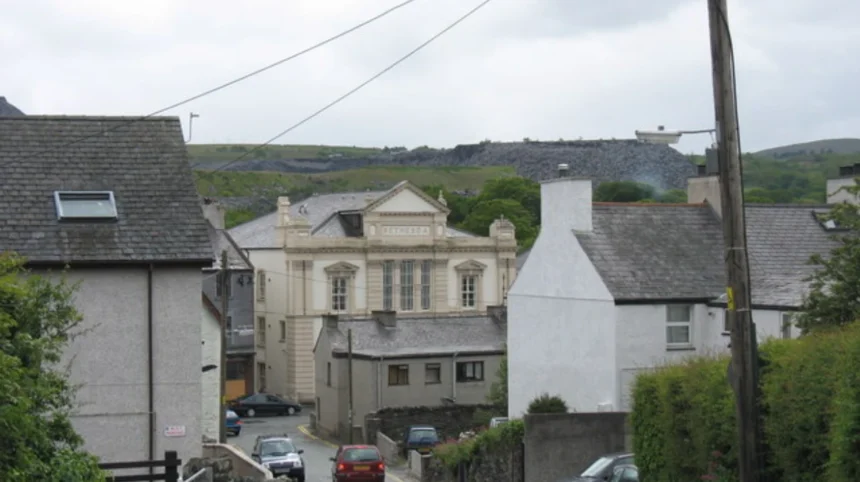
Bethesda is a historic slate quarrying town located in the Ogwen Valley within the Gwynedd council area of northwest Wales. Situated approximately three miles south of uk/local/bangor/">Bangor and adjacent to the A5 road, the settlement evolved rapidly during the nineteenth century around the expansive Penrhyn Slate Quarry. The local population of 4,735 residents inhabits a steep, mountainous terrain defined by industrial heritage, Welsh language prominence, and proximity to Eryri National Park.
The structural morphology of Bethesda is closely tied to its industrial origins along the Afon Ogwen river. The settlement expanded from the initial establishment of the Bethesda Independent Chapel in 1820, which gave the growing town its name. Housing rows were densely packed onto the hillsides in irregular configurations on former common land, reflecting the rapid influx of workers required for heavy industrial extraction. The surrounding topography features glacial valleys, slate tips, and high-altitude ridges that separate the residential footprint from the industrial excavations of Penrhyn Quarry.
Modern administrative functions are divided between Cyngor Cymuned Bethesda and Cyngor Gwynedd, ensuring local governance operates primarily through the medium of the Welsh language. Transport routes, including the historical Penrhyn Quarry Railway and Thomas Telford’s historic London to Holyhead road, historically shaped the linear expansion of the community. Economic activities have transitioned away from heavy manufacturing toward tourism, local services, and outdoor adventure enterprises that leverage the dramatic landscape of northern Gwynedd.
How Did the Slate Industry Shape the History of Bethesda?
The history of Bethesda is defined by the rise, peak, and industrial disputes of the Penrhyn Slate Quarry, which transformed a rural valley into a global center of slate production. Richard Pennant, later Baron Penrhyn, initiated large-scale industrial operations at the site in the 1770s, utilizing wealth derived from Jamaican sugar plantations. By the late nineteenth century, Penrhyn Quarry operated over twenty distinct rock galleries and employed roughly 3,000 workers, exporting purple roofing slates to markets across the world.
The intense labor conditions and social stratification of the nineteenth century culminated in the historic Penrhyn Quarry strike between 1900 and 1903. Led by the North Wales Quarrymen’s Union, this industrial dispute lasted for three years, making it the longest stoppage in British industrial history. The conflict caused severe economic hardship for local families, altered community relationships, and prompted the construction of alternative housing rows in nearby Tregarth for non-striking workers. Following the dispute, the economic dominance of the quarry gradually declined due to international competition, reduced demand for roofing slates, and twentieth-century world conflicts.
The community preserved its distinct cultural identity through nonconformist chapels, choral societies, and bilingual educational institutions such as Ysgol Dyffryn Ogwen. Today, the heritage of the slate industry is recognized globally through the designation of the Slate Landscape of Northwest Wales as a UNESCO World Heritage Site, preserving the historical infrastructure, worker barracks, and transport networks for future generations.
What Modern Attractions and Economic Activities Exist in Bethesda?
Modern Bethesda sustains its local economy through adventure tourism, outdoor recreation, and small service-sector enterprises anchored by the repurposed Penrhyn Slate Quarry. The primary commercial attraction is Zip World Penrhyn Quarry, which features Velocity, recognized as the fastest zip line in the world and the longest in Europe. Participants reach operational speeds of up to 100 miles per hour while descending across the flooded quarry pit, drawing thousands of international visitors annually to the Ogwen Valley.
Additional adventure infrastructure at the site includes the Quarry Karts mountain cart experience, the Aero Explorer zipline ride, and guided heritage tours operated in iconic red trucks. These commercial ventures provide employment opportunities in hospitality, maintenance, and tourism management, offsetting the decline of traditional manufacturing. Non-adventure economic activity relies on small retail shops along the High Street, public sector employment, and services catering to outdoor enthusiasts accessing nearby climbing and hiking routes.
The conversion of the former Penrhyn Quarry Railway trackbed into the Lôn Las Ogwen cycle path facilitates sustainable transit and recreational cycling through the valley toward Port Penrhyn. Educational facilities such as Ysgol Dyffryn Ogwen maintain bilingual instruction for local students, ensuring the preservation of the Welsh language within younger demographics. Infrastructure improvements continue to balance rural conservation requirements with the demands of a high-volume visitor economy centered on extreme sports and industrial heritage tourism.
How Does Geography Influence Transportation and Infrastructure in Bethesda?
Transportation networks in Bethesda are shaped by the challenging topography of the Ogwen Valley, connecting isolated mountain terrain with coastal commercial ports. The primary arterial route through the town is the A5 road, which follows Thomas Telford’s historic engineered alignment constructed in the early nineteenth century to link London and Holyhead. This highway historically divided land ownership between Lord Penrhyn’s estate and independent freehold plots, dictating the urban layout and commercial placement of buildings along the high street.
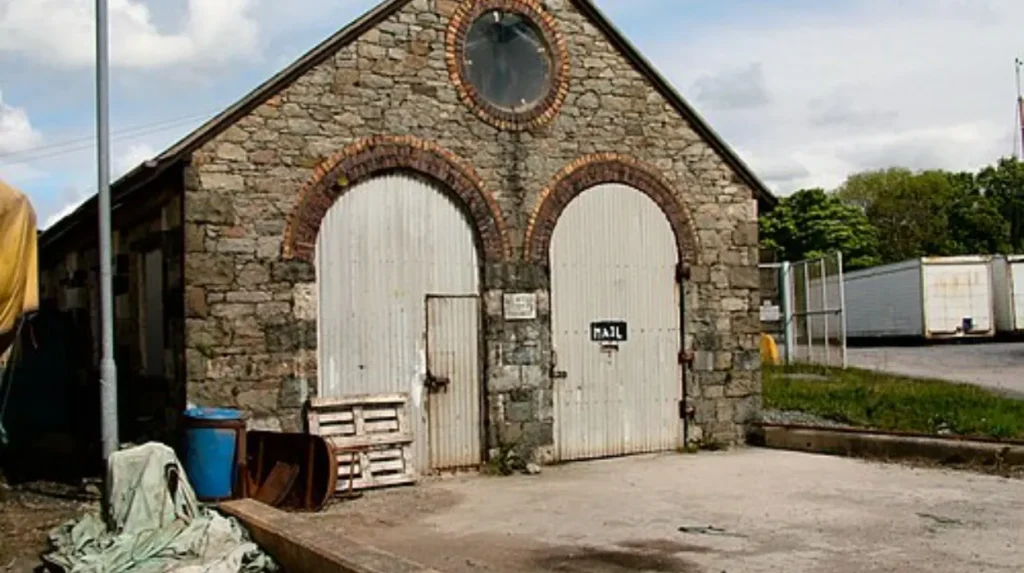
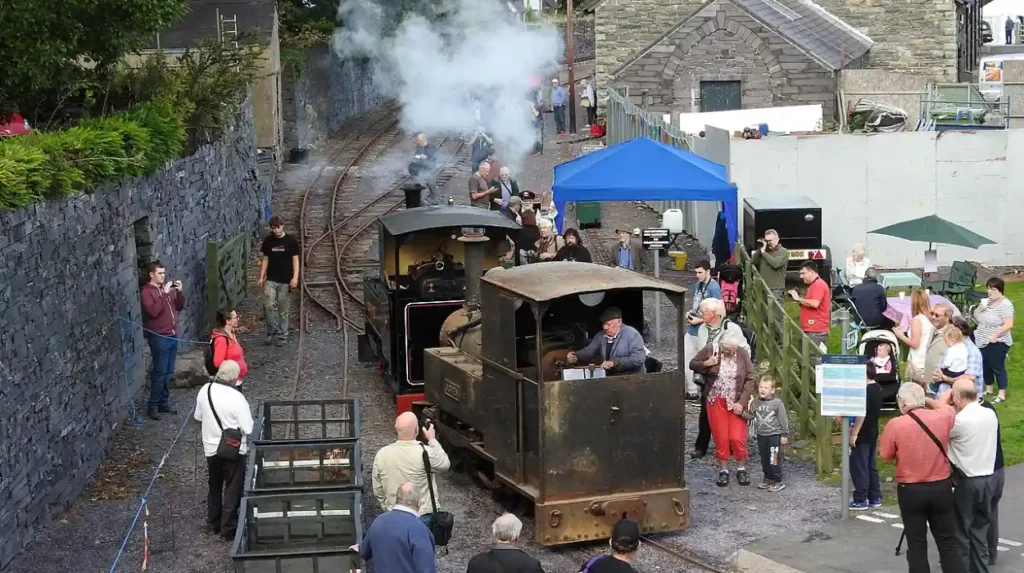
Historical freight transport relied heavily on the Penrhyn Quarry Railway, a narrow-gauge line opened in 1801 that transported finished slate blocks downhill from the quarry benches to Port Penrhyn on the Menai Strait. A branch of the London and North Western Railway subsequently connected Bethesda to Bangor for passenger and freight services in 1884, though passenger operations ceased in 1951 and freight ended in 1963. Modern transit relies entirely on road networks, with bus services connecting Bethesda to Bangor, Caernarfon, and surrounding upland villages. The absence of an active heavy rail link places emphasis on regional bus links and private vehicular transport for daily commuting. Infrastructure maintenance projects continuously manage hillside stability, bridge upkeep along the Afon Ogwen river, and traffic management systems designed to handle tourist congestion during peak summer operating seasons at adjacent outdoor adventure facilities.
What Role Does Culture and Language Play in the Community of Bethesda?
Cultural life in Bethesda is rooted in traditional Welsh nonconformist heritage, strong community networks, and the preservation of the Welsh language across civic life. The community developed around religious institutions such as the Bethesda Independent Chapel, which fostered choral traditions, eisteddfodau, and literary societies that defined working-class intellectual life during the peak of the slate industry. Welsh remains the predominant community language, spoken fluently by a substantial majority of the population and utilized actively in local council proceedings by Cyngor Cymuned Bethesda.
Educational provision reinforces linguistic continuity through Welsh-medium and bilingual instruction at institutions like Ysgol Dyffryn Ogwen, ensuring younger generations maintain cultural competencies. Social cohesion is maintained through local sports clubs, community facilities at Canolfan Cefnfaes, and cultural events that commemorate the region’s industrial struggles and artistic achievements. Literature and poetry continue to reflect the landscape of the Ogwen Valley and the hardships experienced by historical quarrymen and their families. Cultural preservation initiatives work alongside modern economic developments to ensure that incoming tourism does not dilute local heritage. Public art installations, heritage plaques, and museum partnerships document the transformation of Bethesda from a radical industrial settlement into a modern gateway for outdoor recreation and Welsh cultural identity.
Frequently Asked Questions
What is the history of Bethesda Wales?
Bethesda grew rapidly during the nineteenth century as a major slate mining settlement centered on the Penrhyn Slate Quarry. The town experienced the longest industrial dispute in British history during the 1900 to 1903 quarry strike. Today, it preserves its heritage alongside modern adventure tourism developments.
Where is Bethesda located in Wales?
Bethesda is situated in the Ogwen Valley within the Gwynedd council area of northwest Wales. It lies approximately three miles south of Bangor and immediately adjacent to Eryri National Park.
What main attractions are in Bethesda?
The primary attraction is Zip World Penrhyn Quarry, which hosts the fastest zip line in the world and the longest in Europe. Visitors also explore the Lôn Las Ogwen cycle path and local historical slate landscapes.
Is Welsh spoken in Bethesda?
Welsh is the primary community language spoken throughout Bethesda and is used actively in local governance and education. Bilingual instruction is standard in local schools like Ysgol Dyffryn Ogwen.
How did the Penrhyn strike impact Bethesda?
The three-year strike between 1900 and 1903 caused severe economic hardship, community division, and long-term population shifts. It established the town’s legacy of organized labor and union history.