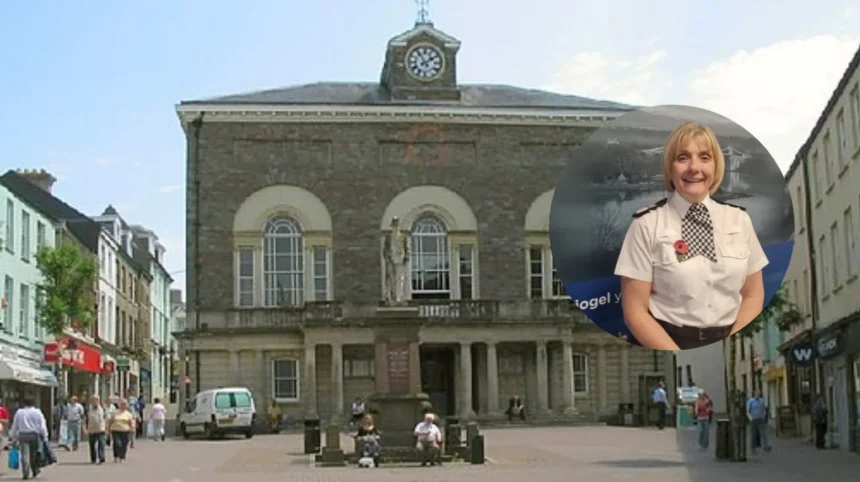
Key Points
- North Wales Police chief constable Amanda Blakeman is due to give evidence to Members of Parliament on Wednesday, 18 November as part of United Kingdom Government proposals which could see the force merged into a larger regional police force.
- She is set to give evidence to the Welsh Affairs Committee in Westminster together with other chief constables from South Wales, Gwent, and Dyfed-Powys police forces.
- This comes following a Telegraph story showing that Ms Blakeman wrote letters to the chairman of the National Police Chiefs’ Council, describing the way in which a small number of senior police chiefs promoted the idea of larger forces.
- Extracts sent to The Telegraph show that she described “a chiefs’ council within a chiefs’ council” where a small group advances the position and the whole membership is made aware of it afterward.
- She further argued that the discussion was heavily focused on the idea that policing was broken and she did not agree with the characterization.
- According to the UK Government’s Police Reform White Paper released in January, the current configuration of 43 forces in England and Wales is “no longer fit for purpose.”
- The White Paper recommends the creation of larger regional forces and abolition of the police and crime commissioners who supervise individual forces.
- A government-commissioned review is understood to have recommended the creation of either nine or eighteen larger forces, possibly with one for Wales.
- Should one Welsh force be created, the North Wales Police would be merged with South Wales Police, Gwent Police, and Dyfed-Powys Police.
- The review is being conducted by former Metropolitan Police Commissioner Lord Bernard Hogan-Howe and has not yet been published.
- In June, North Wales Assistant Chief Constable Nick Evans told the North Wales Police and Crime Panel that North Wales exhibited a very different pattern of criminality than the rest of Wales especially when compared to the North West of England.
- The North Wales Police and Crime Commissioner Andy Dunbobbin is against the prospect of merging the force into a larger regional “megaforce.”
- Mr Dunbobbin told The Telegraph that such a move could mean that the organization would become bigger and farther away, hence making it possible that local priorities are overshadowed by those of the larger metropolitan areas.
- All four Welsh police and crime commissioners have come out against the idea of abolishing their roles in front of the same committee in July.
- Members of Parliament are also expected to ask questions about the use of live facial recognition technology as a result of the White Paper’s pledge to fund 40 more vans to be deployed in town centers in England and Wales.
- Policing devolution to the Welsh Government could be considered by the committee.
- The evidence session is due to begin at 2:45 p.m. and will be streamed live through Parliamentlive.tv.
Wales Police (Wales Times) November 14, 2026 – North uk/police/">Wales Police Chief Constable Amanda Blakeman is to face questioning from MPs next week over UK Government proposals that could see her force merged into a larger regional police force.
- Key Points
- What Did Amanda Blakeman Say About Police Reform?
- What Do the UK Government’s Plans Propose?
- Why Are Welsh Police Leaders Being Questioned?
- What Has North Wales Police Said About Criminality?
- Why Does Andy Dunbobbin Oppose a Merger?
- What Is the Role of Police and Crime Commissioners?
- What Happens Next?
- Background of the Development
- Prediction: How Could This Affect North Wales Residents?
Ms Blakeman will appear before the Welsh Affairs Committee at Westminster on Wednesday 18 November, alongside the chief constables of South Wales, Gwent and Dyfed-Powys police. The session will examine the UK Government’s police reform plans, which could reduce the number of police forces in England and Wales and create larger regional organisations.
As reported by Deeside.com, the hearing comes after The Telegraph reported that Ms Blakeman had written to the head of the National Police Chiefs’ Council, criticising the way a small group of senior police chiefs had been arguing for bigger forces. The review of police force structures, led by former Metropolitan Police commissioner Lord Bernard Hogan-Howe, has not been published.
What Did Amanda Blakeman Say About Police Reform?
As reported by The Telegraph, extracts of Ms Blakeman’s letter seen by the newspaper said: “The impression being created is that there is a chiefs’ council within a chiefs’ council, a smaller group driving a particular position while the wider membership is informed after the fact.”
She also wrote that too often the debate had focused on the “fact” that policing is fundamentally broken, adding that this was “not a characterisation that I recognise”. The comments indicate concern about the process through which senior police leaders have been advancing arguments for structural reform.
The Welsh Affairs Committee is expected to question Ms Blakeman and the leaders of the other three Welsh forces about the implications of the proposals for policing in Wales. MPs may also ask about live facial recognition and whether policing should be devolved to the Welsh Government.
What Do the UK Government’s Plans Propose?
The UK Government’s Police Reform White Paper, From Local to National: A New Model for Policing, was published on 26 January 2026. It states that the current system of 43 local police forces in England and Wales is “no longer fit for purpose”.
The White Paper proposes merging existing forces into larger regional forces and abolishing police and crime commissioners, who currently oversee individual forces. The government has not set out the new geographical boundaries for the larger forces; instead, it commissioned an independent review to propose how regional police forces should be organised.
According to Deeside.com, a review commissioned by the UK Government was reported to propose between nine and 18 larger forces, including a single force for Wales. If that option were adopted, North Wales Police would merge with South Wales Police, Gwent Police and Dyfed-Powys Police.
The review is being led by Lord Bernard Hogan-Howe, the former Metropolitan Police commissioner. Its findings have not yet been published.
Why Are Welsh Police Leaders Being Questioned?
The Welsh Affairs Committee has called the four Welsh chief constables to give evidence as MPs examine the potential consequences of the reforms for Wales. The session is scheduled to begin at 2.45pm and will be shown live on Parliamentlive.tv.
The committee said MPs are likely to ask about live facial recognition, with the White Paper pledging to fund 40 new vans to be used in town centres across England and Wales. MPs may also discuss whether policing should be devolved to the Welsh Government.
The hearing follows earlier evidence from Welsh police and crime commissioners. All four Welsh commissioners told the same committee in July that they opposed plans to abolish their role.
What Has North Wales Police Said About Criminality?
In June, North Wales Police Assistant Chief Constable Nick Evans told the North Wales Police and Crime Panel that North Wales had very little in common in terms of criminality with the rest of Wales compared with the North West of England.
His comments were made during a discussion of the potential reorganisation of police forces. They highlight one of the issues likely to be considered in any decision about whether Wales should be served by one police force or remain divided into separate forces.
The UK Government has said that the current structure of 43 forces is the product of historical evolution rather than deliberate design. It has argued that a reformed system would reduce duplication and bring capabilities including the National Crime Agency, Counter Terrorism Policing, regional organised crime units, police helicopters and national roads policing under a single organisation.
Why Does Andy Dunbobbin Oppose a Merger?
North Wales Police and Crime Commissioner Andy Dunbobbin, who is from Connah’s Quay, has said he opposes the force being merged into a larger regional “megaforce”.
As reported by The Telegraph, Mr Dunbobbin said: “A merger risks creating a larger, more remote organisation where local priorities could be overshadowed by the demands of larger urban and metropolitan areas elsewhere.”
His position reflects concern that a larger regional force could reduce the ability of local communities to influence policing priorities. The commissioner’s comments were made as debate continued over the government’s plans to reduce the number of forces across England and Wales.
What Is the Role of Police and Crime Commissioners?
Police and crime commissioners are elected officials who oversee police forces in their areas. The White Paper proposes abolishing the role as part of a wider restructuring of policing governance.
All four Welsh commissioners told the Welsh Affairs Committee in July that they opposed the plans to abolish their role. Their opposition adds to the political and operational questions surrounding the proposed reforms.
The proposals are part of a broader government programme that also includes plans for a National Police Service to take responsibility for forensics from the 43 local forces, with direction set centrally from the new organisation.
What Happens Next?
The Welsh Affairs Committee evidence session is scheduled for Wednesday 18 November. Ms Blakeman and the chief constables of South Wales, Gwent and Dyfed-Powys police are expected to give evidence to MPs.
The government’s independent review of police force structures remains unpublished. Until its recommendations are released, no final decision has been announced on the future boundaries of police forces in Wales or elsewhere in England and Wales.
Background of the Development
The UK Government published its Police Reform White Paper, From Local to National: A New Model for Policing, on 26 January 2026. The document set out proposals to modernise policing across England and Wales, including reducing the number of forces and creating a National Police Service for the most serious and complex crime.
England and Wales currently have 43 policing areas: the Metropolitan Police Service, City of London Police, 37 other forces in England and four forces in Wales. The government says the existing structure dates from the 1960s and argues that it is no longer fit for purpose.
The White Paper does not specify the new force boundaries. Instead, it established an independent review, led by Lord Hogan-Howe, to propose how larger regional forces should be organised. The National Police Chiefs’ Council has described the current arrangement of 43 forces, regional collaborations, national agencies and funding streams as inefficient and ineffective.
In Wales, the proposed changes have prompted opposition from police and crime commissioners, including North Wales commissioner Andy Dunbobbin. The Welsh Affairs Committee hearing will provide MPs with an opportunity to question police leaders directly about the possible impact of the reforms.
Prediction: How Could This Affect North Wales Residents?
If the proposals lead to a single Welsh police force, North Wales residents could see their local force become part of a much larger organisation covering South Wales, Gwent and Dyfed-Powys. The practical effect would depend on the final force boundaries, local command arrangements and the government’s decisions on funding and governance.
Supporters of reform argue that larger forces could share specialist resources more effectively and reduce duplication across the current 43-force system. Opponents, including Mr Dunbobbin, argue that a larger regional force could make policing feel more remote and allow priorities from larger urban areas to take precedence over local concerns.
For residents in North Wales, the immediate effect of next week’s hearing is likely to be greater parliamentary scrutiny rather than an immediate change to policing. However, the evidence given by Ms Blakeman and the other Welsh chief constables could influence the committee’s understanding of how merger proposals would affect local policing, community engagement and the delivery of services across Wales.