Key Points
- All four of Wales’ Chief Constables are due to give evidence to the Welsh Affairs Committee of the House of Commons on Wednesday, 18 November 2026.
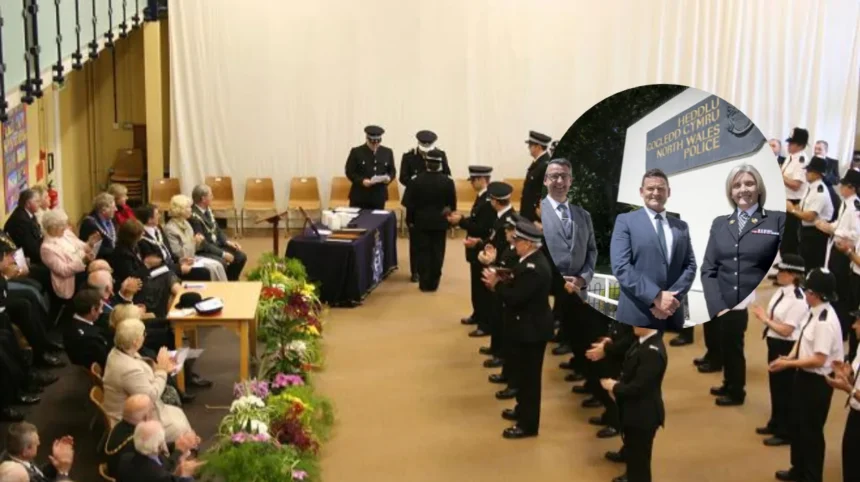
- Amanda Blakeman, Chief Constable of North Wales Police, is expected to join Jeremy Vaughan from South Wales Police, Ifan Charles of Dyfed-Powys Police, and Mark Hobrough of Gwent Police.
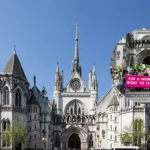
- The event is to be held as part of the committee’s inquiry into the future of Policing in Wales at 2.45pm in Committee Room 16 of the Palace of Westminster.
- There is speculation that the MPs will ask questions regarding the UK Government’s Police Reform White Paper, specifically the proposals to reduce the number of forces, integrate them into larger regional units and remove Police and Crime Commissioners.
- It is also speculated that the discussion will involve live facial recognition technology and devolution of policing to the Welsh Government.
- The White Paper, entitled From Local to National: A New Model for Policing, released in January 2026, has declared that “there are no longer fit for purpose” 43 forces in England and Wales.
- According to media reports, the review may recommend creating between nine and 18 forces with enlarged territorial coverage, possibly even one force for Wales; however, no decisions about geographical boundaries and structures of the forces are made yet.
- In a letter seen by The Telegraph, Blakeman criticizes how a small group of police leaders has driven the whole reform debate.
- According to the Welsh Affairs Committee, North Wales Police and Crime Commissioner Andy Dunbobbin is against the integration of North Wales Police in a larger regional “megaforce” saying that local priorities could be neglected.
- Moreover, the Committee has requested all four chief constables for the operational data related to violence against women and girls.
Wales Police (Wales Times) November 16, 2026 — Will Wales’ Chief Constables face questions on police reforms? Yes. Wales’ Chief Constables face questions on police reforms this week when the leaders of all four Welsh police forces appear before MPs examining UK Government proposals that could reshape policing across England and Wales.
- Key Points
- What Will MPs Ask the Welsh Police Chiefs?
- What Does the Reform White Paper Propose?
- Why Is Amanda Blakeman’s Evidence Significant?
- What Have Welsh Police Leaders Said About Devolution?
- How Have Welsh Commissioners Responded?
- What Has North Wales Police Said Previously?
- What Is the Committee Asking About Violence Against Women and Girls?
- What Happens After the Evidence Session?
- Background of the Development
- Prediction: How Could This Affect Welsh Communities?
As reported by the Herald Wales, North Wales Police Chief Constable Amanda Blakeman is among four Welsh police chiefs due to give evidence to MPs considering proposals to reshape policing. She will appear before the Welsh Affairs Committee alongside South Wales Police Chief Constable Jeremy Vaughan, Dyfed-Powys Police Chief Constable Ifan Charles and Gwent Police Chief Constable Mark Hobrough.
The public evidence session is scheduled for Wednesday, 18 November, at 2.45pm in Committee Room 16 at the Palace of Westminster. It will be streamed live on Parliamentlive.tv.
What Will MPs Ask the Welsh Police Chiefs?
The Welsh Affairs Committee has said the session forms part of its inquiry into the future of policing in Wales. According to reporting by the Pembrokeshire Herald, the committee has indicated that questioning will focus on the UK Government’s police reform White Paper, published in January, which proposes changes to the number and organisation of police forces.
Those proposals include merging forces and abolishing Police and Crime Commissioners. MPs are also expected to ask about live facial recognition, with the White Paper pledging funding for 40 new vans to be used in town centres across England and Wales, as reported by Deeside.com.
The committee has also indicated that MPs may explore whether policing should be devolved to the Welsh Government. The issue has long been contentious because policing remains a reserved matter, while many services that intersect with police work—including health, education and some local government functions—are devolved.
What Does the Reform White Paper Propose?
The UK Government’s police reform White Paper, From Local to National: A New Model for Policing, was published in January 2026. As reported by Deeside.com, it says the current system of 43 local police forces in England and Wales is “no longer fit for purpose”.
The White Paper proposes merging forces into larger regional ones and abolishing Police and Crime Commissioners, the elected officials who currently oversee individual forces, set budgets and set local policing priorities.
If the proposals were applied in their most extensive form, North Wales Police could be merged with South Wales Police, Gwent Police and Dyfed-Powys Police into a single Welsh force. However, no final decision has been taken on the future boundaries or structure of individual forces.
A review commissioned by the UK Government has been reported as proposing between nine and 18 larger forces, including a single force for Wales. That reporting was referenced in a joint statement by police and crime commissioners from North Wales and the North West of England, covered by Deeside.com.
Why Is Amanda Blakeman’s Evidence Significant?
Chief Constable Blakeman’s appearance comes at a politically sensitive moment for North Wales Police. As reported by The Telegraph’s journalist in its 11 November article, she wrote to National Police Chiefs’ Council chair Gavin Stephens criticising the way a small group of senior police chiefs had been arguing for bigger forces.
According to extracts seen by The Telegraph, Ms Blakeman wrote: “The impression being created is that there is a chiefs’ council within a chiefs’ council, a smaller group driving a particular position while the wider membership is informed after the fact.”
She also wrote that too often the debate had focused on the “fact” that policing is fundamentally broken, adding that this was “not a characterisation that I recognise”, according to Deeside.com’s report of the letter.
Ms Blakeman is president of the British Association of Women in Policing. The Telegraph reported that she said she was “deeply disappointed” by the process of arranging a panel event, which meant “the first chiefs knew of this event was after arrangements were well advanced”.
She added: “Chiefs need to be confident that different perspectives can not only be expressed but can genuinely influence the debate.”
What Have Welsh Police Leaders Said About Devolution?
The four chief constables previously appeared together before the Welsh Affairs Committee in July 2023, during an earlier inquiry into policing in Wales. The official oral-evidence transcript records that Amanda Blakeman said she saw herself as primarily accountable to her local community through the elected Police and Crime Commissioner, while also being accountable to the UK Government on wider strategic and performance matters.
In that earlier session, Ms Blakeman said that work on violence against women and girls had been easier to deliver across Wales because of Welsh partnerships and the scale of the country. She said: “In terms of being able to look at that, to be able to deliver strategy, to be able to work through the partnerships, it has been much easier to do that within Wales than it has in England.”
But she also said cross-border organised crime created a real challenge. “If I look at regional organised crime, my collaborations across Cheshire and Merseyside, and dealing with the day-to-day business of criminals who offend in North Wales but live elsewhere, then it becomes a real issue,” she told the committee.
South Wales Police Chief Constable Jeremy Vaughan said devolution could bring benefits, particularly in aligning policing with devolved public services, but said unresolved questions about operational interfaces with England would need to be answered first.
Dyfed-Powys Police’s then chief constable, Dr Richard Lewis, said a unified Welsh police force could be better for operational reasons, while stressing that devolution was a matter for politicians. Gwent Police’s then chief constable, Pam Kelly, said there were conversations to be had about devolution or one force for Wales, but warned that forces needed to remain focused on tackling crime and delivering local services.
The current witnesses are not identical to the 2023 panel: Dr Richard Lewis has been succeeded by Ifan Charles as Dyfed-Powys chief constable, while Pam Kelly has been succeeded by Mark Hobrough as Gwent chief constable.
How Have Welsh Commissioners Responded?
North Wales Police and Crime Commissioner Andy Dunbobbin has publicly opposed merging North Wales Police into a larger regional force. As reported by Deeside.com, he said: “A merger risks creating a larger, more remote organisation where local priorities could be overshadowed by the demands of larger urban and metropolitan areas elsewhere.”
Mr Dunbobbin joined police and crime commissioners from Cheshire, Cumbria, Lancashire and Merseyside in a joint statement opposing plans for regional “mega-forces”. The commissioners said large-scale mergers would be “costly, complex and disruptive”, while supporting reform that strengthened policing, improved technology and helped tackle modern crime.
The joint statement came after reports that the UK Government-commissioned review could recommend a substantially reduced number of forces. The commissioners said they did not believe reducing the number of local forces was the answer.
All four Welsh Police and Crime Commissioners told the Welsh Affairs Committee in July that they opposed plans to abolish their roles, according to Deeside.com and the Pembrokeshire Herald.
What Has North Wales Police Said Previously?
Concerns about the potential impact of reform on North Wales were raised at a meeting of the North Wales Police and Crime Panel at Conwy County Council’s Coed Pella headquarters in Colwyn Bay in June. As reported by Wrexham.com, Assistant Chief Constable Nick Evans said North Wales Police had made strong representations to ensure Wales was properly understood by those carrying out the review.
He said the review needed to recognise the “Welsh language, culture and identity”. He also said North Wales Police had examined reforms in Scotland to understand both the opportunities and risks involved in reorganisation.
Chief Constable Blakeman told panel members that the review was only halfway through its work. “We are at an interim stage,” she said, adding that it was a “20-week piece of work and we are only at week 10”.
She said many elements of the reforms remained unclear and that uncertainty persisted. She added that work had been undertaken to ensure “the unique position of Wales as a country” was “fully appreciated by the people that are making the decision”.
What Is the Committee Asking About Violence Against Women and Girls?
The Welsh Affairs Committee has also sought information from all four chief constables on operational data relating to tackling violence against women and girls. Parliament’s publication record shows letters dated 29 October 2026 were sent to Amanda Blakeman, Ifan Charles, Jeremy Vaughan and Mark Hobrough.
The letters were published by the committee on 4 November 2026. The requests form part of the committee’s wider work on the future of policing in Wales, although the precise questions and any responses have not been published in the material reviewed for this report.
The issue is likely to be relevant to the hearing because violence against women and girls has been a major policing and public-safety concern across Wales. Ms Blakeman previously told the committee that she had led work on the issue across Wales and that Welsh partnership structures had made strategy delivery easier.
What Happens After the Evidence Session?
The evidence session is not a decision on the boundaries or future structure of individual forces. As the Pembrokeshire Herald reported, it is intended to gather the chief constables’ evidence on the proposals.
Any changes to force structures, governance arrangements or the role of Police and Crime Commissioners would require further government decisions and parliamentary processes. The Welsh Affairs Committee’s inquiry may inform parliamentary scrutiny, but it does not itself determine reform outcomes.
The committee has not announced in the material reviewed what recommendations it will make after hearing from the chief constables. Further evidence sessions, written evidence and committee reports are expected to form part of its inquiry.
Background of the Development
Policing in Wales is currently organised through four territorial forces: North Wales Police, South Wales Police, Gwent Police and Dyfed-Powys Police. Policing is reserved to the UK Government, although the Welsh Government funds certain policing-related services, including community support officers, and works with forces through the Policing Partnership Board for Wales.
In earlier evidence to the Welsh Affairs Committee, the chief constables described a complex funding and accountability landscape. Dyfed-Powys Police’s then chief constable, Dr Richard Lewis, said roughly half of that force’s funding came from the Home Office and about half from local taxpayers, with additional ringfenced funding from the Welsh Government for specific initiatives.
The UK Government announced in 2024 reforms that led to the current review of policing structures. The Welsh Government has said it wants to secure the devolution of policing and justice in its entirety and is working with the UK Government and Welsh partners to develop a bespoke model of police governance in Wales.
The current reform debate follows the publication of the White Paper in January 2026. It proposes a smaller number of larger forces, a new National Police Service from 2027, and the abolition of Police and Crime Commissioners at the end of their term of office in 2028, according to Welsh Government meeting records and subsequent reporting.
Prediction: How Could This Affect Welsh Communities?
For Welsh communities, the immediate effect of Wednesday’s hearing is likely to be greater parliamentary scrutiny of how reforms could affect local policing, accountability and cross-border cooperation. If larger regional forces or a single Welsh force were ultimately created, residents could see changes in how local priorities are set, how complaints and performance are overseen, and how visible neighbourhood policing is organised.
For North Wales in particular, the evidence may influence the debate over whether a merger would preserve local identity, Welsh-language services and existing partnerships with Cheshire and Merseyside. Chief Constable Blakeman’s evidence is likely to be closely watched because she has previously highlighted both the benefits of Welsh-wide partnership working and the operational challenges of cross-border crime.
For victims of crime, especially those affected by violence against women and girls, the committee’s request for operational data may increase pressure for greater transparency about force performance. The outcome could shape how future policing arrangements balance national capabilities, such as organised-crime and facial-recognition operations, with locally accountable neighbourhood policing.