

Newport, Wales, captivates with its blend of ancient Roman heritage, medieval landmarks, and modern vibrancy along the River Usk. Nestled in Gwent, this city offers enduring appeal for history enthusiasts, families, and adventurers exploring authentic Welsh charm.
Ancient Origins and Roman Legacy
Newport’s history traces back to Bronze Age settlements and Celtic Silures hillforts near the River Usk estuary. Romans established a key fort at Caerleon in AD 75, serving as the base for the Second Augustan Legion for over 200 years, marking Wales’ only permanent Roman garrison. Arthurian legends tie Caerleon to King Arthur’s court, where visitors can explore the amphitheatre and baths that once buzzed with legionary life.
In the 5th century, Saint Gwynllyw founded a church that grew into Newport Cathedral, now the seat of the Diocese of Monmouth. Vikings raided in 1049, but Normans constructed the first castle around 1075 on Stow Hill, laying the groundwork for Newport’s Welsh name, Casnewydd-ar-Wysg, or “new castle on the Usk.”
Medieval Landmarks and Norman Strongholds
The city earned its first charter in 1314, fueling expansion around Newport Castle, built from 1327 to 1386 using Old Red Sandstone. Welsh leader Owain Glyndŵr seized it in 1402 amid the Welsh Revolt, also damaging St Woolos Church. The castle’s imposing towers once guarded the vital river crossing, embodying Norman dominance over the region.
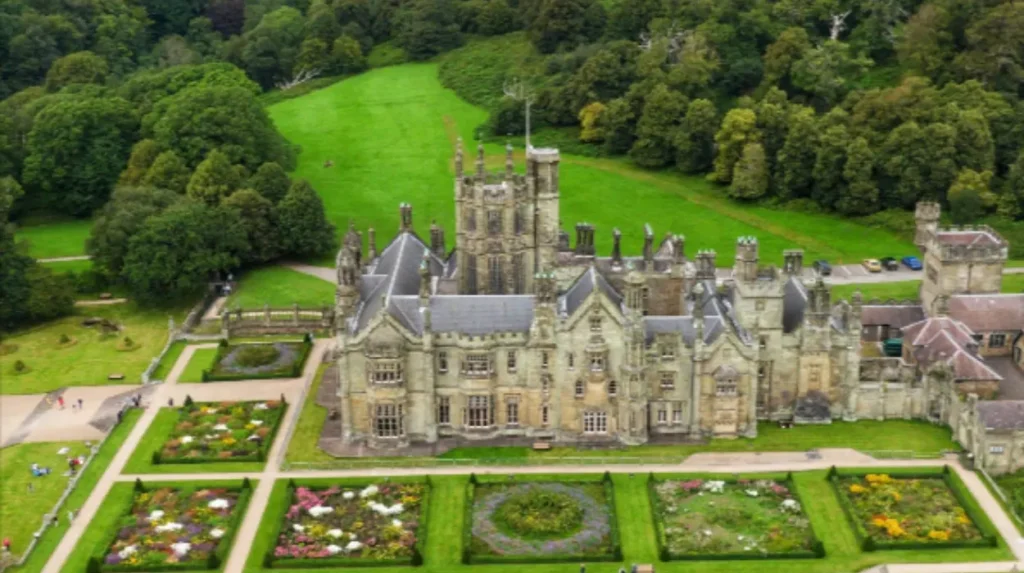
Opened in 1906 by Viscount Tredegar, the Newport Transporter Bridge remains one of just eight such structures worldwide, uniquely transporting cargo across the Usk without hindering maritime traffic. Tredegar House, a grand 17th-century mansion surrounded by gardens, showcases aristocratic living and commemorates events like the Chartist uprising.
Industrial Heritage and Chartist Uprising
During the 19th century, Newport emerged as Wales’ premier coal port, shipping vast quantities from the South Wales Valleys through Alexandra Docks, operational since 1875. The dramatic 1839 Newport Rising saw 3,000 Chartists, led by John Frost, march on the Westgate Hotel in a pivotal clash for voting rights, Britain’s last major armed uprising of its kind.
Engineering marvels like Fourteen Locks canal, finished in 1799, featured innovative ponds and weirs to ascend 50 meters, now offering peaceful towpath strolls. The tragic 1909 Docks Disaster claimed 46 lives, remembered at St Mark’s Church, while Lysaght’s Orb Works steel production peaked, employing thousands by 1901.
Cultural Vibrancy and Key Attractions
With a 2021 population of 159,587, Newport boasts a diverse makeup—85.6% White, 7.6% Asian—and ranks among Wales’ fastest-growing areas. Christianity leads at 42.8%, complemented by various faiths and a significant non-religious group. Newport Cathedral, granted full status in 1949, anchors community events in its multicultural fabric.
Sports pulse at Rodney Parade, venue for Dragons rugby and Newport County AFC matches. The expansive Celtic Manor Resort spans 2,000 acres, famed for hosting the 2010 Ryder Cup and 2014 NATO Summit, alongside world-class golf and spa facilities. Annual events like the July Maindee Festival celebrate arts and community spirit.
Economic Evolution and Innovation Hub
Newport’s economy has shifted from heavy industry to high-tech along the M4 corridor, attracting Airbus, the Office for National Statistics headquarters, and the UK Intellectual Property Office. Emerging semiconductor clusters and an AI Growth Zone target 5,000 new jobs with £10 billion in investments. Regeneration at the former Llanwern steelworks envisions a £1 billion mixed-use future.
Institutions like Coleg Gwent and the University of South Wales campus drive skills development. City status since 2002 has spurred projects such as Friars Walk shopping and the ICC Wales convention centre. A Labour-led council oversees 51 councillors across 20 wards, guiding sustainable growth.

Visitor Essentials and Getting Around
Newport connects easily via the M4 motorway, electrified rail lines reaching London in 90 minutes, or Cardiff Airport just 35 minutes away. Accommodation ranges from Celtic Manor’s luxury to riverside city apartments. Savor award-winning Welsh dishes or vibrant market stalls for dining.
Navigate by bus from the central station, cycle paths around the Geraint Thomas Velodrome, or stroll the City Footbridge. Visit in summer for festivals or year-round thanks to the Gulf Stream’s mild climate, with free parking at scenic parks. Newport stands as Wales’ gateway, where echoes of Romans and rebels harmonize with forward-looking innovation.
