

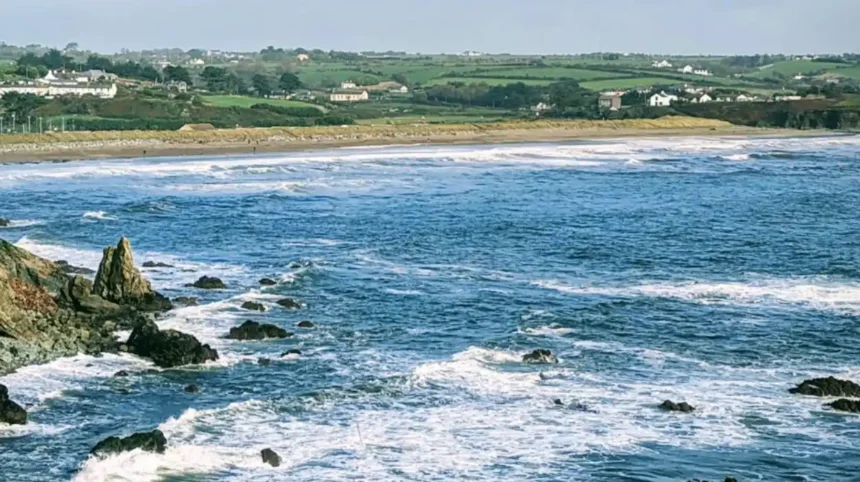
Wales is a distinct country located on the western peninsula of the island of Great Britain, bordered by England to the east and surrounding bodies of water. The country covers a total land area of 20,779 square kilometers, featuring 2,700 kilometers of coastline facing the Irish Sea, the Celtic Sea, and the Bristol Channel. Topographically, Wales is predominantly mountainous, with its highest peaks located in the northern and central regions, most notably Yr Wyddfa, also known as Mount Snowdon, which reaches an elevation of 1,085 meters above sea level.
The country contains three designated national parks covering 20 percent of its total landmass, including Eryri National Park, Bannau Brycheiniog National Park, and the Pembrokeshire Coast National Park. The population of Wales is estimated at 3.1 million people, with the vast majority of residents concentrated in the southern industrial coastal belt surrounding urban centers. The capital city of uk/local/cardiff/">Cardiff sits on the southern coast, forming the central administrative, economic, and cultural hub of the nation alongside other major settlements including Swansea, Newport, and Wrexham.
What Is the Historical Timeline of Welsh Governance?
The political history of Wales spans over a millennium of territorial defense, formal English annexation, and eventual modern democratic devolution within the United Kingdom. Human habitation in Wales dates to the Paleolithic era, with permanent Celtic settlements establishing a distinct language and tribal society prior to the Roman invasion in 48 AD. Following the departure of Roman legions, independent Welsh kingdoms emerged, resisting foreign encroachment until King Edward I of England completed the conquest of Wales in 1283 with the Statute of Rhuddlan.
Formal legislative integration occurred through the Laws in Wales Acts 1535 and 1542 passed under King Henry VIII, which annexed Wales into the English legal system and abolished native Welsh law. The political landscape shifted dramatically in the late twentieth century when Welsh voters approved a referendum in September 1997 to establish a devolved national assembly. The Government of Wales Act 1998 formally created the body now known as the Senedd, or Welsh Parliament, granting legislative authority over healthcare, education, agriculture, local government, transport, and economic development.
How Does the Welsh Language Act Protect Bilingualism?
The Welsh language is a Brythonic Celtic tongue that holds official equal status with English across all public administration and legislative affairs in Wales. Following centuries of linguistic decline due to statutory English enforcement, parliament passed the Welsh Language Act 1967, which permitted the use of Welsh in legal court proceedings for the first time. The framework was strengthened by the Welsh Language Act 1993, establishing the legal principle that Welsh and English must be treated on a basis of equality in public business.
According to government census data, approximately 538,300 people across the nation speak Welsh fluently, representing about 17.8 percent of the total resident population. Modern educational statutes require that all pupils in state schools study the Welsh language as either a primary medium or a core secondary subject up to age sixteen. The Welsh Language Measure 2011 created the independent role of the Welsh Language Commissioner, establishing legally enforceable standards that mandate public bodies, telecom operators, and utility providers to offer bilingual services.
What Are the Key Economic Drivers in Wales?
The Welsh economy has transitioned from historical heavy reliance on extractive industries like coal mining and slate production toward a modern service and high-tech manufacturing sector. During the nineteenth century, South Wales produced a significant portion of the global coal supply, while North Wales operated massive slate quarries such as Penrhyn Quarry, employing thousands of manual laborers. The collapse of heavy manufacturing in the late twentieth century required deep economic diversification across all regions of the country.

Modern economic outputs generate a Gross Value Added of approximately 81.5 billion pounds annually, supported by aerospace, life sciences, renewable energy, financial services, and automotive manufacturing sectors. Examples of major manufacturing installations include the Airbus wing fabrication facility in Broughton and the Royal Mint currency production facility in Llantrisant, which manufactures coins for dozens of global nations. Tourism plays an essential financial role, generating billions of pounds each year as millions of domestic and international visitors travel to national parks, historical castles, and coastal heritage paths.
What Is the Cultural Heritage and National Identity of Wales?
Welsh culture is defined by deep literary traditions, distinct musical forms, ancient mythology, and recognized national symbols that distinguish the country within the United Kingdom. The official flag of Wales features Y Ddraig Goch, a prominent red dragon set against a field of white and green, legally recognized as the official national flag in 1959. National symbols include the leek and the daffodil, both tied to historical military events and the patron saint, Saint David, whose feast day is celebrated annually on March 1.
Welsh literary traditions are showcased during the National Eisteddfod, a competitive artistic festival tracing its historical roots back to Lord Rhys of Deheubarth in the year 1176. Musical heritage is anchored by choral singing traditions, particularly male voice choirs that originated in industrial mining valleys during the eighteenth and nineteenth centuries. The country maintains four recognized UNESCO World Heritage Sites, including the Castles and Town Walls of King Edward I in Gwynedd, the Pontcysyllte Aqueduct, the Slate Landscape of Northwest Wales, and the Blaenavon Industrial Landscape.
Frequently Asked Questions
Is Wales considered an independent country?
Wales is an official country that operates as part of the United Kingdom alongside England, Scotland, and Northern Ireland. It possesses its own devolved parliament that governs internal matters like health and education, while the UK Parliament retains control over foreign policy, defense, and macroeconomics.
What is the capital city of Wales?
Cardiff is the official capital city of Wales, holding this status since its formal designation in 1955. It is located on the southern coast of the country and serves as the center for administration, culture, commerce, and national government.
What languages are spoken in Wales?
Wales is a bilingual nation where both English and Welsh hold official legal status. English is spoken by almost the entire population, while Welsh is spoken fluently by roughly eighteen percent of residents, with strong concentration in northern and western regions.
What is the national symbol on the Welsh flag?
The national flag of Wales features a large red dragon known as Y Ddraig Goch set against a background split horizontally into white and green halves. This ancient red dragon symbol was officially recognized as the country’s national flag in 1959.
How big is Wales compared to other countries?
Wales covers a total area of approximately 20,779 square kilometers, which is roughly 8,023 square miles. In terms of land area, it is similar in size to Slovenia, about half the size of the Netherlands, or slightly smaller than the US state of New Jersey.