
Devil’s Bridge Falls Wales is a natural gorge and geological landmark located twelve miles east of Aberystwyth in the Cambrian Mountains of Ceredigion. It features a unique three-tiered bridge architectural structure spans over a 300-foot cascade formed by the River Mynach.
- What Is The History Behind The Three Stacked Bridges At Devil’s Bridge?
- What Is The Legend Associated With The Origin Of Devil’s Bridge?
- What Are The Hydrological Features And Cascade Stages Of Mynach Falls?
- How Do Visitors Navigate The Nature Trails And Jacob’s Ladder?
- What Ecological Habitat And Wildlife Exist Within The Mynach Gorge?
- What Role Does The Vale Of Rheidol Railway Play In Accessing Devil’s Bridge?
- What Visitors Information And Safety Guidelines Apply At The Attraction?
- Frequently Asked Questions
Devil’s Bridge Falls Wales sits within the historic county of Ceredigion in West Wales, positioned precisely at the junction where the River Mynach converges with the River Rheidol. The elevation of the surrounding Cambrian Mountains creates steep topography, resulting in a dramatic gorge cut through Silurian mudstone and sandstone rock layers. The geographical feature attracts substantial tourism to West Wales due to its combination of natural hydrology and engineering heritage. The site is recognized nationally as a Site of Special Scientific Interest owing to its rare ancient oak woodland habitat and moss ecosystems.
Hydrological discharge from the surrounding peat bogs feeds the Mynach Waterfalls, ensuring continuous flow across all four main cascade stages year round. Visitors access the rural location via the A4120 road, which connects the inland mountain pass directly to the coastal hub of Aberystwyth. The site represents an critical hydrological catchment area for the Rheidol valley hydroelectric scheme, demonstrating significant industrial and natural utility. The complex geology of the gorge provides researchers with clear exposed strata dating back hundreds of millions of years, making it an essential geographical research site in Wales.
What Is The History Behind The Three Stacked Bridges At Devil’s Bridge?
The three stacked bridges at Devil’s Bridge represent three distinct eras of bridge construction spanning from the medieval period to the twentieth century. Each structure was built directly on top of the previous arch to cross the deep gorge without demolishing existing stone foundations.
The lower bridge arch is the oldest structure, built between 1075 and 1200 during the medieval era, likely by the monks of Strata Florida Abbey to allow safer travel across the valley. The original stone arch spans the narrowest point of the Mynach Gorge, situated approximately ninety feet above the rushing torrent below. By the late eighteenth century, increased traffic made the medieval bridge insufficient, leading to the construction of a second stone arch directly above the original in 1753.
This middle arch expanded the road width and reinforced the lower structural stability without requiring removal of the ancient masonry underneath. In 1901, Ceredigion County Council erected a modern iron bridge over the second arch to accommodate heavy motorized vehicles crossing the valley. The current arrangement features three distinct architectural eras visible in a single vertical alignment: medieval stone masonry, Georgian arch construction, and Victorian ironwork. The stacked design prevents structural collapse by distributing modern traffic weight across reinforced abutments rooted deep into the bedrock. Preserving all three layers provides structural engineers and architectural historians with a physical timeline of civil engineering techniques used across eight centuries in rural Wales.
What Is The Legend Associated With The Origin Of Devil’s Bridge?
The folk legend states that the original bridge was constructed by the Devil for an old woman named Megan Llandunach in exchange for the soul of the first living creature that crossed the stone arch over the deep gorge.
According to Welsh folklore documented in the nineteenth century, an elderly woman named Megan lost her cow on the opposite side of the steep Mynach Gorge. The Devil appeared to her and offered to construct a bridge across the chasm on the condition that he would claim the soul of the first living entity that crossed it. After the stone bridge appeared, the woman clever tricked the Devil by tossing a crust of bread across the river, causing her pet dog to run across first. The Devil was forced to accept the soul of a dog instead of a human soul, leaving the area in embarrassment and never returning to Ceredigion. This mythic origin story gave the location its modern name, Devil’s Bridge, or Pontarfynach in the Welsh language, which translates directly to Bridge over the Mynach. While historical documentation attributes the lower bridge build to medieval monastic builders, the folklore remains an essential aspect of local heritage and tourism narrative. The legend is commemorated at the site through interpretive signage and educational materials distributed to visiting scholars and tourists. Local cultural institutions preserve the oral tradition as an example of traditional Welsh folklore where human wit triumphs over supernatural entities.
What Are The Hydrological Features And Cascade Stages Of Mynach Falls?
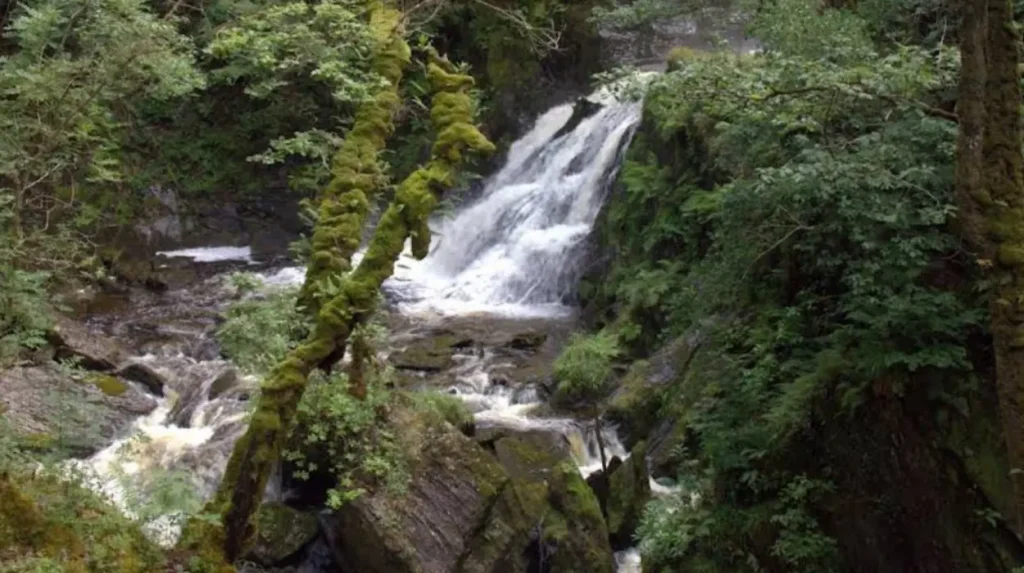
Mynach Falls consists of four distinct waterfall drops that collectively descend 300 feet (91.4 meters) down the sheer slate walls of the Mynach Gorge into the River Rheidol. The total hydraulic drop makes it one of the tallest waterfalls in Wales.
The river flow begins above the upper bridge, where the water squeezes through a narrow rocky cleft before making its first vertical drop of twenty feet. The second tier plummets thirty feet into a deep plunge pool known historically as the Punchbowl, formed by centuries of hydraulic erosion grinding rocks into circular hollows. The third cascade drops fifty feet over a jagged rock face, dispersing energy before the water reaches the final, most dramatic vertical plunge. The fourth drop falls 110 feet continuously down a vertical cliff face, generating constant mist and supporting rare bryophyte and lichen growth on the gorge walls.
The total continuous drop measures approximately 300 feet over a horizontal distance of less than 100 yards, producing significant hydraulic energy during periods of high rainfall. Peak water volumes occur during late autumn and winter when rainfall across the Cambrian Mountains upland drainage basin surges into the river catchment system. The constant exposure to moisture creates an unusual microclimate within the gorge, characterized by high humidity and minimal direct sunlight exposure. Hydrologists monitor the flow rates regularly because sudden water surges can alter path safety and alter the structural stability of the lower trail steps.
How Do Visitors Navigate The Nature Trails And Jacob’s Ladder?
Visitors navigate Devil’s Bridge Falls via two circular walking trails that feature steep stone steps, narrow pathways, and elevated viewing platforms designed to showcase the waterfalls and stacked bridges. The main trail includes the famous Jacob’s Ladder sequence of 675 steps.
The primary walking route is the Waterfalls Nature Trail, a difficult circular path that takes approximately forty-five minutes to complete due to its steep descent and ascent. Hikers descend deep into the ancient oak woodland gorge, crossing timber bridges and navigating uneven slate staircases cut directly into the hillside rock. The most challenging section of this trail is Jacob’s Ladder, a continuous set of 675 steep stone steps that leads visitors down to the valley floor and back up to the exit. For visitors seeking a shorter or less strenuous walk, the Punchbowl and Three Bridges Trail provides a fifteen-minute round trip along flat paved paths and gentle slopes. This alternative route provides clear visual access to the three stacked bridges and the upper potholes without requiring visitors to climb down into the deep canyon.
Safety infrastructure along both trails includes wooden handrails, wire mesh reinforcement on slippery surfaces, and designated viewing huts to protect hikers during sudden rain showers. The trails require sturdy footwear with non-slip soles due to perpetual dampness caused by waterfall spray and thick canopy cover. Trail maintenance teams continuously monitor the paths to repair stone steps worn down by hundreds of thousands of annual visitors.
What Ecological Habitat And Wildlife Exist Within The Mynach Gorge?
The Mynach Gorge contains a ancient sessile oak woodland ecosystem that supports rare lower plants, specialized mosses, breeding bird species, and diverse aquatic life under Site of Special Scientific Interest protection.
The dense canopy of the gorge is dominated by Quercus petraea (sessile oak), Betula pubescens (downy birch), and Sorbus aucuparia (rowan), creating a temperate rainforest environment. High atmospheric humidity generated by the cascading waterfalls creates ideal conditions for Atlantic bryophytes, liverworts, and rare lichen species that coat the damp rock faces. Birdlife within the gorge includes the Cinclus cinclus (white-throated dipper), Motacilla cinerea (grey wagtail), and Phoenicurus phoenicurus (redstart), which nest along the damp cliff ledges and river margins. Raptors such as Milvus milvus (red kite) and Buteo buteo (common buzzard) frequently soar over the open canopy above the Rheidol valley.
Mammals present in the surrounding forest include the Martes martes (pine marten), Pipistrellus pipistrellus (common pipistrelle bat), and Meles meles (Eurasian badger). The cold, oxygenated water of the Mynach river supports healthy populations of Salmo trutta (brown trout) and various benthic macroinvertebrates that feed the local river ecosystem. Conservation guidelines strictly restrict off-path hiking to prevent trampled soil from eroding delicate root systems and destroying rare moss habitats on the gorge floor. Educational signs along the public trails highlight the importance of protecting this fragile temperate rainforest habitat from climate impacts.
What Role Does The Vale Of Rheidol Railway Play In Accessing Devil’s Bridge?
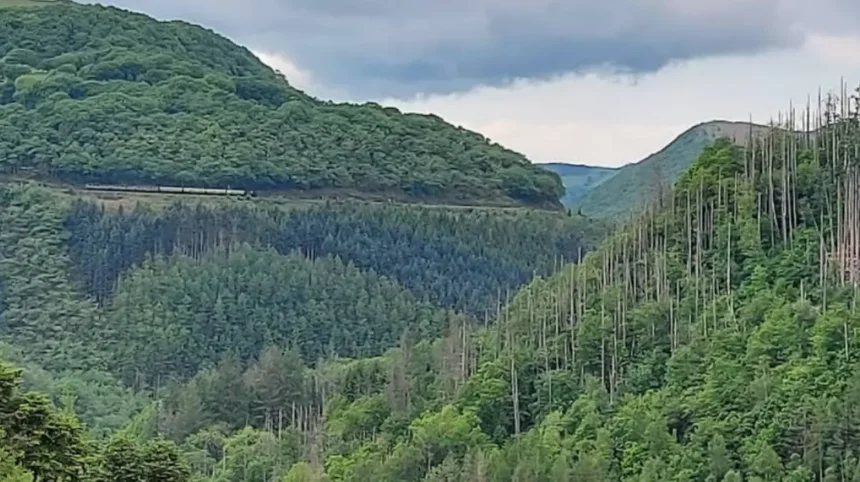
The Vale of Rheidol Railway is a historic narrow-gauge steam railway that has transported tourists between the coastal town of Aberystwyth and Devil’s Bridge since its opening in 1902.
Engineered specifically to haul timber, lead ore, and passengers through the rugged Rheidol Valley, the railway operates on a two-foot (610mm) narrow gauge track system. The twelve-mile line climbs nearly 700 feet from sea level at Aberystwyth station to its terminus at Devil’s Bridge Station, located a short walk from the waterfall entrance. Vintage steam locomotives, including historic engines built in the early twentieth century, haul restored wooden carriages along steep cliff edges and through dense woodland.
The railway served as an essential transport link for rural communities in Ceredigion before automobile ownership became widespread across West Wales. Today, the railway operates primarily as a heritage tourism attraction, carrying thousands of visitors to the falls during the operational season from spring through autumn. The journey takes approximately one hour each way, offering views of the valley, red kite feeding areas, and the Cambrian Mountains landscape. The terminus station at Devil’s Bridge features visitor amenities, tea rooms, and historical exhibits detailing the industrial heritage of the mineral railways in Wales. Integrating the steam train journey with a walking tour of the waterfalls remains one of the most popular historic travel itineraries in West Wales.
What Visitors Information And Safety Guidelines Apply At The Attraction?
Devil’s Bridge Falls operates as a paid private attraction requiring admission fees, suitable physical fitness, and strict adherence to trail safety guidelines due to challenging terrain.
The site operates an automated turnstile entry system that accepts card payments and pre-booked digital tickets at the main entrance building. Admission fees fund the ongoing structural maintenance of the stone steps, handrails, timber bridges, and natural conservation work throughout the gorge. The attraction is open daily from spring through late autumn, with limited opening hours or complete weather closures during severe winter conditions. Visitors with heart conditions, respiratory issues, or mobility impairments are advised against attempting the full Jacob’s Ladder trail due to the strenuous physical exertion required.
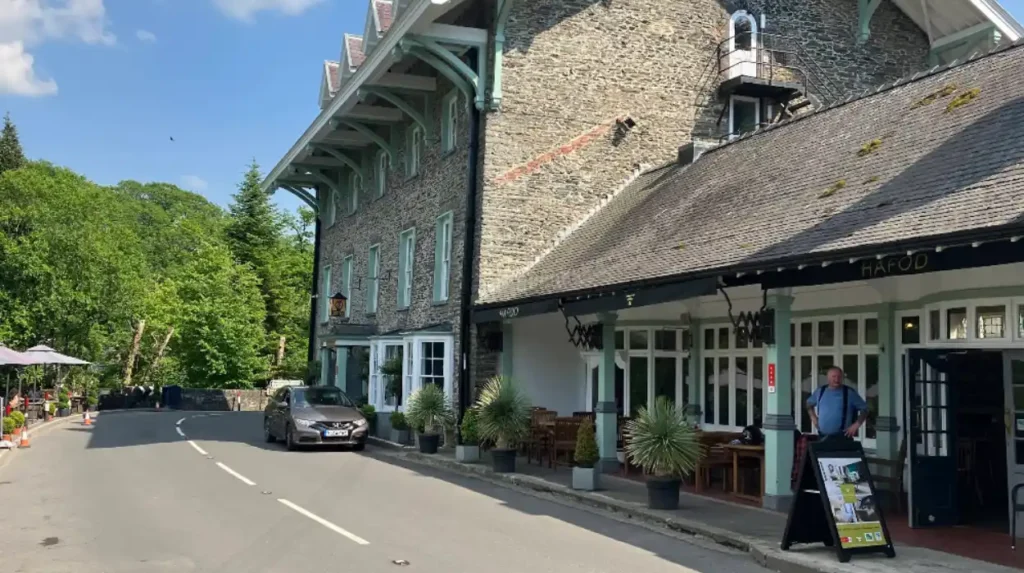
Wheelchairs and pushchairs can access the viewing area near the hotel and bridge road, but cannot enter the narrow, step-heavy canyon trails. Dogs are permitted on the nature trails provided they are kept on short leashes at all times to protect local wildlife and ensure safety on narrow ledge paths. Visitors must remain on marked paths at all times, as stepping over safety barriers onto wet slate rocks carries severe risks of slipping into deep water currents. Appropriate outdoor clothing, including waterproof jackets and sturdy hiking boots, is strongly recommended regardless of weather forecasts due to localized valley weather shifts.
Frequently Asked Questions
What is the best time of year to visit Devil’s Bridge Falls Wales?
The best time to visit is during spring or autumn when rainfall increases the water volume over Mynach Falls while weather conditions remain mild for hiking. Visiting during these seasons also avoids peak summer tourist crowds on the narrow step trails.
How hard is the walk down to Devil’s Bridge Falls?
The main Waterfalls Trail is physically demanding due to Jacob’s Ladder, which features 675 steep and uneven stone steps. It requires good physical fitness, balance, and sturdy footwear, making it unsuitable for individuals with mobility challenges.
Can you see Devil’s Bridge without paying an entry fee?
You can view the topmost modern road bridge from the public highway without paying a fee. However, accessing the views of all three stacked bridges, the Punchbowl, and the 300-foot waterfalls requires purchasing a ticket to enter the private nature trail.
Are dogs allowed on the trails at Devil’s Bridge Falls?
Yes, dogs are welcome on the nature trails but must be kept on a short leash at all times. The steep steps, narrow paths, and drops make strict leash control essential for the safety of pets and other hikers.
How long does it take to walk around Devil’s Bridge Falls?
The full Waterfalls Nature Trail takes approximately 45 to 60 minutes to complete depending on your fitness level and pace. The shorter Punchbowl Trail takes around 15 to 20 minutes for a quick viewing experience.
What Is Devil’s Bridge Falls Wales And How Do You Visit It