

Key Points
- Firefighters were called to a kitchen blaze in Newport, Shropshire, on Tuesday, 30 September, 2025, according to Shropshire Fire and Rescue Service.
- Six fire appliances, including an Incident Command Unit, were mobilised from Albrighton, Newport, Telford, Tweedale and Wellington.
- Operations and Safety officers were also in attendance at the scene.
- Crews used breathing apparatus, hose reel jets and positive pressure ventilation to deal with the incident.
- The fire involved the ground-floor kitchen of a public house, the Barley Mow Inn on High Street in Newport.
- Police were also present at the scene.
- Shropshire Fire and Rescue Service said the stop message was received at 00:47 on Wednesday, 1 October, 2025.
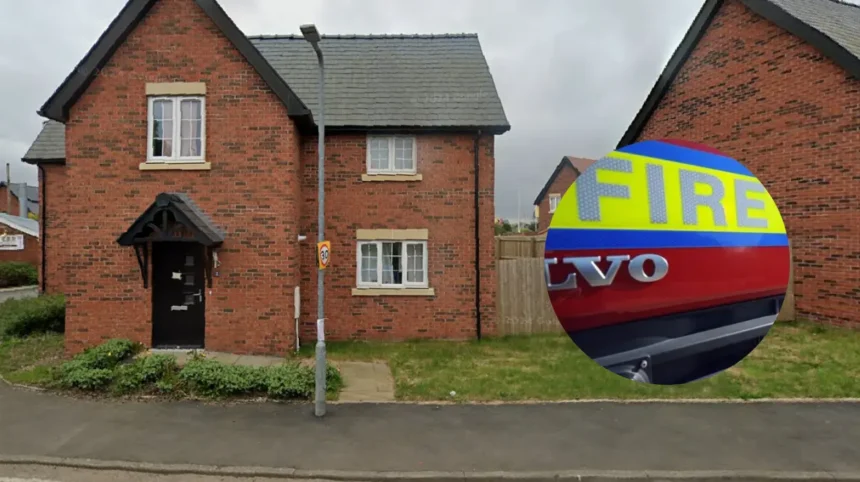
Newport Fire (Wales Times) July 2026 – Firefighters rush to kitchen blaze in uk/local/newport/">Newport as crews tackle a fire at the Barley Mow Inn on High Street, with six appliances called to the scene and police supporting the response.
As reported by Shropshire Fire and Rescue Service, crews were mobilised after a call at 20:29 on Tuesday, 30 September, 2025, about a property fire in Newport. The service said six fire appliances, including the Incident Command Unit, were sent from Albrighton, Newport, Telford, Tweedale and Wellington, while Operations and Safety officers attended the incident.
In the initial response, firefighters used breathing apparatus, hose reel jets and positive pressure ventilation to bring the situation under control. The fire service said police were also at the scene, assisting emergency crews as they worked at the pub.
Where was the fire reported?
The incident was reported at the Barley Mow Inn, High Street, Newport, in the station ground of Newport, according to the fire service log. Shropshire Fire and Rescue Service classified the incident as a property fire and noted that it involved the ground-floor kitchen of the public house.
The service’s record states that the stop message was received at 00:47 on Wednesday, 1 October, 2025. That suggests crews remained on duty for several hours after the initial call while the fire was dealt with and the scene made safe.
What was used at the scene?
According to the fire service incident record, crews deployed breathing apparatus, hose reel jets and positive pressure ventilation fans. These are standard firefighting tools used to protect firefighters, attack flames and clear smoke from buildings after a fire.
The log also says six breathing apparatus sets, two main jets, three hose reel jets and two positive pressure ventilation fans were in use. That level of equipment indicates the incident needed a multi-appliance response rather than a single crew call-out.
What does the record say about the incident?
Shropshire Fire and Rescue Service’s public incident entry gives the clearest account of what happened, but it does not provide further detail on the cause of the fire or whether anyone was injured. It also does not state how much damage was caused to the building.
The available record focuses on the operational response: the location, the number of appliances, the equipment used and the attendance of police and officers. No additional statement from the pub or from investigators is included in the source material provided.
Why did the response matter?
A kitchen fire in a public house can pose risks beyond the room where it starts, because smoke can spread quickly through a building and affect upper floors, staff areas and adjoining rooms. That is why positive pressure ventilation and breathing apparatus are often used together in these incidents.
The scale of the response suggests firefighters treated it as a serious structure fire rather than a minor contained blaze. The attendance of multiple crews from different stations also shows the incident was managed as part of a wider emergency response.
Background of this development
Kitchen fires are among the most common building fires because cooking equipment, oils and electrical appliances can quickly ignite if left unattended or if faults occur. In a pub or restaurant setting, the risk can be higher because of frequent use, busy service periods and the presence of ventilation systems, storage and electrical equipment.
Shropshire Fire and Rescue Service routinely publishes incident logs that record the time, location, appliance deployments and operational details of call-outs. In this case, the record identifies the Barley Mow Inn in Newport and confirms the fire was in the ground-floor kitchen, but it does not give a cause or a follow-up investigation outcome.
Prediction: How could this affect local businesses and residents?
For local businesses, incidents like this can lead to temporary closures, repair costs and possible reviews of fire safety procedures, particularly in kitchens and shared service areas. For nearby residents and traders, it can also mean a stronger focus on emergency access, smoke alarms and evacuation planning if similar incidents occur again.
If investigators find that the fire was accidental, the main effect is likely to be operational: repairs, insurance checks and safety reviews. If it reveals a preventable issue, it could prompt closer attention to kitchen maintenance and staff training across similar venues in Newport and the wider Shropshire area.