

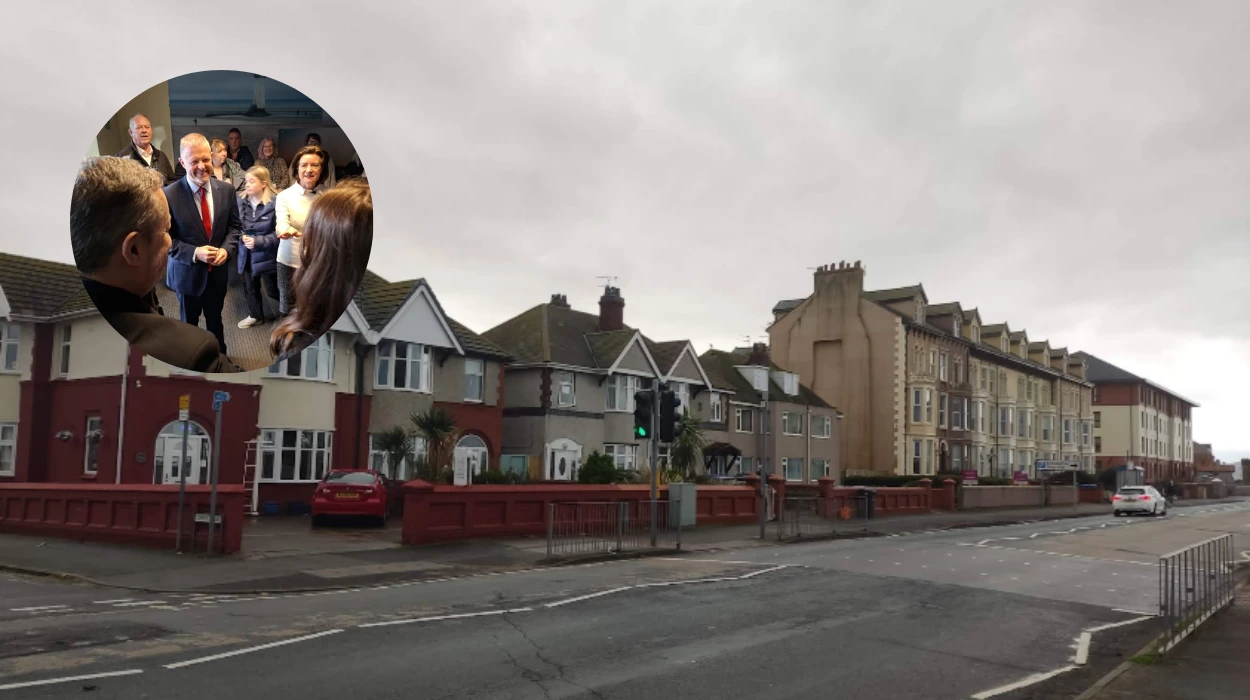
Key Points
- The Welsh Government has announced a £33 million redevelopment of the Royal Alexandra Hospital site in Rhyl, north Wales.
- The project, unveiled by Cabinet Secretary for Health and Social Care Jeremy Miles and First Minister Eluned Morgan, includes a new minor injuries unit to treat over 20,000 patients annually.
- The facility aims to ease pressure on the emergency department at Ysbyty Glan Clwyd in Bodelwyddan.
- Additional features comprise a 14-bed “ready-to-go-home” reablement unit for patient transitions, expanded radiology services, and four new dental suites to enhance NHS dentistry access and training.
- The first phase totals £33 million, with a further £60 million planned across two phases; completion expected in 2027.
- Jeremy Miles described the plan as “really good news” for Rhyl and north Wales, projecting over 4,500 fewer bed days at Ysbyty Glan Clwyd.
- Miles noted the design reflects modern healthcare needs, adapting from earlier proposals.
- Plaid Cymru health spokesperson Mabon ap Gwynfor MS welcomed the investment but criticised Labour for “dithering” after 27 years, citing a £1 billion NHS maintenance backlog and Betsi Cadwaladr Health Board crisis.
- Rhyl Welsh Conservative councillor Brian Jones called the announcement an “insult” and “pure political gimmick” ahead of May Senedd elections, noting it scales down from a promised 30-bed facility over a decade ago.
- Jones urged the First Minister to visit Ysbyty Glan Clwyd’s A&E to witness conditions.
- The event occurred at the Royal Alexandra Hospital, with Miles speaking to the local democracy reporting service.
Wales (The Wales Times) – February 23, 2026 – The Welsh Government has unveiled ambitious plans for a £33 million redevelopment of the Royal Alexandra Hospital site, hailed by Health Secretary Jeremy Miles as “really good news” for the region despite sharp criticism labelling it a pre-election stunt.
This announcement, made jointly by Cabinet Secretary for Health and Social Care Jeremy Miles and First Minister Eluned Morgan, promises a purpose-built facility tailored to contemporary healthcare demands. The scheme responds to longstanding pressures on local services, particularly the overburdened emergency department at Ysbyty Glan Clwyd in Bodelwyddan.
What Does the £33m Redevelopment Entail?
The new facility at the Royal Alexandra Hospital will feature a minor injuries unit designed to handle more than 20,000 patients each year. This unit forms the cornerstone of the first phase, funded entirely by the Welsh Government at £33 million, with an additional £60 million allocated across two phases.
As detailed in the official unveiling, the site will incorporate a 14-bed “ready-to-go-home” reablement unit. This innovative space integrates NHS and social care teams to support patients transitioning home post-medical or surgical treatment, reducing hospital stays elsewhere.
Expanded radiology services and four new dental suites are also planned, aiming to improve NHS dentistry access while creating training opportunities for dental nurses. Completion is slated for 2027, positioning the project as a forward-looking investment.
Why Is This ‘Really Good News’ for North Wales?
Speaking directly to the local democracy reporting service at the Royal Alexandra Hospital, Cabinet Secretary Jeremy Miles defended the plans robustly.
“It is really good news for people in Rhyl and really good news for people right across North Wales,”
he stated.
Miles elaborated on the investment’s scope:
“It was a £33m investment, which we are announcing today in the Royal Alex. It’s the first of two stages, another £60m in total investment across the two phases. So what we are going to have in the Royal Alexandra as part of the first phase is a new minor injuries unit.”
He projected significant relief for neighbouring facilities:
“We think about 21,000 people a year are going to come to it, another 14 beds, low intensity beds, which basically means beds that you are ready to stay, and when you’re about to go home but not quite ready to go home. And what we think that means is obviously it is great for people in Rhyl, but also, for example, it’ll mean more than four and a half thousand less bed days being taken up in (Ysbyty) Glan Clwyd. So it will make a real difference right across North Wales.”
Miles addressed the scaled-down nature compared to prior visions:
“It is a different proposal. The good thing is we’ve been able to take account of changes in the meantime and how health care is delivered. So nobody wants facilities for 25 years ago. They want facilities that are going to be fit for 25 years in the future.”
This emphasis on adaptability underscores the Welsh Government’s rationale, framing the project as responsive to evolving healthcare delivery rather than a rigid adherence to outdated plans.
Has Labour ‘Dithered’ on North Wales Healthcare?
Opposition voices have tempered enthusiasm with pointed critique. Plaid Cymru health spokesperson Mabon ap Gwynfor MS acknowledged the funding but questioned its timing and context.
“While the investment is welcomed, the people of north Wales have been waiting too long for this announcement,”
he said, as reported across multiple outlets covering the event.
Mabon ap Gwynfor continued:
“While Labour dithered – the people of north Wales have faced worsening health standards with increased pressure on other hospitals regionally. After 27 years of mismanagement under Labour, the NHS estate faces a maintenance backlog of over a billion pounds and Betsi Cadwaladr Health board is in crisis.”
He positioned Plaid Cymru as the solution:
“The people of north Wales will have little faith in today’s announcement’s ability to undo these failures. Only Plaid Cymru has real plans for our NHS to ensure the people of Wales get the health service they deserve.”
This critique highlights broader concerns over the Betsi Cadwaladr University Health Board’s operational challenges, including strained A&E departments, which the new facility seeks to alleviate.
Is This Announcement an ‘Insult’ to Rhyl Residents?
Local Conservative figures echoed delays and dilutions. Rhyl Welsh Conservative councillor Brian Jones described the scheme as falling
“well short of what residents were promised more than a decade ago.”
In a forthright response, Councillor Jones stated:
“My response to the First Minister’s announcement today is that, in many respects, it is an insult to the residents of Rhyl and the surrounding area to announce a project which is a shocking watering down of a facility miles better that was promised over a decade ago.”
He spotlighted specifics:
“The original bed capacity announced over a decade ago was for 30 beds. What has been announced today will not help the current problems in North Wales A&E departments under Betsi Cadwaladr University Health Board. It is an insult to the people of Rhyl and surrounding area and a pure political gimmick for the upcoming Senedd elections, which I’m sure the public will not be taken in by.”
Jones added a call to action:
“I sincerely hope that the First Minister paid a visit to the A&E at Ysbyty Glan Clwyd to see the awful conditions that prevail there for residents and frontline staff.”
His remarks frame the announcement amid May’s Senedd elections, suggesting electoral motivations over substantive delivery.
What Broader Challenges Face North Wales NHS?
The redevelopment arrives against a backdrop of acute pressures. Ysbyty Glan Clwyd’s emergency department exemplifies regional strains, with the minor injuries unit poised to divert approximately 21,000 cases annually. The reablement beds target “low intensity” needs, freeing capacity for acute care.
Betsi Cadwaladr Health Board, overseeing the area, grapples with a reported £1 billion maintenance backlog across the Welsh NHS estate, as cited by Mabon ap Gwynfor. Frontline conditions, as invoked by Councillor Jones, remain a flashpoint, with calls for ministerial scrutiny.
Jeremy Miles’ vision counters this by prioritising future-proofing: facilities “fit for 25 years in the future.” Yet opposition narratives persist, questioning whether this first phase truly addresses a decade of deferred promises.
Who Stands to Benefit Most from the Plans?
Rhyl residents gain immediate proximity to a minor injuries unit and dental services, historically distant. North Wales broadly benefits via reduced bed days at Ysbyty Glan Clwyd—over 4,500 annually—easing regional flow.
Dental nurses secure training avenues, bolstering workforce development. Patients nearing discharge receive holistic support through the reablement unit, potentially shortening overall hospital tenures.
First Minister Eluned Morgan’s presence signals cross-party governmental commitment, though political divides sharpen scrutiny.
When Will the Facility Open and What Next?
Targeted for 2027 completion, the project unfolds in phases, with £60 million more earmarked. This timeline follows years of consultation and revision, adapting to healthcare shifts.
Monitoring delivery will test claims amid election rhetoric. Stakeholders await tangible progress on a site long pivotal to local health.
In summary, while Jeremy Miles champions transformative relief, critics demand accountability for past shortfalls. North Wales watches as plans move from announcement to bricks and mortar.
