
Key Points
- The Carmarthen County Hall is located on a ground that is said to have once contained a medieval castle and a former prison and site of many executions.
- The land had been attacked by several Welsh princes like Gruffydd ap Rhys, Llywelyn the Great, and Owain Glyndŵr.
- The design for Carmarthen Gaol was provided by the architect John Nash and completed in 1792.
- Since 1817, executions would be conducted within the premises of the prison rather than being carried out in open public places.
- The last public execution to take place in Carmarthen was in 1829 when David Evans was hanged in front of an audience of 10,000 people.
- Execution was last carried out at Carmarthen Gaol in 1894 when Thomas Richards, a sailor, was hung for murder.
- The prison had ceased operations in 1922 and the structure was pulled down during the 1930s.
- Finally, the present day County Hall was completed in 1955 and was officially opened in 1956.
- Currently, the Carmarthenshire County Council makes use of the Grade II listed structure.
- Ground-penetrating radar tests are being considered to find out whether there are any remains of five executed prisoners buried under a car park.
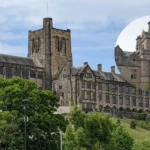
Wales (Wales Times) September 19, 2026 — The Carmarthen office building now used by Carmarthenshire County Council stands above the River Towy on a site shaped by medieval conflict, imprisonment and capital punishment. The present County Hall is a prominent civic building, but the land beneath and around it was once occupied by a uk/local/swansea/castle/">castle and later by Carmarthen Gaol.
- Key Points
- How did the castle become a prison?
- Who were the prisoners being investigated?
- What did the radar survey reveal?
- How did the present County Hall emerge?
- What does this development mean for local history?
- Background: Why was Carmarthen Gaol important?
- Prediction: How could this affect Carmarthenshire residents and visitors?
The history of the site has gained renewed attention because of an investigation into whether the remains of five prisoners executed at the former gaol could still lie beneath a modern car park. The investigation used specialist radar equipment rather than excavation, and the council said the work did not disturb the surface.
The five men are believed to have been executed between 1818 and 1894. They included four men convicted of murder and one convicted of forging Bank of England notes. The search was prompted by research suggesting that the men may have been buried within the prison grounds and never exhumed after the gaol was demolished.
The site’s earlier history reaches back almost a thousand years. A castle associated with Carmarthen was established in the early 12th century, although an earlier stronghold known as Rhyd-y-gors Castle had existed elsewhere in the town from about 1094. The castle in the town centre became a strategic location during repeated conflicts involving Welsh rulers and English authorities.
The site was attacked by Gruffydd ap Rhys during the 12th century and later captured and destroyed by Llywelyn the Great in the early 13th century. After the castle was recaptured in 1223, it was substantially rebuilt. By 1275, the complex included a great tower, a gatehouse and a dungeon.
The castle was attacked again during the early 15th century, when Owain Glyndŵr’s revolt challenged English rule in Wales. By 1456, the site was held by Edmund Tudor, father of the future King Henry VII. Edmund Tudor died at the castle after contracting plague.
How did the castle become a prison?
By the end of the 18th century, the site had developed into a prison. Carmarthen Gaol was designed by John Nash, an architect who later became associated with major buildings and planning projects in London. Nash moved to Carmarthen in 1784 and designed a new county jail intended to improve conditions for prisoners.
The gaol was completed in 1792 and expanded in 1869. Although the new prison was presented as a more organised institution, the site remained connected with the harsh criminal justice system of the period.
At that time, more than 200 offences could carry the death penalty. Executions connected with Carmarthen had previously taken place at locations including Babell Hill in Pensarn and Royal Oak Common in Johnstown. From 1817, however, hangings took place within the prison site.
Public executions continued until 1829. The final public execution was that of David Evans, a schoolteacher convicted of murdering Hannah Davies, his pregnant partner. The killing took place near Llanybydder, where Davies’ body was discovered in a stream after local people noticed that the water had turned red.
Evans had used a billhook during the attack and later confessed to striking Davies repeatedly. On 21 September 1829, he was taken to the gallows at Carmarthen Gaol while thousands gathered to watch. The crowd has been estimated at as many as 10,000 people.
The execution did not proceed smoothly. The rope or part of the execution apparatus failed during the first attempt, causing Evans to fall on to the platform. He reportedly pleaded in Welsh that he had already suffered punishment and should not be forced to endure it twice. The authorities nevertheless carried out the execution a second time.
The event marked the end of public hangings in Carmarthen, although executions continued inside the prison for several more decades.
Who were the prisoners being investigated?
The modern search concerns five men whose executions occurred between 1818 and 1894. Their cases show how the criminal justice system changed over the course of the 19th century, from public punishment attended by large crowds to executions conducted within prison walls.
William Baines, from St Clears, was executed on 23 May 1818 for counterfeiting and distributing Bank of England notes. He reportedly claimed that he had forged the notes after accidentally burning genuine money. Baines offered to help the authorities combat counterfeiting in exchange for a pardon, but the offer was rejected.
A forged £2 note attributed to Baines is preserved in Carmarthenshire. His mother and sister were also sentenced to prison for their involvement, but they were not executed.
David Evans was executed in 1829 for the murder of Hannah Davies. His death was the last public execution at Carmarthen Gaol and was witnessed by a crowd estimated at about 10,000 people.
David Rees, aged 23, was hanged in 1888 for killing a messenger connected with the tin industry in Llanelli. The victim was reportedly carrying between £500 and £600. The crime was witnessed by an 11-year-old boy.
Rees wrote a confession on the night before his execution. He said that heavy drinking had left him “muddled and confused” and expressed sorrow for what he had done. The gallows used for his execution had reportedly been moved from Dolgâu Prison after that facility closed.
George Thomas, aged 25, was executed on 13 February 1894 for murdering 17-year-old Jane Jones in Carmarthen. Contemporary reporting described him as calm before his death. The case was presented in court as a deliberate and particularly brutal killing.
Thomas had previously written letters to his parents from Carmarthen Gaol. In them, he discussed his imprisonment and his anxiety that his parents were no longer responding to him. He wrote that each day inside the prison seemed to last a week.
The fifth man was Thomas Richards, a sailor who became the last person executed at Carmarthen Gaol. He was hanged on 29 November 1894 for murdering his sister-in-law, Mary Davies, during a robbery at her home in Borth. An immense crowd gathered outside the prison to witness the final execution.
The men are believed to have been buried in the former prison grounds. Former Carmarthen mayor Richard Goodridge has spent years researching the site and believes the remains were not removed when the prison was later demolished.
What did the radar survey reveal?
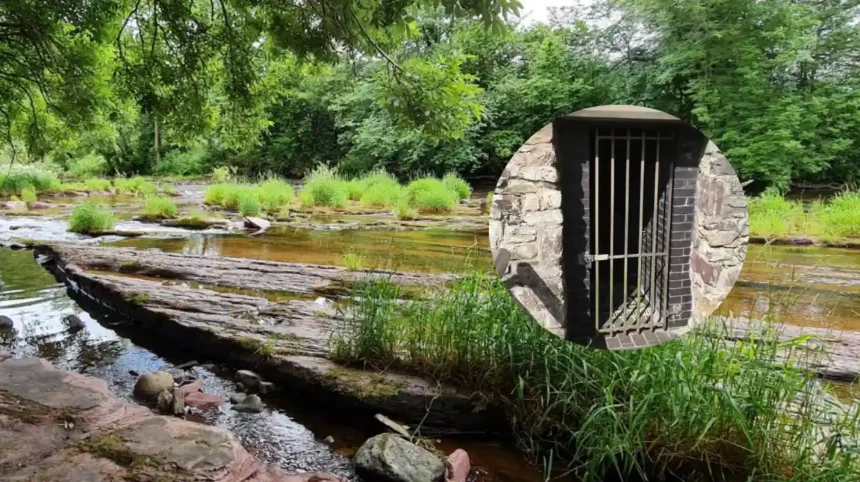
The investigation used ground-penetrating radar to examine the former prison gardens, now associated with the council headquarters and its car park. Surveyor Shane Gwilt carried out the scanning, and the data was sent to Italy for further analysis.
The investigation was intended to establish whether unusual underground features could correspond to burial locations. Results were expected after the data had been examined, although the survey did not confirm that human remains had been found.
Goodridge described the possibility of locating the graves as a long-standing mystery. He said his research led him to believe that the five men remained where they were originally buried.
Councillor Alun Lenny, who oversees resources at Carmarthenshire County Council, said the survey did not disturb the car park surface. He also said that the council did not incur any cost from the work.
The council’s position is that any remains found would not be disturbed or removed. That approach would leave the site intact while allowing historians and investigators to establish whether burial evidence exists beneath the modern development.
The investigation is significant because the prison itself no longer survives. The gaol was closed in 1922, and prisoners were transferred to Swansea Prison. The former building was later demolished in the 1930s, when the site was redeveloped for county administration.
How did the present County Hall emerge?
After the prison closed, the former gaol site was acquired for public administration. County Hall was designed by Percy Thomas, an architect known for work including Swansea Guildhall and buildings connected with Aberystwyth University.
Construction was delayed by the Second World War. The building was eventually completed in 1955 and officially opened on 1 February 1956. It became the headquarters of the local authority and later served as the base of Dyfed Council following local-government reorganisation in 1974.
In 1996, after the implementation of the Local Government (Wales) Act 1994, it became the headquarters of Carmarthenshire County Council. The building is Grade II listed and has been described as one of Wales’ notable 20th-century public buildings.
County Hall is positioned on what is commonly known as Jail Hill. Its height and symmetrical design make it one of Carmarthen’s most recognisable landmarks, visible from parts of the town and from across the River Towy.
Its current use contrasts sharply with the site’s former functions. The building now accommodates public administration, while the same location once served as a defensive stronghold, a prison and an execution site.
What does this development mean for local history?
The radar survey could provide physical evidence for an aspect of Carmarthen’s history that has largely survived through written records and local research. If the results indicate burial sites, they could help establish where the executed prisoners were interred after their deaths.
However, the investigation does not by itself confirm that the remains belong to the five men. Any interpretation would require specialist assessment, documentary comparison and, potentially, further archaeological work. The council has indicated that it does not intend to disturb or remove any remains discovered beneath the site.
The development also highlights the way modern civic buildings can conceal earlier layers of a town’s history. Carmarthen County Hall is not simply a council headquarters; it occupies land that has been central to political power, military conflict and criminal justice for centuries.
The surrounding area retains other reminders of that history. Castle House contains Victorian custody cells, while the remains of Carmarthen Castle survive in the town centre. The Guildhall, which once housed the town’s courts, also forms part of the area’s legal and civic heritage.
Background: Why was Carmarthen Gaol important?
Carmarthen Gaol was important because it served the wider county during a period when imprisonment, transportation and capital punishment were central parts of the British criminal justice system. Its construction in the late 18th century reflected attempts to create more formal prison facilities, but it remained a place where executions were carried out.
The gaol also illustrates the transition from public punishment to private execution. Before the 19th century, executions were commonly held in visible public places and attracted large crowds. At Carmarthen, public hangings continued inside the prison grounds until David Evans’ execution in 1829.
Later executions were conducted within the prison itself. George Thomas and Thomas Richards were among the last people to be hanged there in 1894. Their deaths took place decades after public executions had ended, but capital punishment remained part of the legal system.
The prison closed in 1922 and was later demolished. County Hall, which replaced it, was built as a modern administrative centre, but its location preserved the connection with the earlier site. The possible survival of prison graves beneath the car park adds another layer to the history of the present council headquarters.
Prediction: How could this affect Carmarthenshire residents and visitors?
The immediate effect is likely to be limited because the survey was carried out without disturbing the car park surface and without reported cost to the council. If the results identify possible graves, the council may need to consider archaeological advice, heritage interpretation and how the discovery should be communicated to the public.
For Carmarthenshire residents, confirmation of the graves could provide evidence about a significant part of the town’s past and strengthen local historical research. It could also prompt renewed discussion about how the former gaol site should be marked or explained.
For visitors, the discovery could increase interest in Carmarthen’s castle, custody cells, Guildhall and County Hall. A confirmed burial site might eventually support new heritage displays, walking-tour material or interpretation panels, although no such plans have been announced.
The most likely outcome is a gradual increase in historical interest rather than an immediate change to the council headquarters. Any future development will depend on the radar findings, independent verification and decisions by Carmarthenshire County Council and heritage authorities.