

Key Points
- A money laundering scheme centred on HMP Parc has been dismantled after a Tarian ROCU investigation.
- Inmate David James Braddon, 38, recruited former prison officer Claire Ann Jones, 39, to move funds believed to come from drug sales inside the prison.
- Between 9 September 2023 and 28 March 2024, £21,045 was paid into Jones’s account, with additional transfers via accounts held by Braddon’s mother and partner.
- All four defendants pleaded guilty; sentencing took place at Cardiff Crown Court on 31 July 2026.
- Braddon received three years and seven months, plus nine months for possessing a mobile phone in prison, to be served concurrently.
- Jones was sentenced to two years and nine months; Gemma Louise Phillips, 41, received one year and 10 months; Karen Elizabeth Graham, 57, was given a 15‑month sentence suspended for two years.
- Tarian ROCU and HM Prison Service highlighted the case as evidence of effective joint operations against prison‑based crime.
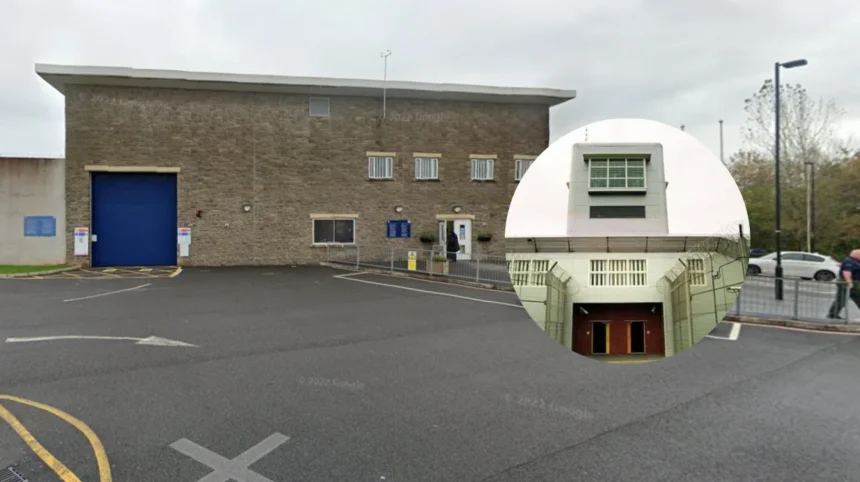
Wales Crime (Wales Times) August 03, 2026. Four people have been convicted after investigators uncovered a £21,000 money laundering operation linked to drug activity inside HMP Parc. The plot involved a serving prisoner, a former prison officer, and two family members who facilitated transfers of cash believed to be generated from the supply of controlled drugs within the jail.
- Key Points
- How did the prison drug money laundering scheme work?
- Who were the four people convicted in the HMP Parc case?
- What sentences were handed down at Cardiff Crown Court?
- What did police and prison officials say about the case?
- Why is this case significant for prison security and organised crime?
- Background to the development at HMP Parc
- Prediction: how this development may affect prisoners, staff and families
As reported by the South Wales Argus, the scheme was exposed following an investigation led by the Prison Intelligence Unit within Tarian, the Regional Organised Crime Unit (ROCU) for southern Wales. Detectives found that inmate David James Braddon, 38, had used an illicit mobile phone hidden in his cell to contact Claire Ann Jones, 39, a former prison officer at HMP Parc, and direct her to move money through bank accounts.
How did the prison drug money laundering scheme work?
According to Tarian ROCU, Braddon contacted Jones on multiple occasions using the contraband phone to instruct her to open and operate a bank account in her name. Jones then used that account to receive and transfer funds between other accounts linked to prisoners, effectively laundering the proceeds of alleged drug dealing inside the prison.
Court hearings heard that between 9 September 2023 and 28 March 2024, a total of £21,045 was paid into Jones’s account. Investigators also identified additional accounts belonging to Braddon’s mother, Karen Elizabeth Graham, 57, of Caerphilly, and his partner, Gemma Louise Phillips, 41, also of Caerphilly, which were used to move the illegal funds.
Jones had been employed at HMP Parc but was dismissed in July 2023 after failing her probation period, prior to the period covered by the money laundering charges.
Who were the four people convicted in the HMP Parc case?
The four defendants who pleaded guilty were:
- David James Braddon, 38, a prisoner at HMP Parc (now held at HMP Cardiff), charged with being concerned in the acquisition, retention, use or possession of criminal property, and with possession of a mobile phone in prison.
- Claire Ann Jones, 39, of Tonypandy, a former prison officer at HMP Parc, charged with possession of criminal property.
- Karen Elizabeth Graham, 57, of Caerphilly, Braddon’s mother, charged in connection with the movement of criminal property.
- Gemma Louise Phillips, 41, of Caerphilly, Braddon’s partner, also charged in relation to the laundering of criminal property.
All four entered guilty pleas ahead of sentencing at uk/local/cardiff/">Cardiff Crown Court on 31 July 2026.
What sentences were handed down at Cardiff Crown Court?
Sentencing remarks confirmed that Braddon received three years and seven months’ imprisonment for being concerned in the acquisition, retention, use or possession of criminal property, and a further nine months for possession of a mobile phone in prison, with the terms to run concurrently. He is currently held at HMP Cardiff.
Jones, of Tonypandy, was sentenced to two years and nine months in prison for possession of criminal property. Phillips, also from Caerphilly, received one year and 10 months’ imprisonment for her role in the scheme. Graham, of Caerphilly, was given a one‑year and six‑month sentence, suspended for two years.
What did police and prison officials say about the case?
Detective Sergeant Matthew Pearce of Tarian ROCU said:
“Tarian will continue to work with the prison service to proactively identify and investigate prisoners who continue to offend, as well as those who seek to enable them,” according to the South Wales Argus.
A spokesperson for HMP Parc said:
“Today’s outcome shows the capability of joint operations involving the prison, HMPPS, and southern Wales police to bring criminals to justice,” as quoted by the South Wales Argus. The Prison Intelligence Unit within Tarian led the investigation into the money laundering network.
Why is this case significant for prison security and organised crime?
The case underlines continuing concerns about contraband mobile phones in prisons and their use to coordinate criminal activity beyond the jail walls. As noted in wider reporting on HMP Parc, illicit phones have repeatedly been linked to drug supply networks and financial crime connected to inmates.
In a related but separate case reported by the BBC, David Braddon was previously jailed for life with a minimum term of 20 years for the 2015 murder of Conner Marshall, and earlier this year admitted using a mobile phone in prison to direct three women to move tens of thousands of pounds between bank accounts, with transactions totalling more than £50,000 across accounts linked to dozens of people, including relatives of prisoners at several jails. That wider context highlights how prison‑based offenders can leverage outside contacts to launder substantial sums.
Background to the development at HMP Parc
HMP Parc, a privately managed prison in Bridgend, has been the focus of multiple investigations into drug smuggling and associated money laundering in recent years. Reporting by the BBC and police forces has detailed cases involving drones, prison staff, and external couriers used to bring class A drugs and phones into the site, with proceeds then moved through complex financial chains.
Tarian ROCU, which covers southern Wales, has increasingly targeted prison‑related organised crime, securing convictions against groups trafficking heroin and cocaine and against individuals laundering the proceeds through bank accounts and, in other cases, cryptocurrency. The Braddon–Jones operation fits a pattern identified by investigators: inmates using contraband communications to direct outsiders, including former staff and family members, to handle cash and transfers on their behalf.
Prediction: how this development may affect prisoners, staff and families
This development is likely to intensify scrutiny of financial transactions linked to prisoners and their close associates, particularly where large or frequent transfers are detected. For prisoners, it signals a higher risk of extended sentences for in‑prison offences such as phone possession when tied to further criminality. For former and current staff, it reinforces that any involvement in moving inmate funds can lead to immediate dismissal and custodial sentences. For families, the case may prompt more rigorous checks on accounts used to receive money on behalf of inmates, with banks and investigators increasingly alert to patterns consistent with laundering. Overall, the judgment is expected to deter some would‑be facilitators while pushing organised groups to adopt more concealed methods, sustaining pressure on prison intelligence units and financial crime teams.