

Key Points
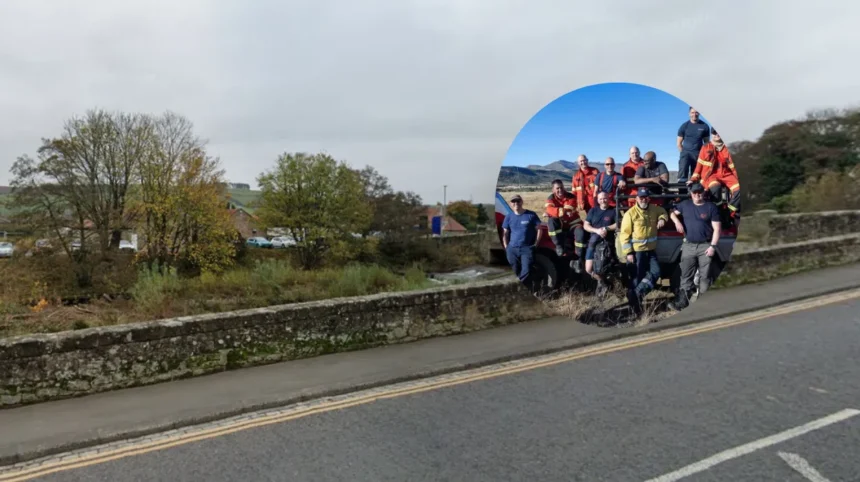
- Specialist officers and tactical crews from Northumberland Fire and Rescue Service have been deployed to South Wales to support firefighting operations during severe wildfire activity.
- The deployment was carried out under the UK Government’s National Resilience programme, which coordinates mutual aid between emergency services during incidents requiring additional capacity.
- Northumberland sent Wildfire Tactical Advisers, high-mobility all-terrain response units and personnel trained in tactical suppression techniques.
- Crews have been working in difficult upland terrain around Blaenavon and along surrounding valley ridgelines.
- The deployment is part of cooperation between fire and rescue services to respond to wildfire risks across the UK.
Wales (Wales Times) August 25, 2026 — Specialist wildland firefighting crews and strategic advisers from Northumberland Fire and Rescue Service have deployed hundreds of miles south to bolster frontline suppression efforts against severe wildfires spreading across South Wales. Operating under national mutual aid frameworks, the cross-service deployment comes amid prolonged hot, dry conditions that have triggered multi-hectare blazes across Welsh valleys and moorlands, placing unprecedented pressure on local emergency services.
As reported by Chronicle Live, Rob Stacey, Wildfire Team Leader at Northumberland Fire and Rescue Service, emphasised the strategic value of cross-border coordination, stating that the service is “incredibly proud that Northumberland Fire and Rescue Service has been selected as one of the national wildfire response teams” capable of deploying whenever regional resilience thresholds are reached. The deployment brings essential frontline relief and specialist knowledge to fire grounds where challenging topography and dry fuel loads have hampered containment operations.
What Specialist Resources and Tactics Are Being Deployed on the Ground?
The resources mobilised from Northumberland include Wildfire Tactical Advisers (NFRTA), advanced burn teams, and specialised low-ground-pressure vehicles designed specifically for remote, mountainous environments. Working in tandem with incident commanders from South uk/fire/">Wales Fire and Rescue Service, these units are executing targeted containment strategies, including mechanical line cutting, backburning operations, and water supply maintenance across remote hill sectors.
As documented by Emergency Services Times, standardisation exercises conducted earlier in South Wales prepared 17 specialist Northumberland personnel to operate seamlessly within multi-agency tactical teams across jurisdictional borders. This interoperability ensures that visiting crews can take immediate control of high-risk operational sectors without communication friction, enabling South Wales commanders to rotate exhausted frontline staff and establish continuous containment perimeters around large-scale incidents such as Blaenavon.
Background to the National Resilience Wildfire Programme
Wildfire frequency and severity across the United Kingdom have increased steadily over recent seasons, prompting a strategic overhaul of national emergency response infrastructure. Historically, fire and rescue services handled wildland incidents primarily at a local or regional level, drawing on voluntary mutual aid arrangements only when local capacity was entirely exhausted. However, large-scale events across moorlands and urban-rural interfaces exposed the need for a formalised, federally coordinated approach.
Through the Home Office and the National Fire Chiefs Council (NFCC) National Resilience structure, six regional fire and rescue services—including Northumberland, Greater Manchester, Lancashire, and South Wales—were designated as primary host hubs for National Wildfire Teams. These services received enhanced investment in specialist equipment, overseas fire behaviour training, and interoperable communication systems. The current response in South Wales marks a practical activation of this integrated model, demonstrating how specialist resources from northern England can rapidly bolster southern civil protection frameworks during severe climate-driven surges.
What Does This Deployment Mean for UK Communities and Emergency Services?
The mobilisation of Northumberland personnel into South Wales signals an evolving operational reality for UK public safety agencies, regional infrastructure planners, and local populations.
For communities situated near wildfire-prone landscapes—such as the peatlands of Northern England and the valleys of Wales—these coordinated deployments offer greater assurance that sudden, aggressive wildfire outbreaks can be contained before threatening residential areas, heritage sites, or municipal utility networks.
For the fire and rescue sector, the ongoing operational tempo suggests that inter-service deployments will shift from rare exceptions to routine summer protocols. This structural change will likely accelerate joint procurement of all-terrain appliances, drive mandatory wildland firefighting modules across standard recruit training, and foster closer collaboration between civil fire services, land managers, and national defence logistics units to maintain public safety.