Key Points
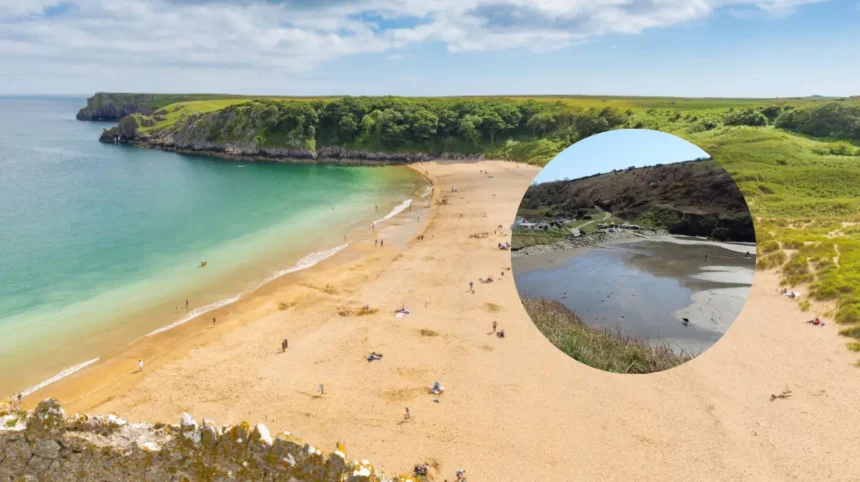
- A mobile sauna for the three-year period from December to May has been proposed for Pwllgwaelod Beach in Dinas Cross (north Pembrokeshire).
- Under the Pwllgwaelod project by Wildwater Sauna Ltd, the unit will accommodate up to 10 people, have a charcoal-coloured timber finish on a portable steel base.
- Advice from the Pembrokeshire Coast National Park prior to the application said that the structure would be “highly conspicuous” and “visually prominent” from the coast path and beach.
- Another application for a mobile sauna at Tenby’s North Beach has been turned down because of damage to the Tenby Conservation Area and to the “secluded nature” of the beach.
- David Jones’s year-round plan for the unit with direct sea access has been turned down by national park planners on the grounds that it is not an acceptable location.
- The decisions come following the rejection of applications to give a permanent status to the Hwyl Outdoor Sauna which operated under a two-year temporary permission issued in 2024 at Saundersfoot Harbour.
- The Pwllgwaelod application will be considered by the national park planners at a future date.
Wales (Wales Times) September 14, 2026 — Plans to site a mobile outdoor sauna at a secluded stretch of Welsh coastline have drawn fresh scrutiny after Pembrokeshire Coast National Park flagged visual impact concerns, while a similar proposal at Tenby’s North Beach has already been turned down. The developments highlight the tension between growing demand for cold‑water wellness facilities and strict landscape protections inside the national park.
- Key Points
- What are the latest sauna proposals on Pembrokeshire beaches?
- Why was the Tenby North Beach sauna plan refused?
- How does this relate to the Saundersfoot sauna decision?
- What do planning officers say about visual impact and conservation areas?
- What happens next for the Pwllgwaelod sauna application?
- Background: how did beach sauna proposals develop in Pembrokeshire?
- Prediction: how could these decisions affect swimmers, residents and operators?
What are the latest sauna proposals on Pembrokeshire beaches?
A new planning application seeks to place a temporary, seasonal mobile sauna at the Boat Yard within Pwllgwaelod Beach, Dinas Cross, in north Pembrokeshire. Submitted by Brawdy‑based Wildwater Sauna Ltd, via agent Geraint John Planning Ltd, the proposal asks Pembrokeshire Coast National Park for permission to operate the unit for three years on a seasonal basis between December and May.
According to the supporting statement, the sauna would be built from charcoal‑coloured treated timber on a moveable rigid galvanised steel base, measuring 3.57m in height, 2.5m in width and 6.5m in length, with two‑tier bench seating for up to 10 people. The applicant argues the modest scale and sympathetic materials would reduce visual impact, and notes the functional need for a beach location given the intended link between sauna use and sea bathing. The application states the proposal represents a “modest but meaningful contribution to tourism (and the local economy accordingly)” and is “wholly acceptable” in light of planning policy.
However, pre‑application advice from the national park cautioned that the facility “would be highly conspicuous from both the coast path and the beach, appearing visually dominant within the surrounding landscape”, and could “significantly undermine the character and appearance of this coastal area, as well as the special qualities of the National Park”. The application acknowledges this concern but contends that design revisions and the presence of existing commercial activity nearby, including the Sailors Safety public house further east along the beach, demonstrate an established tourism operation at Pwllgwaelod. National park planners will consider the application at a later date.
Why was the Tenby North Beach sauna plan refused?
A separate mobile sauna proposal for Tenby’s North Beach has been refused by Pembrokeshire Coast National Park. Tenby‑based applicant David Jones sought permission to site a mobile sauna unit on a raised concrete hard‑standing area above the breakwater wall and slipway at the far north end of North Beach, on privately owned land forming part of the Park Hotel estate below the Park Hotel on North Cliff.
The supporting statement said the site had most recently been used as a base for a paddleboard tour and rental business and for storing watercraft and recreational beach equipment. The applicant set out aims to “provide a close to nature sauna experience” and make “sauna culture’s physical, mental, and social health benefits accessible to the local community and its visiting guests”, operating year‑round with direct access for sea bathing as an integral part of the experience.
Planning officers recommended refusal, concluding the location was unsuitable because of its impact on the Tenby Conservation Area. An officer report stated: “It is considered by officers that the proposal would negatively impact the Tenby Conservation Area by proposing a commercial element in a quiet and secluded part of Tenby North Beach.” The report added: “The contrast between both ends of North Beach is notable, and whilst the proposed use may be regarded as acceptable in principle; the location is not considered acceptable.” Officers also noted the proposed site is “currently recognised as a quiet and secluded area of Tenby, which lacks the presence of commercial enterprises”, and that the sauna and associated buildings would “detract from these elements” and negatively alter the character of the conservation area and immediate site.
How does this relate to the Saundersfoot sauna decision?
The Tenby refusal follows another recent decision on the Pembrokeshire coast involving a mobile sauna. In June 2024, Pembrokeshire Coast National Park’s development management committee granted a temporary two‑year permission for a mobile wood‑filled sauna overlooking the sea at Saundersfoot Harbour. Owner Kerry Evans of Hwyl Outdoor Sauna subsequently applied to make the location permanent, but the national park refused the application in July following an officer recommendation.
According to reporting by Bruce Sinclair, Local Democracy Reporter for Nation.Cymru, councillors expressed regret at refusing the Saundersfoot proposal and indicated they hoped a suitable alternative location could be found within the harbour area. The sequence of decisions—temporary permission at Saundersfoot, refusal of permanency there, and refusal at Tenby—forms the immediate context for the new Pwllgwaelod application now before planners.
What do planning officers say about visual impact and conservation areas?
Across the recent cases, planning officers have focused heavily on visual impact, landscape character and conservation area settings. In the Pwllgwaelod pre‑application response, officers warned the sauna could be “highly conspicuous” and “visually dominant”, potentially undermining the special qualities of the national park. In Tenby, officers emphasised the introduction of a commercial element into a “quiet and secluded” part of the beach and the resulting harm to the Tenby Conservation Area.
The applicant’s case at Pwllgwaelod rests partly on design mitigation—using natural, charcoal‑coloured materials and on the argument that the beach location is essential to the proposal’s function, given the intended relationship between sauna and sea bathing. The submission also points to existing commercial and tourism uses nearby as evidence that the site is not devoid of such activity. Planners will weigh these arguments against national park policies protecting landscape character and coastal settings when the application is considered.
What happens next for the Pwllgwaelod sauna application?
The Pwllgwaelod application will be considered by national park planners at a later date, with no decision published at the time of writing. The outcome will depend on how planners assess the balance between tourism and wellbeing benefits, the design and siting of the mobile unit, and the potential visual and landscape impacts from the coast path and beach. Given the recent refusals at Tenby and for permanent status at Saundersfoot, the Pwllgwaelod case is likely to be examined closely for consistency with those precedents and with national park policy on temporary structures in sensitive coastal locations.
Background: how did beach sauna proposals develop in Pembrokeshire?
Mobile, wood‑fired saunas have emerged in coastal Wales as part of a wider growth in cold‑water swimming and outdoor wellness activities. In Pembrokeshire, the trend became visible in planning terms in 2024, when a temporary two‑year permission was granted for Hwyl Outdoor Sauna at Saundersfoot Harbour. That temporary status allowed operators to test demand and refine the model, but subsequent bids to make such facilities permanent or to site new units in other coastal spots have met resistance where planners judge landscape, conservation area or visual impact concerns to outweigh the benefits.
The current wave of applications—Tenby, Saundersfoot permanency, and now Pwllgwaelod—shows operators seeking to anchor mobile saunas in locations that combine sea access with visitor footfall, while national park authorities apply strict tests on conspicuousness, commercialisation of quiet stretches of coast, and the integrity of designated landscapes.
Prediction: how could these decisions affect swimmers, residents and operators?
If planners continue to prioritise visual and conservation concerns, mobile sauna operators in Pembrokeshire may be pushed towards less sensitive, more established tourism nodes such as harbour edges or car‑park adjacencies rather than secluded beach corners. For cold‑water swimmers and wellness users, that could mean fewer “wild”‑feeling sites but more reliable, regulated facilities with clearer access, booking and safety arrangements. For local residents, a tighter line on secluded locations may preserve the quiet character of certain beach sections, though it may also concentrate commercial activity in other parts of the coast. For operators, the pattern suggests a need to design smaller, lower‑profile units, limit seasonal windows, and align proposals with existing tourism infrastructure to improve the chance of approval.