

Key Points
- Ernest Melville, aged 37, was found battered and bruised in a bombsite near Dyfatty Park in Swansea on Saturday, January 22, 1949, by children playing after heavy rain.
- The victim, a reserved and amiable man living with his parents in Watkin Street, North Hill, Swansea, suffered a savage assault including fractured skull, broken nose, shattered jaw, black eyes, split lip, chin gash, strangulation marks, and scrotum bruising; no defensive wounds noted.
- Post-mortem revealed extensive injuries; false teeth fragment and bloodied stone/debris found nearby; heavy rain likely destroyed forensic evidence.
- Melville clocked off work at Swansea Corporation’s surveyor department at 4pm Friday, collected wages, went home, then out at 7.30pm to Red Cow pub, Palace Bar, and Full Moon in High Street (9.30pm), playing piano in the singing room with an unidentified man in a trench coat.
- Witnesses at Full Moon (around 36 questioned) gave conflicting descriptions of the trench coat man; Melville left between 10pm-10.30pm, not seen after.
- No theft motive: watch, ring, and money still on body; Scotland Yard assisted major investigation pursuing global suspects, but case unsolved after 76 years.
- Post-war context: bombsite from 1941 Three Night Blitz; Melville medically discharged from Army, held temporary jobs in 20s, suffered digestive issues, slender build.
- Reported by Jason Evans, court and crime reporter, WalesOnline, February 7, 2026.
Swansea (Wales times) February 7, 2026 – The battered body of 37-year-old Ernest Melville lay undiscovered in a Swansea bombsite until children playing nearby found him on January 22, 1949, prompting a major police probe aided by Scotland Yard that spanned the globe yet yielded no answers after 76 years, as detailed by Jason Evans of WalesOnline.
What Circumstances Led to the Discovery of Ernest Melville’s Body?
Post-war Swansea’s bomb-damaged sites from the 1941 Three Night Blitz served as playgrounds amid ruins. As reported by Jason Evans in WalesOnline, youngsters stumbled upon Melville’s bloodstained corpse beside an air raid shelter near Dyfatty Park after morning rain on Saturday lunchtime, January 22, 1949; his brown suit trousers torn, false teeth nearby, and a blood-and-hair-covered stone or debris chunk close by.
Authorities launched a murder inquiry with Scotland Yard detectives assisting. Heavy rain likely obliterated evidence.
Who Was Ernest Melville?
Ernest Melville, 37, resided with parents in Watkin Street, North Hill, Swansea—near the discovery site. WalesOnline’s Jason Evans describes him as diminutive, slender, with lifelong digestive ailments and poor health; reserved yet amiable.
In his 20s, he took miscellaneous temporary jobs; Army medical discharge led to Swansea Corporation surveyor department employment.
What Injuries Did Melville Sustain?
Post-mortem revealed savage trauma: fractured skull, broken nose, shattered jaw, black eyes, split lip, chin gash, neck strangulation marks, scrotum bruising. Jason Evans in WalesOnline notes no defensive wounds on arms/hands, suggesting scant chance to fight back. Watch, ring, and pocket money intact ruled out robbery as primary motive.
What Were Melville’s Movements on His Final Evening?
Detectives traced his last hours: clocked off at 4pm Friday, collected wages, went home. Around 7.30pm, he headed to Red Cow pub, then Palace Bar, reaching Full Moon in High Street—his regular—by 9.30pm. There, Melville played piano in the rear “singing room,” accompanied by an unfamiliar trench-coated man, per conflicting witness accounts from ~36 questioned Full Moon patrons.
What Did Witnesses Report at the Full Moon Pub?
Officers interviewed dozens at the busy pub, but accounts clashed. WalesOnline reports Melville last seen leaving between 10pm-10.30pm; no one recalled seeing him after. Patrons noted the trench coat man as unknown; descriptions varied widely, hindering identification.
Why Remains the Case Unsolved After 76 Years?
Despite global suspect pursuits, no arrests ensued. Jason Evans highlights rain’s evidentiary destruction, witness hesitancy in a pub setting, conflicting statements, absent forensics, and no clear motive as barriers. Scotland Yard’s involvement underscores inquiry scale, yet Melville’s killer(s) evade justice.
How Did Post-War Swansea’s Landscape Factor In?
Bomb-sites lingered as play areas post-Three Night Blitz. Evans notes such ruins near Dyfatty Park enabled the grim find, complicating scene preservation amid rain. North Hill’s proximity to pubs and site framed Melville’s final walk.
What Police Actions Followed the Discovery?
Immediate murder inquiry: post-mortem, scene examination (despite rain), witness canvassing (36+ at Full Moon), global tracing. Wales Online details Scotland Yard’s London detectives aiding Swansea police. No breakthroughs despite thoroughness.
Could the Trench Coat Man Hold the Key?
The unidentified companion emerges as prime focus, unfamiliar to regulars. Varied descriptions stymied progress, per Evans. Pub reluctance possibly stemmed from post-war caution.
What Broader Context Surrounds Unsolved 1949 Cases?
Melville’s joins persistent UK mysteries; Wales Online revives it amid enduring interest. No new leads mentioned after 76 years.
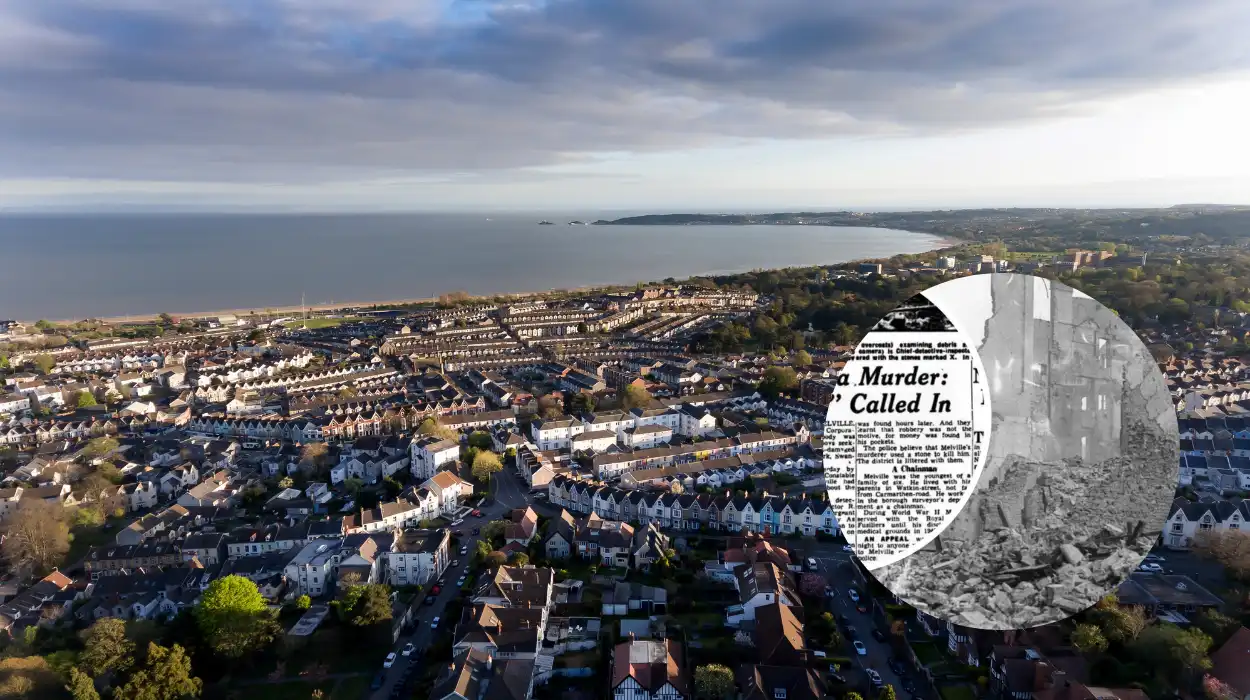
Evans’ piece draws on Western Mail/British Newspaper Archive images.
This enduring Swansea enigma, uncovered amid children’s play, exemplifies investigative limits in austere 1949 conditions.
