Key Points
- Five rural community organisations (RCOs) have received grants of over £76,000 to allow them to invest in renewable energy equipment which will also reduce their running costs.
- Swansea Council funded this programme via the UK Local Growth Fund Rural Renewable Energy Grant Programme.
- Loughor RFC 1882 was awarded the biggest individual grant with an amount of £24,216 for installing solar panels and battery storage at their clubhouse
- £15,916 has been allocated to Bont Elim Community Church in Pontarddulais for the installation of an additional 3 heat pumps.
- £14,749 will be given to Clydach Community Council to fit 32 solar panels plus battery storage at their Forge Fach Resource Centre.
- £8,369 will enable Three Crosses Community Council to install electric vehicle charging points as well as adding additional battery storage at their community centre.
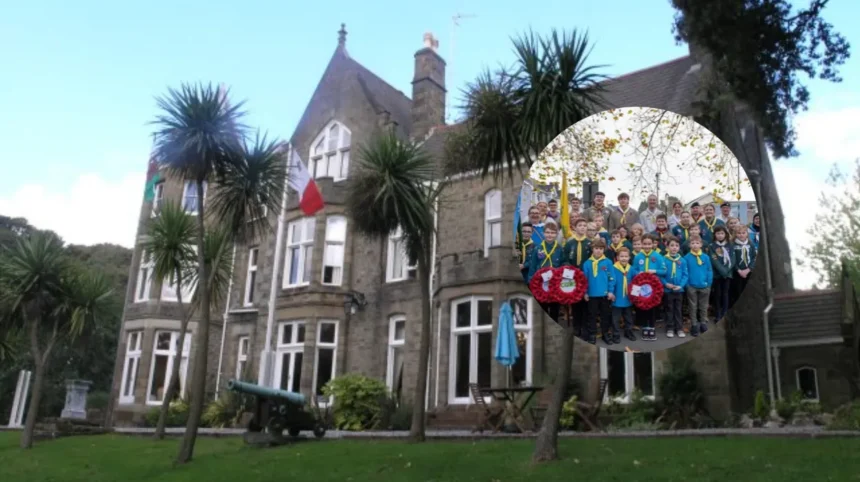
- £13,382 will be used by the 4th Lliw Valley (Pontarddulais) Scout Group on solar panels, battery storage and LED lighting.
- Swansea Council added that there is still funding available and urged those who qualify as a rural community organisation to apply. Councillor Andrew Stevens – the council’s Cabinet Member for Environment and Infrastructure – said such grants were helping community buildings to become greener while freeing up funds which could go towards local services.
Swansea (Wales Times) November 06, 2026 — Five community organisations across rural uk/local/swansea/">Swansea have been awarded more than £76,000 in grants to install renewable energy technology, reduce energy bills and improve the sustainability of buildings used by local residents.
As reported by Wales 247, the awards were made by Swansea Council through the UK Local Growth Fund Rural Renewable Energy Grant Programme, which supports renewable infrastructure at community facilities. The council says the funding is intended to lower carbon emissions and reduce energy costs in rural areas.
Which organisations received funding?
Loughor RFC 1882 received the largest award, £24,216, for solar panels and battery storage at its clubhouse. As reported by Insider Media, the building is used not only for rugby but also hosts community groups, veterans, older residents and a weekly foodbank.
Bont Elim Community Church in Pontarddulais has been awarded £15,916 to install three additional heat pumps. The former school building reportedly welcomes around 1,300 visits each week and provides activities, training, wellbeing support and a community coffee shop.
Clydach Community Council secured £14,749 for 32 solar panels and battery storage at Forge Fach Resource Centre. According to Insider Media, the installation is intended to reduce running costs at the community venue.
Three Crosses Community Council received £8,369 for electric vehicle charging points and additional battery storage at its community centre.
The 4th Lliw Valley (Pontarddulais) Scout Group was awarded £13,382 for solar panels, battery storage and LED lighting. The council says the improvements should reduce bills and free up more funding for activities, equipment and camps.
What did Swansea Council say?
Councillor Andrew Stevens, Swansea Council’s Cabinet Member for Environment and Infrastructure, welcomed the awards. As reported by Insider Media, he said:
“These are fantastic examples of how we’re helping communities across rural Swansea become greener, stronger and more sustainable.”
He added:
“From scout halls and rugby clubs to community centres, these buildings are at the heart of local life.”
Councillor Stevens also said that helping organisations reduce energy bills would allow more money to go towards “the activities and services that really matter to residents”. He described the programme as “good for the environment, good for local communities” and said it would help protect important facilities for future generations.
How does the grant programme work?
The Rural Renewable Energy Grant is delivered by Swansea Council and invests in renewable energy schemes in the authority’s rural areas. According to the council, its aims include reducing carbon emissions and lowering energy costs.
The latest awards form part of a wider programme of rural support in Swansea. The council’s separate Rural Anchor funding supported 54 rural projects between 2023 and 2025, with a total of £716,934.76 awarded by June 2025; 17 of those projects focused on renewable energy.
Swansea Council says funding remains available through the current Rural Renewable Energy Grant Programme and that other eligible rural community organisations are encouraged to apply.
Background of the development
Swansea Council has previously used rural funding programmes to support community buildings, renewable energy projects and local services. Its Rural Anchor programme, funded through the UK Government’s Shared Prosperity Fund, made grants available for projects including renewable energy, biodiversity, volunteering, rural markets, visitor trails and feasibility studies.
Earlier rural energy projects have included solar panels and battery storage at Pennard Community Hall, LED floodlights for South Gower RFC, and a solar project at Pontarddulais Town Juniors Football Club. In December 2025, Swansea Bay News reported that Pontarddulais Town FC had installed 30 solar panels and battery storage after receiving £23,130 through the Rural Anchor Fund.
The latest £76,000 round continues that approach by directing support towards community-owned buildings that serve large numbers of residents. The council says the grants are designed to make those facilities cheaper to run while supporting environmental objectives.
Prediction: What it means for rural community groups
For rural community organisations in Swansea, the development suggests that funding may continue to be available for practical energy improvements such as solar panels, battery storage, heat pumps, LED lighting and electric vehicle charging. Groups operating village halls, sports clubs, churches, scout huts and community centres may be able to use similar grants to reduce fixed energy costs.
If the installations perform as intended, the organisations could redirect savings towards frontline community activity, including foodbank provision, youth activities, training, wellbeing services and sports. The council’s stated position is that lower bills should allow more resources to remain with local services rather than being spent on energy costs.
For other eligible groups, the announcement may also increase interest in applying for the remaining funding. Swansea Council has said that funding remains available and has encouraged rural community organisations to come forward.