

Key Points
- Welsh Government is planning to reduce the business rates by 30% for selected pubs, hotels, gyms, and other hospitality and leisure properties from 1 April 2027.
- It will be applicable to the smaller properties with a rateable value under £51,000 while there would be a slight increase in case of bigger properties in order to finance the reduction.
- Welsh First Minister Rhun ap Iorwerth announced this policy while he visited a pub in Cardiff.
- According to Finance Minister Elin Jones, the finance would be taken from the increased multipliers from bigger properties, which would add up to nearly 1p per pound to their bills.
- This 30% reduction would be replacing the 15% temporary reduction provided to the food and drink hospitality in terms of business rates.
- UK Hospitality Cymru applauded this announcement but at the same time raised concern about the heavy taxation burden being placed on the hospitality sector in terms of VAT, energy, and National Insurance changes.
- UK Government announced separately 20% reduction in business rates for pubs, social clubs and live music venues from April 2027.
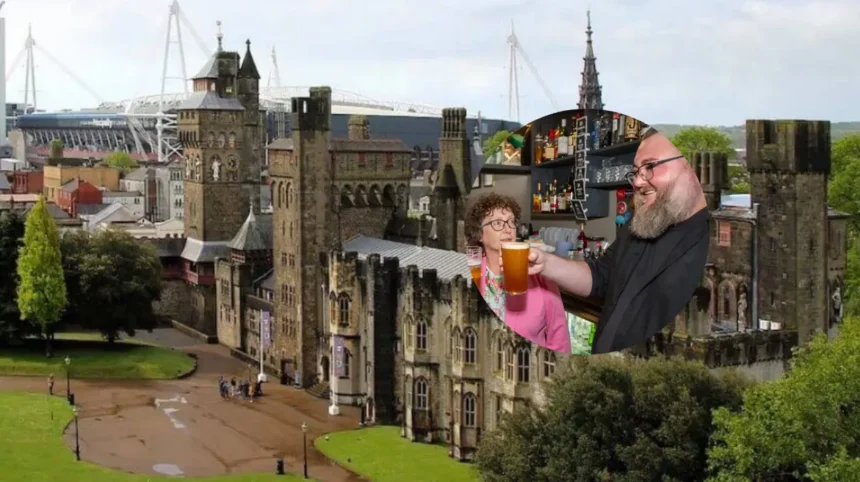
Cardiff (Wales Times) September 15, 2026 – Pubs, hotels and gyms in Wales to get 30% business rates cut from April 2027, with the relief targeted at small and medium-sized venues while the largest properties pay slightly more to fund the reform. First Minister Rhun ap Iorwerth set out the policy during a visit to the Rady Tap pub in uk/local/cardiff/">Cardiff, where he said backing these businesses would help communities prosper.
- Key Points
- Who will benefit from the rates relief and who will pay more?
- How will the cut be funded and what do ministers say?
- What do business owners and industry bodies say?
- How does this fit with UK-wide business rates policy?
- Background to the development
- Prediction: How could this affect pubs, hotels and gyms in Wales?
As reported by BBC News, ap Iorwerth stated: “This 30% cut to rates for pubs, cafés, gyms, hotels and so many other local favourites is about giving those businesses the confidence to invest, grow and keep serving the communities that rely on them.” He added that the measure was intended to “rebalance the way business rates work” and inject more vitality into Welsh high streets.
The Welsh Government confirmed that regulations will be brought forward in the autumn and, subject to Senedd approval, will take effect from 1 April 2027. The 30% reduction will be permanent, replacing the existing temporary 15% relief for food and drink hospitality, thereby giving businesses greater certainty to plan and invest.
Who will benefit from the rates relief and who will pay more?
The 30% cut applies to small and medium-sized hospitality, accommodation and leisure properties with a rateable value below £51,000. Eligible venues include pubs, restaurants, cafés, bars, food courts, licensed clubs and live music venues; visitor accommodation such as hotels, guest houses and hostels; and leisure venues including cinemas, theatres, libraries, museums and gyms.
Larger properties, including some hotels and supermarkets, will see a modest rise in their business rates to help finance the relief for smaller venues. Finance Minister Elin Jones explained that the funding would come from increased rates for larger businesses, which she described as a fairer distribution of the burden. According to BBC News, Jones said the additional charge on the largest properties would amount to approximately 1p for every £1 of rateable value.
Ministers have assured local councils that the shift will not reduce the overall funding available to them, as business rates are administered by the Welsh Government and then redistributed to councils across Wales.
How will the cut be funded and what do ministers say?
As reported by the Welsh Government’s media service, Cabinet Minister for Finance Elin Jones said the change would be “fully funded” through adjustments to the multiplier applied to the highest-value properties. She argued that it is fair for larger businesses to shoulder a greater share in order to support “thriving high streets” in Welsh communities.
First Minister Rhun ap Iorwerth told reporters that the reform uses powers available to the Welsh Government to act from the earliest feasible point, which he identified as April 2027. “This is something that we’re able to do now, in April next year, which is the earliest point we can do this,” he said, adding: “It will make a difference.”
The Welsh Government has described the policy as backing “the businesses people depend on” and said the permanent 30% relief exceeds the current temporary 15% support for food and drink hospitality.
What do business owners and industry bodies say?
Phil Newbould, landlord of the Rady Tap in Cardiff, said the rates cut would be beneficial for the industry, estimating that across his two pubs the savings would total around £3,000 a year. He also highlighted a wider campaign to reduce VAT for hospitality businesses, which is controlled by the UK Government, arguing that such a move would significantly lower costs for the sector.
Oliver Banks, owner of Kindred, a café and wine bar in Cardiff, welcomed the impending relief. “If it can give us a little bit of wiggle room with what we do with our spend on food and drink, it also makes it a bit lighter for people in the current climate,” Banks said. He stressed that hospitality is not typically run by wealthy individuals and that rising costs from inflation and higher minimum wages have already forced prices up. “There’s so much you can do as a business owner and you can’t put all the cost on to the guests,” he added.
David Chapman, executive director of UK Hospitality Cymru, described the financial pressures on the sector as akin to “trying to balance a plate when you’re riding a bike”. He pointed to multiple taxes and cost pressures, including VAT, high inflation, surging energy bills and increased labour costs due to National Insurance changes. Despite those challenges, Chapman welcomed the business rates reduction as “the beginnings of a change” that could help businesses focus on growth and employment.
UK Hospitality Cymru had previously urged the Welsh Government to reduce the tax burden on hospitality, calling lower business rates a “simple and practical solution”.
How does this fit with UK-wide business rates policy?
The UK Government, which controls VAT and National Insurance, said the Chancellor had prioritised support for hospitality by implementing a 20% cut in business rates for pubs, social clubs and live music venues in England from April 2027. A government spokesperson noted that, as business rates are devolved, the cut also provides extra funding to the Welsh Government, which can choose how to allocate it.
In England, Prime Minister Andy Burnham announced in July that the 20% reduction would take effect in April 2027, a measure the government said would save a typical pub about £1,100 and benefit nearly 32,000 venues. The UK Treasury has also commissioned an independent review of how pubs and hotels are valued for business rates, with a report due by March 2027.
Background to the development
Business rates in Wales are set and administered by the Welsh Government, which then distributes the revenue to local councils. Hospitality and leisure venues have long argued that they face disproportionately high tax burdens compared with other sectors, particularly after the 2026 revaluation increased many rateable values.
UK Hospitality Cymru analysis warned that, without intervention, the sector’s total business rates bill in Wales could rise sharply over the coming years, with projected increases of £19.6 million in 2026/27, £43.3 million in 2027/28 and £67.7 million in 2028/29 compared with current levels. That pressure stems from higher rateable values, the removal of some temporary reliefs and the exclusion of many hospitality venues from existing Welsh reliefs.
Against that backdrop, industry representatives lobbied ministers for targeted relief, arguing that lower business rates would be a straightforward way to reduce costs and support jobs on high streets. The Welsh Government’s decision to introduce a permanent 30% cut for properties under £51,000 rateable value is framed as a response to those concerns, while using a higher multiplier on the largest properties to keep the overall system revenue-neutral for councils.
Prediction: How could this affect pubs, hotels and gyms in Wales?
For small and medium-sized pubs, hotels and gyms in Wales to get 30% business rates cut, the immediate effect is likely to be a reduction in fixed overheads, improving cash flow and reducing the risk of closures among marginal operators. Venues with rateable values under £51,000 could use the savings to stabilise prices, invest in minor refurbishments, or retain staff during periods of weak demand, particularly in town centres where footfall has been inconsistent.
Larger properties that face a modest rates increase may seek to offset the higher bills through operational efficiencies, renegotiated leases or, in some cases, passing a portion of costs to customers, though competitive pressures could limit price rises. Industry bodies have stressed that business rates are only one component of the tax burden, so the overall impact will depend on how VAT, energy costs and labour expenses evolve over the next few years.
If the relief succeeds in keeping more independent venues open and supporting employment on high streets, it could also strengthen the case for similar targeted interventions in other parts of the UK, especially as the Treasury’s independent review of pub and hotel valuations reports in 2027. Conversely, if larger venues feel the additional charge is too onerous, there may be renewed lobbying for a more graduated approach to multipliers or for broader relief across the hospitality sector.