
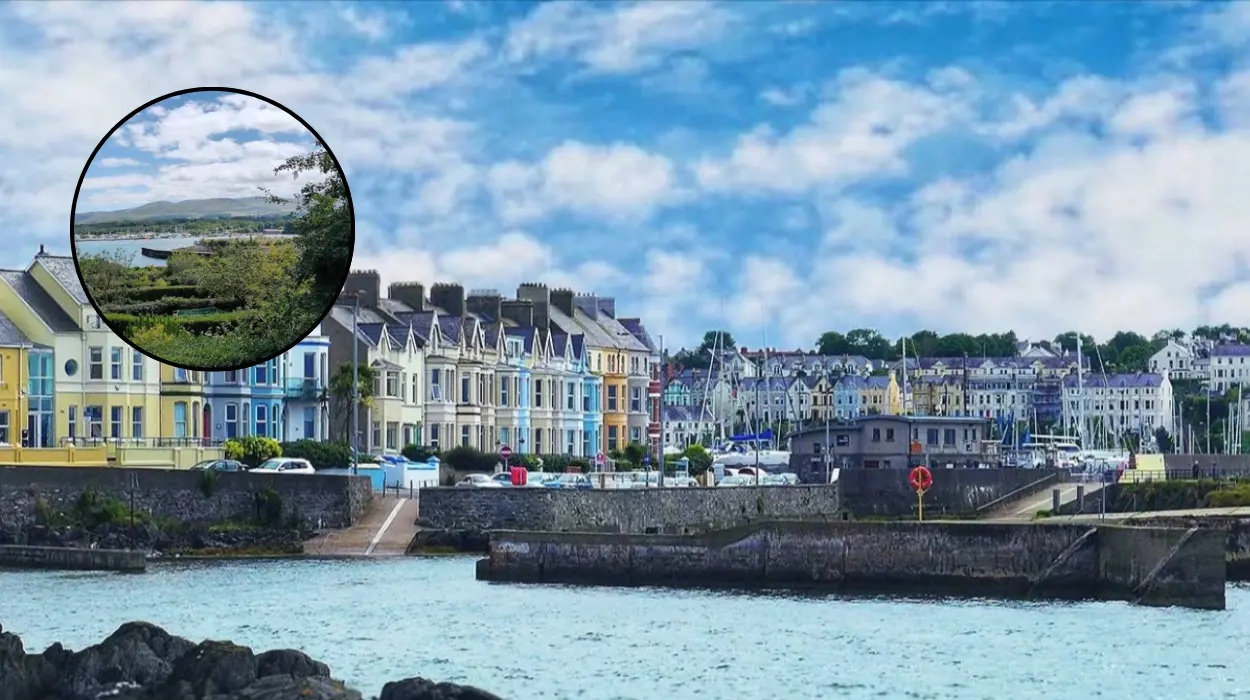
uk/local/bangor/">Bangor, Wales, stands as one of the UK’s oldest cities, blending ancient history with stunning natural beauty along the Menai Strait. Nestled in Gwynedd, this cathedral city offers a perfect mix of heritage, education, and outdoor adventures for visitors seeking an authentic Welsh experience.
Ancient Origins
Bangor’s roots trace back to the early 6th century when Saint Deiniol founded a monastic community around 525-530 AD on land gifted by King Maelgwn Gwynedd. The name “Bangor” derives from the Welsh word for a wattled enclosure, referring to the original structure surrounding the site that evolved into Bangor Cathedral.
This foundation marks one of Britain’s earliest Christian sites, predating many English cathedrals, though the current building stems from Norman reconstructions in the 12th century under Bishop David and King Gruffudd ap Cynan. The monastery endured sackings in 634 AD and 1073, yet the bishopric persists as one of the UK’s oldest.
Bangor Cathedral
Bangor Cathedral, dedicated to Saint Deiniol, exemplifies medieval resilience with its cruciform Norman layout rebuilt multiple times after invasions by King John in 1211 and Edward I in 1282. Victorian architect George Gilbert Scott oversaw major 19th-century restorations from 1868, adding Gothic elements while preserving features like the 15th-century “Mostyn Christ” oak carving and Robert Thompson’s carved mice.
The cathedral’s tower dates to 1532, built by Bishop Thomas Skevington, and houses a William Hill organ rebuilt in 2008 with over 4,000 pipes, supporting bilingual Welsh-English choral traditions. Its Biblical Garden features plants from scripture, and burials include kings Gruffudd ap Cynan and Owain Gwynedd, linking it to Gwynedd’s royal dynasty.
Victorian Pier and Waterfront
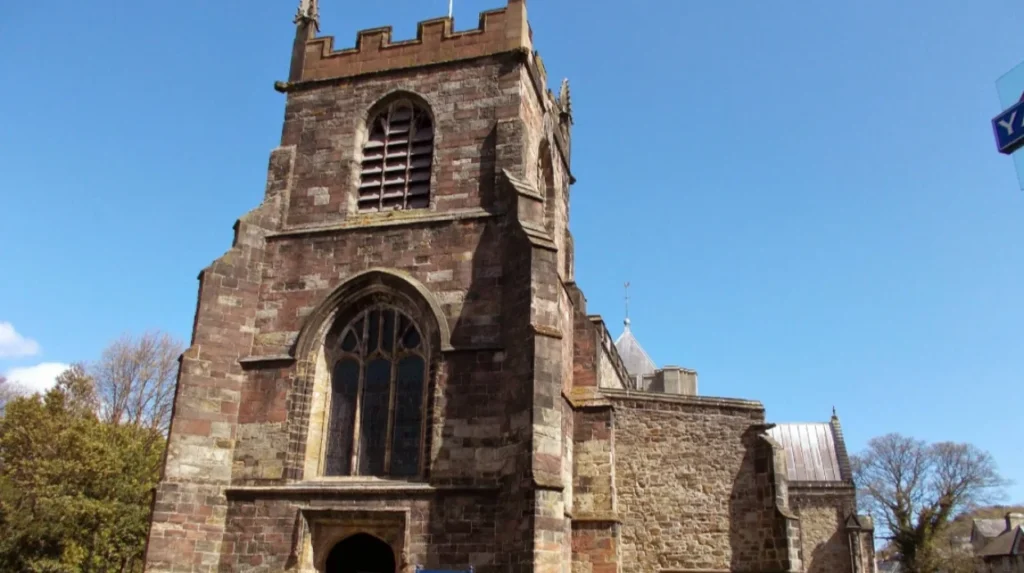
Garth Pier, opened in 1893, extends 1,500 feet into the Menai Strait as Wales’ second-longest pier and a Grade II listed gem with pinnacle-roofed kiosks offering sea views toward Anglesey. Restored in the 1980s after storm damage, it survived closure threats in 1974 through community efforts and now draws visitors for its promenade and heritage.
The pier highlights Bangor’s Victorian tourism boom, spurred by steamships from Liverpool and proximity to Telford’s 1826 Menai Suspension Bridge. Nearby Port Penrhyn exported slate from the 19th-century Penrhyn Quarry, fueling economic growth.
Academic Hub
Bangor University, founded in 1884 as University College of North Wales in the Penryn Arms Hotel, now spans arts, sciences, and over 50 research centers with 16,990 residents in its built-up area boosting the local vibe. Its historic Main Arts building, opened by King George V in 1911, overlooks the city and supports a multicultural student body.
The university drives innovation, from environmental sciences tied to nearby Snowdonia to cultural events at Pontio Arts Centre, opened in 2015 with theater and cinema. Friars School, established in 1557, adds to Bangor’s educational legacy.
Natural Surroundings
Bangor sits at the gateway to Eryri (Snowdonia) National Park, with the 83-mile Snowdonia Slate Trail starting here and leading through UNESCO-listed slate landscapes to Bethesda’s quarries in 10 km. Bangor Mountain (117m) and the Menai Strait offer hikes blending coast and peaks.
Treborth Botanic Garden and North Wales Wildlife Trust reserves like Eithinog provide serene nature spots amid the city’s urban edge. The Wales Coast Path runs nearby, enhancing access to Eryri’s trails.
Industrial Heritage
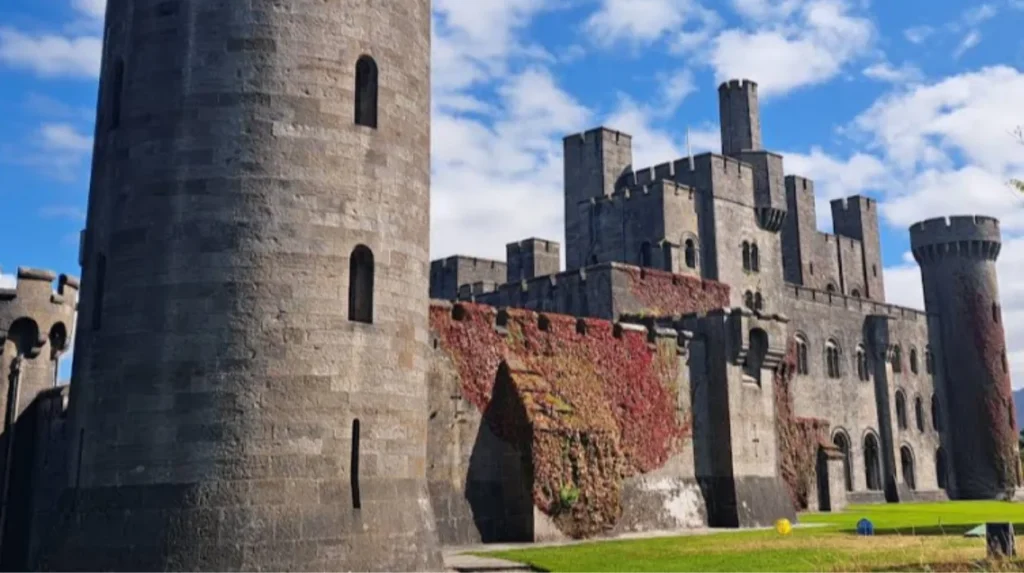
Penrhyn Castle, built 1822-1837 by George Hay-Dawkins Pennant from Jamaican sugar plantation wealth (including £14,700 slavery compensation in 1833), looms as a neo-Norman landmark with slate industry ties. The estate’s quarry made Bangor a slate export hub via Port Penrhyn.
19th-century growth came from mail coaches, Telford’s A5 road, and railways opening in 1848, transforming Bangor from a small settlement to a bustling port.
Cultural Vibrancy
Bangor hosts Gŵyl Bangor Festival with parades, music, and arts, alongside Gŵyl Arall celebrating Welsh-language talent and the Bangor Music Festival’s symphonies. Storiel museum in the Town Hall showcases Gwynedd heritage, while Pontio hosts modern performances.
The city hosted National Eisteddfods in 1890, 1902, 1915, 1931, 1940, 1943, 1971, and 2005, underscoring its cultural role. Bilingual services at the cathedral reflect 36% Welsh speakers (2011 census).
Modern Economy
Bangor’s economy thrives on education, tourism, healthcare at Ysbyty Gwynedd (403 beds), and retail along Wales’ longest High Street (1.265 km). Regeneration via Cyngor Gwynedd’s Placemaking Plan includes Tŷ Cyfle Bangor hub for training and jobs.
Median household income hovers at £25,000 with growth in healthcare, retail, and tourism; population hit 15,060 in 2021, diverse with 85% White British.
Notable Figures
Bangor birthed talents like singer Aled Jones (“Walking in the Air”), Duffy (UK No.1 artist), sculptor Richard Deacon (Turner Prize winner), and footballer Wayne Hennessey (108 Wales caps). Sport icons include rugby’s Robin McBryde and golfer Errie Ball (first Masters participant).
Politician Owen Hurcum became Wales’ youngest mayor at 22 in 2021, non-binary and historic.
Sports Scene
Bangor City F.C. won the Welsh Premier League thrice (1994, 1995, 2011) and Welsh Cup eight times; Bangor 1876 F.C. formed in 2019 to preserve local football. Bangor RFC competes in WRU Division Two North, with university teams excelling in BUCS rugby.
Practical Visitor Guide
Reach Bangor via A55, A5, or Bangor station on the North Wales Coast Line. Stay at historic Castle Hotel or modern options; explore via buses to Caernarfon or walks on NCR 5/8/85 cycles. Events peak summer with festivals; book pier tolls online.
Bangor’s enduring appeal lies in its seamless fusion of 1,500-year-old sanctity, rugged landscapes, and lively academia—ideal for heritage seekers and adventurers alike.