

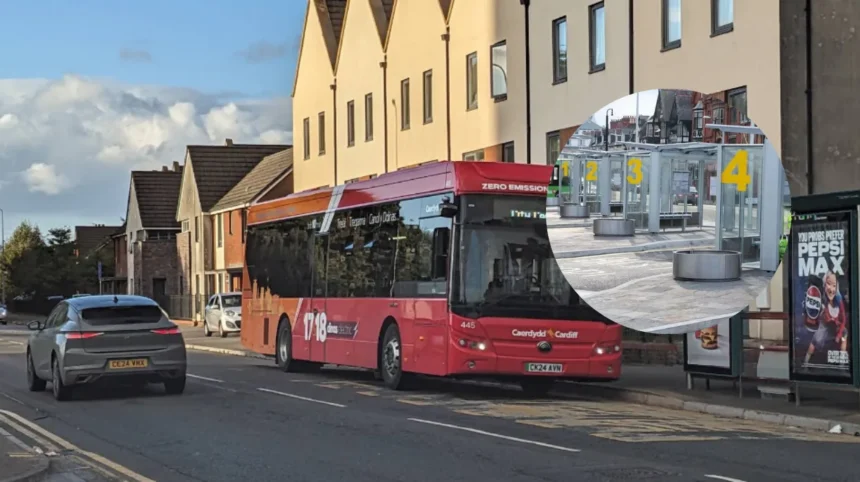
Key Points
- A new express coach service linking Bangor and Carmarthen will launch in autumn 2026, with services every two hours along Wales’s western corridor.
- Deputy Minister for Transport Mark Hooper announced the service in the Senedd, alongside an extension of the £1 bus fare scheme for young people until the end of the 2026–27 academic year.
- The route is expected to cut up to 90 minutes from existing journey times, using limited stops to ensure reliability and speed.
- Eight new coaches have already been purchased and are “in the yard, ready to go”; booking will open several weeks before the service starts.
- The service forms part of the Welsh Government’s first 100‑day commitments and builds on feasibility work carried out under the previous Welsh Labour Government as part of the co‑operation agreement with Plaid Cymru.
- Mark Hooper said 60 per cent of people consulted said they wanted the service, describing it as “making a difference quickly” in a way users will actually choose.
- Jason O’Connell (Reform UK) criticised the route for not extending to Holyhead, calling the announcement “the equivalent of Dave’s Coaches” and arguing Wales needs major rail investment rather than buses.
- Hooper responded that he supports rail, welcomed the possibility of discussing rail devolution, and said the service could be extended to additional stops based on demand.
- Labour’s Vikki Howells described a high‑speed bus alternative as “eminently sensible” given the estimated £2 billion cost of reopening direct rail links between Bangor and Carmarthen, but questioned why the £1 youth fare scheme was only extended for one year instead of made permanent.
- Conservative Janet Finch‑Saunders welcomed the link as progress on a devolution objective from 27 years ago but stressed continued investment in road infrastructure alongside public transport.
- Jane Dodds (Welsh Liberal Democrats) raised concerns about the T4 TrawsCymru service from Newtown to Cardiff, now terminating at Merthyr Tydfil and forcing passengers to change; Hooper said officials are already working on a solution.
- Hooper confirmed the new coach service will be cheaper than travelling by car or rail, with accessibility features at every stop and capacity for wheelchair users, and stressed that “integration, integration, integration” is central to success.
Wales (Wales Times) July 01, 2026 – A new express coach service connecting north and south Wales is set to launch in the autumn, with services running every two hours between uk/local/bangor/">Bangor and Carmarthen, the Senedd has been told.
- Key Points
- How Will the Service Fit Into the Government’s 100‑Day Plan and Previous Rail Work?
- Why Have Some Politicians Criticised the Route and Called for Rail Instead?
- How Have Other Parties Responded to the Coach Launch and the £1 Youth Fare Extension?
- Background of the North–South Express Coach Development
- How Can This Development Affect Passengers, Students and Communities in Wales?
Deputy Minister for Transport Mark Hooper announced the plans on Tuesday, confirming that eight new coaches were already delivered and “in the yard, ready to go”, with booking expected to open several weeks before the service begins. The service will operate along Wales’s western corridor, using limited stops to ensure reliability and to cut up to 90 minutes from existing journey times, according to Hooper’s statement to the chamber.
How Will the Service Fit Into the Government’s 100‑Day Plan and Previous Rail Work?
As reported in the Senedd proceedings, the coach service forms part of the Welsh Government’s first 100‑day commitments and builds on feasibility work carried out under the previous Welsh Labour Government as part of the co‑operation agreement with Plaid Cymru. That earlier work had examined the possibility of a faster north–south link along the west coast, and the current announcement refines that into a practical, high‑frequency coach solution rather than an immediate rail reopening.
Hooper told the Senedd:
“This is about making a difference quickly; it’s about making a difference that we know people will want to use,”
and noted that 60 per cent of those consulted said they wanted the service as set out. He said integration with other transport services is central to the new coach service’s success, repeating: “Integration, integration, integration,” and confirmed the service would be cheaper than travelling by car or rail, with accessibility features at every stop and capacity for wheelchair users.
Why Have Some Politicians Criticised the Route and Called for Rail Instead?
Jason O’Connell (Reform UK) gave the most critical response in the Senedd, questioning why the service does not extend to Holyhead, which handles 4.8 million tonnes of freight annually as Wales’s principal gateway for trade with Ireland. He said:
“Your flagship north-south service doesn’t even reach it; it stops at Bangor,”
and argued that this shows limited ambition, describing the announcement as “the equivalent of Dave’s Coaches”.
O’Connell contrasted Wales with countries across Europe investing in modern rail networks, citing Switzerland’s Gotthard base tunnel as an example that connected north and south, cut journey times, shifted freight onto rail and created single functioning labour markets. He concluded that the statement told a story of a “fragmented Wales economy and a celebration of the status quo”, rather than true ambition.
Hooper responded by saying he liked that O’Connell supports the rail network, and said he looked forward to discussing rail devolution next week, hoping to receive support from Reform UK when that issue is raised. He also confirmed that the service could be extended to additional stops in future based on demand, including the possibility of extending further north.
How Have Other Parties Responded to the Coach Launch and the £1 Youth Fare Extension?
Vikki Howells (Labour) noted the estimated £2 billion cost of reopening rail links between Bangor and Carmarthen and said a
“high-speed bus alternative is eminently sensible”.
However, she expressed disappointment that the £1 fare scheme for young people was only being extended for one year, rather than made permanent as Welsh Labour had previously pledged.
Hooper replied: “Don’t take that as an indication that it won’t be in for further years; these are conversations that we’ll have,” indicating that the extension to 2026–27 is not necessarily the final decision on the scheme’s duration.
Janet Finch‑Saunders (Conservative, Aberconwy) gave a warm welcome to the announcement, noting that a north–south transport link had been one of the original objectives of devolution 27 years ago. She said:
“I welcome this as being another way to get people from north to south,”
though she stressed the importance of continuing to invest in road infrastructure alongside public transport.
Jane Dodds (Welsh Liberal Democrats) raised concerns about the T4 TrawsCymru service from Newtown to Cardiff via Brecon, which now terminates at Merthyr Tydfil, forcing passengers to change. Hooper confirmed that the issue had already been raised with him and said he had asked officials to start working on a solution, linking that work to the broader integration goals for the new express coach service.
Background of the North–South Express Coach Development
The announced express coach service builds on earlier feasibility work into a faster north–south link along Wales’s western corridor, which had been examined under the previous Welsh Labour Government within the co‑operation agreement with Plaid Cymru. That work considered both rail and high‑frequency bus options, with the current decision focusing on a coach solution that can be delivered more quickly and at lower cost than reopening direct rail lines between Bangor and Carmarthen, an option estimated at around £2 billion.
The service is being framed as part of the Welsh Government’s first 100‑day commitments, with explicit aims to reduce journey times by up to 90 minutes, improve integration with other transport services, and provide a cheaper alternative to car and rail travel, while also supporting accessibility for wheelchair users at all stops.
How Can This Development Affect Passengers, Students and Communities in Wales?
For passengers travelling between north and south Wales, the new express coach is likely to reduce journey times significantly compared with current public transport options, offering a more direct link along the west coast without needing to travel through England or take multiple bus changes. This could make inter‑regional travel more predictable and affordable, particularly for those who do not have access to a car or who prefer not to drive long distances on mountainous routes.
For students and young people, the service could improve access to universities, colleges, placements, internships and part‑time work in towns along the route, while the continuation of the £1 bus fare scheme for young people until the end of 2026–27 will further reduce the cost of daily travel for those eligible. The focus on accessibility and integration aims to make the service usable for people with disabilities and to connect more smoothly with existing rail and bus networks.
For communities along the western corridor, the coach can enhance economic connectivity by making it easier for residents to reach jobs, healthcare and training opportunities further north or south, while also bringing visitors into smaller towns and supporting local businesses, hospitality and tourism, as implied by the government’s stated aims around reliability, speed and integration. If demand grows, Hooper indicated the service could be extended to additional stops or further north, potentially including Holyhead, depending on future decisions and funding.