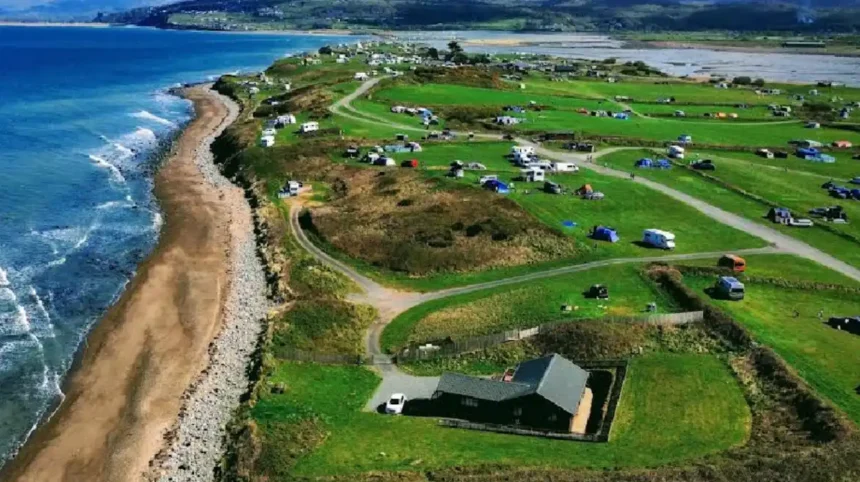
Camping Shell Island North Wales refers to outdoor recreation on Mochras, a 450-acre tidal peninsula in Gwynedd offering 300 acres of unallocated camping space, coastal access, and unique tidal causeway transit within Eryri National Park. Shell Island is widely recognized as one of the largest campsites in Europe. The site operates without marked pitches, allowing visitors to choose their own location across sand dunes, grassy fields, or coastal headlands. Access to the peninsula is controlled by a tidal causeway across the River Artro estuary, which floods twice daily during high tide.
- What Are the Tidal Causeway Access Rules for Shell Island?
- How Does Pitching Work Without Pre-Allocated Campsites?
- What Facilities and Amenities Are Provided on Shell Island?
- What Equipment Is Mandatory for Camping on Shell Island?
- Frequently Asked Questions
- Can you drive onto Shell Island without checking tide times?
- Are electric hookups available for tents or campervans at Shell Island?
- Can you light ground campfires on the beach or pitches at Shell Island?
- Are dogs allowed on Shell Island campsite and beaches?
- Do you need to reserve a specific pitch before arriving at Shell Island?
The peninsula features a rich human history dating back nearly a thousand years. It was recorded as a working agricultural settlement in the Domesday Book of 1086. Tourism expanded on the island during the 1880s following the construction of the local railway network. The Workman family acquired the property in 1958 and developed it into a structured camping destination while preserving its natural coastal landscape. Former farm structures now host modern facilities, such as a supermarket, restaurant, snack bar, and bathhouses.
The site accommodates up to 800 camping units simultaneously across its designated 300 acres of terrain. Visitors must bring self-contained equipment, as the site does not provide electric hookups to campers. The geographic layout includes three distinct environments: beach frontage, sand dunes, and sheltered countryside meadows. Shell Island is named after the hundreds of shell species that wash ashore along its coastline, including key shell varieties like tellins, scrobicularia, and whelks.
What Are the Tidal Causeway Access Rules for Shell Island?
The tidal causeway requires travelers to cross only during low tide windows because sea water covers the tarmac road twice daily during high tide, completely isolating Mochras from mainland Gwynedd for several hours. Driving across the flooded causeway is strictly prohibited due to severe vehicle submersion hazards.
The tidal cycle dictates entry and exit timings for all visitors. High tides flood the causeway to depths exceeding four feet during spring tide events. Crossing schedules change daily based on lunar cycles, shifting backward by approximately 50 minutes each day. Camping operational staff publish accurate tide timetables online and at the entrance toll gate to ensure safe passage for vehicles.
Drivers arriving at high tide must wait in designated mainland holding areas near Llanbedr until the water recedes. Attempting to cross while water covers the road risks engine failure, vehicle loss, and emergency services intervention. The causeway road features markers indicating water depth to deter unsafe crossings. Safe crossing windows typically open four hours after peak high tide and close two hours before the next high tide. Exceptional weather conditions, including heavy onshore winds, can prolong flood periods and delay causeway reopening times.
How Does Pitching Work Without Pre-Allocated Campsites?
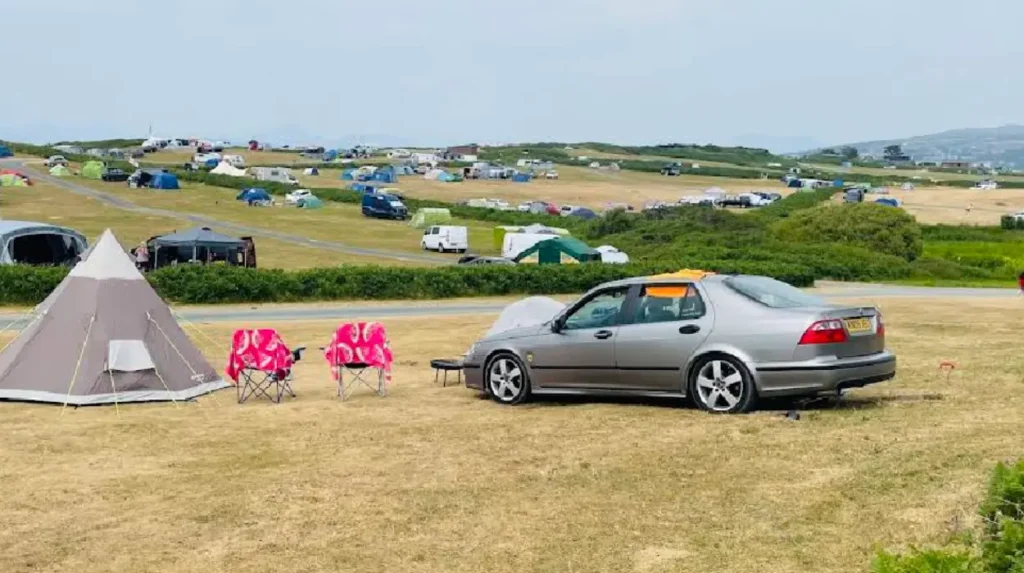
Pitching at Shell Island operates on a first-come, first-served unallocated system where campers drive onto the 300-acre grounds and select any open location that complies with safety distances. Pitch reservation for specific grassy spots or dune hollows is not available.
Upon passing the entrance toll booth, campers receive a site map outlining allowable camping zones, fire hazard areas, and access tracks. Campers may pitch tents along coastal cliffs, within natural dune hollows, or inside flat inland fields. Standard rules require pitches to maintain a minimum distance of six meters between neighboring tents to satisfy fire safety regulations.
Choosing a pitch requires evaluating wind exposure, ground elevation, and proximity to facilities. The coastal western boundary offers panoramic views of Cardigan Bay but leaves structures exposed to high wind speeds. The central fields provide flat grassland with natural tree shelter and quick access to shower blocks. Pitching in low-lying dune hollows can collect rainwater during heavy downpours, so experienced campers target elevated, well-drained turf sections.
What Facilities and Amenities Are Provided on Shell Island?
Shell Island provides centralized modern amenities including hot shower blocks, flush toilets, a fully stocked supermarket, a camping equipment shop, direct beach access, a restaurant, and a licensed tavern. Off-grid camping space is combined with central utility infrastructure.
The main utility complex houses multiple washrooms, dishwashing sinks, and coin-operated laundry units. Fresh drinking water taps are situated throughout the 300-acre field layout to reduce walking distances for campers. Waste disposal stations and chemical toilet disposal points are placed at fixed locations across the site to maintain environmental standards.
The on-site supermarket stocks fresh groceries, fire logs, gas canisters, and general household items. The camping supply shop sells replacement tent pegs, windbreaks, sleeping bags, and hardware suited for sandy coastal ground. The site does not provide electric hookups anywhere on the camping grounds, requiring visitors to supply their own portable power stations or solar chargers.
What Equipment Is Mandatory for Camping on Shell Island?
Mandatory equipment for Shell Island includes heavy-duty rock or sand tent pegs, sturdy windbreaks, portable power devices, elevated campfire equipment, and waterproof outerwear built for Atlantic weather systems. Soft coastal soil and high coastal winds require specialized gear.
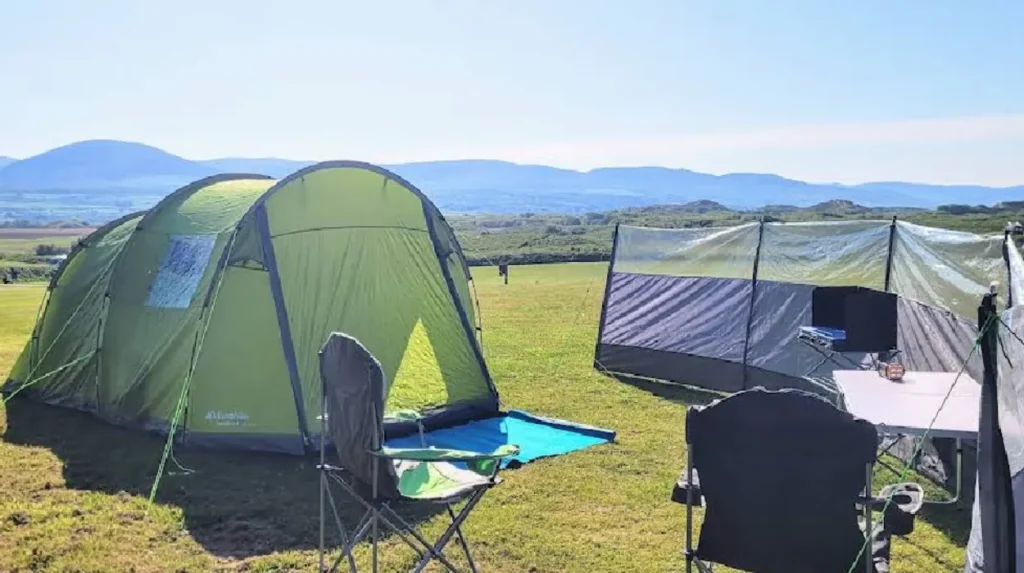
Standard wire tent pegs pull out easily from soft sand and coastal topsoil during strong sea gusts. Heavy-duty steel rock pegs or wooden sand pegs ensure secure anchor points for tent guy lines. Wooden or metal-spiked windbreaks stabilize outdoor living spaces against prevailing westerly winds.
Because the site lacks electricity, campers must pack high-capacity power banks, solar panels, or battery-powered lanterns for lighting and device charging. Campfires are permitted only when raised off the grass inside contained metal fire pits to prevent turf damage and ground fires. Open ground fires are strictly forbidden across all zones. Warm clothing layers and high-rating waterproof jackets are necessary due to rapid coastal weather changes.
Frequently Asked Questions
Can you drive onto Shell Island without checking tide times?
No, you cannot drive onto Shell Island without checking tide times. The tidal causeway floods twice daily under several feet of sea water, cutting off vehicle access completely. Attempting to cross a flooded causeway causes engine submersion and creates severe safety hazards.
Are electric hookups available for tents or campervans at Shell Island?
No, electric hookups are not available for tents, motorhomes, or campervans anywhere on the camping grounds. Visitors must bring fully self-sufficient power solutions like solar panels, battery chargers, or gas equipment. Central amenities blocks provide shared lighting, washrooms, and hot water.
Can you light ground campfires on the beach or pitches at Shell Island?
Ground campfires are strictly prohibited across the entire island to protect the coastal dunes and turf. Campers may burn logs or charcoal only inside off-the-ground, contained metal fire pits. Fire logs, kindling, and raised fire pits can be purchased directly from the on-site supermarket.
Are dogs allowed on Shell Island campsite and beaches?
Yes, dogs are allowed on Shell Island, but they must be kept under strict control at all times. Owners are required to clear up after their pets and keep them on leads around livestock, wildlife, and central facility buildings.
Do you need to reserve a specific pitch before arriving at Shell Island?
No, pitch reservations for specific spots are not possible because the site operates on an unallocated system. Campers reserve entry to the site and then choose their preferred location upon arrival across the 300 acres of open space.