
Key Points
- Military personnel and an Army helicopter have been deployed to support firefighters tackling Wales wildfires, particularly in Cwmavon, Torfaen.
- Four 14-year-old boys from Porth have been arrested on suspicion of arson following a deliberate mountain fire near Pleasant Heights and released on bail.
- Around 100 military personnel from the Queen’s Own Gurkha Logistic Regiment and 22 Engineer Regiment are assisting with logistics and water supply using four 20,000-litre bowsers.
- A UK-wide emergency alert warned of a “very high risk of wildfires nationally”, urging the public not to light any outdoor fires.
- Homes were evacuated in Llandovery, Carmarthenshire, and significant property damage occurred in Newbridge, while smoke affected multiple towns across Gwent and South Wales.
- Prime Minister Andy Burnham described Britain as a “tinderbox”, with 37 fires smouldering across the country, and First Minister Rhun ap Iorwerth attended a COBR meeting to coordinate the response.
Wales (Wales Times) August 15, 2026 – Military forces have been deployed to assist emergency services battling a series of Wales wildfires, as police confirmed the arrest of four teenagers on suspicion of arson. Personnel from the British Army, including an Army helicopter, are now supporting South uk/fire/">Wales Fire and Rescue Service (SWFRS) and Mid and West Wales Fire and Rescue Service (MWWFRS) at multiple sites, with the largest operation centred on Cwmavon Woods near Blaenavon.
- Key Points
- How extensive are the Wales wildfires and where have they spread?
- What emergency measures and alerts have been issued during the Wales wildfires?
- Who is involved in the response to the Wales wildfires?
- Background: How did the Wales wildfires situation develop?
- Prediction: How could the Wales wildfires affect communities and emergency services?
As reported by BBC News, Torfaen council said Army personnel and a helicopter are providing logistical support and aerial assistance to firefighters on the ground in Cwmavon, while authorities warned the public not to fly drones in the area because they could interfere with military and fire service aircraft. Stephen Kinnock, Secretary of State for Wales, said the deployment was intended to “alleviate the pressure on the ground” as crews faced an unprecedented number of simultaneous incidents.
In a separate but related development, South Wales Police said four 14-year-old boys from Porth were arrested on Friday on suspicion of arson after a deliberate fire was set on a mountain near Pleasant Heights. All four have been released on police bail while investigations continue. Detective Inspector Steve Jones, of South Wales Police, said: “These incidents put communities at risk, can impact people’s health, threaten wildlife, and divert emergency resources away from people who need us.”
How extensive are the Wales wildfires and where have they spread?
Wildfires have been reported at multiple locations across Gwent and South Wales, including Cwmavon Woods near Blaenavon, Wattsville Mountain, Rudry Common, Rhiwderin, Llangynidr Reservoir near Ebbw Vale, Rhandirmwyn near Llandovery and Cwm-Bach near Aberdare. Smoke from the blazes has affected communities including Newport, Cwmbran, Pontypool, Risca, Blaenavon, Brynmawr, Chepstow and Caerphilly, with residents reporting haze, reduced visibility and a strong smell in the air.
As reported by the South Wales Argus, a local resident said they could smell smoke while travelling on the M4 between Cardiff and Newport, and saw two fire engines refill in Wattsville before returning up the mountain. In Llandovery, Carmarthenshire, residents were evacuated from their homes as flames advanced towards the village, with a local councillor describing the situation as “scary”. MWWFRS confirmed firefighters remained on site, actively “making progress in addressing” the fire, which they characterised as a “challenging and dynamic incident”.
In Treorchy, Rhondda Cynon Taf, a BBC reporter observed that locals were “frightened” as flames approached within 30 metres of homes. Mark Carmody, a resident, said firefighters worked to “douse the back of the building and dampen the bracken behind it” as the blaze threatened properties. A fire in Newbridge caused significant damage to residential properties and led to evacuations to a leisure centre, with a 29-year-old woman arrested on suspicion of arson in connection with that incident, although police said it was not linked to other wildfires.
What emergency measures and alerts have been issued during the Wales wildfires?
On Friday evening, the UK government sent an emergency alert to mobile devices across England and Wales, warning of a “very high risk of wildfires nationally”. The alert urged the public to refrain from igniting fires, including disposable barbecues, fire pits, garden incinerators or fireworks, cautioning that “even a small flame can swiftly escalate into a significant wildfire, endangering lives, properties, businesses, and emergency responders”.
Prime Minister Andy Burnham emphasised the importance of taking the alert “seriously”, advising everyone to exercise “extra caution” and to refrain from “lighting any fires in gardens, the countryside, or other open areas, including parks, moorlands, and wooded regions”. Burnham said on Friday that Britain was a “tinderbox right now”, with 37 fires smouldering across the country.
SWFRS and MWWFRS have both declared major incidents following days of fires during prolonged hot and dry weather. SWFRS said it had requested military support under the Military Aid to the Civil Authorities (MACA) scheme after crews tackled more than 30 wildfires in a single day. MWWFRS reported that crews had dedicated more than 90 hours to operations in Merthyr Tydfil, Ebbw Vale and other areas, describing the period as one of the busiest in recent years.
Who is involved in the response to the Wales wildfires?
Around 100 military personnel have been deployed to support the response to fires across south Wales following a request for assistance backed by the Welsh Government. Personnel from the Queen’s Own Gurkha Logistic Regiment, supported by 22 Engineer Regiment, are assisting rescue and recovery operations. Equipment deployed includes four water bowsers, each capable of carrying 20,000 litres.
As reported by Nation.Cymru, the military deployment follows First Minister Rhun ap Iorwerth’s attendance at a COBR meeting earlier in the week, where he called for UK-wide co-ordination and raised the possibility of military assistance. Natural Resources Wales has also deployed a firefighting helicopter to support operations, while more than 20 fire engines, specialist teams and partner agencies have responded to incidents across the region.
Sallie Jones, a representative for the Cwm Task Force, noted the community’s collaborative efforts, saying: “If the wind had shifted, it could have resulted in total devastation.” She added that the entire village was anxious, with residents reaching out the previous night to inquire about their safety. Local businesses have provided sustenance to firefighters, with MWWFRS extending gratitude for the support received during the crisis.
Background: How did the Wales wildfires situation develop?
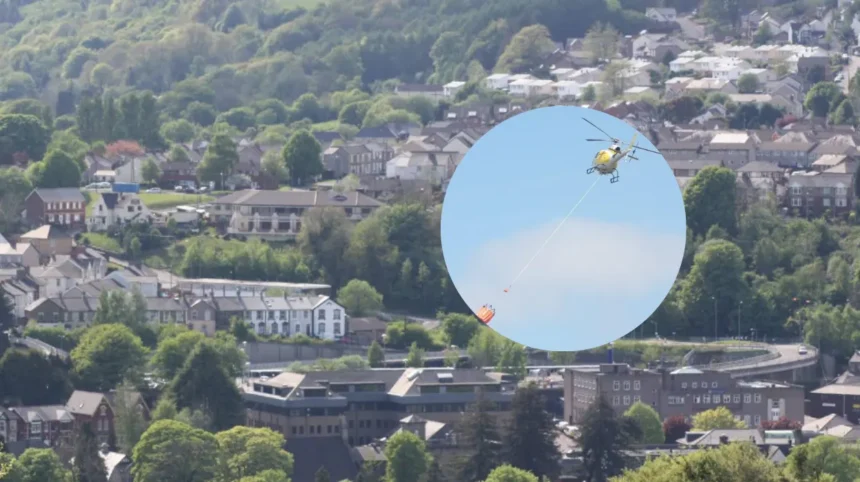
The Wales wildfires emergency developed over several days of prolonged hot and dry weather, with SWFRS reporting more than 30 wildfires in a single day before requesting military assistance under the MACA scheme. A firefighting helicopter was deployed to tackle a blaze at Cwmavon Woods in Blaenavon, with crews working to protect nearby homes as smoke spread across towns and cities in Gwent.
First Minister Rhun ap Iorwerth attended a COBR meeting earlier in the week to coordinate the UK-wide response and raise the possibility of military assistance, leading to the deployment of around 100 personnel from the Queen’s Own Gurkha Logistic Regiment and 22 Engineer Regiment. The UK government’s emergency alert on Friday evening marked an escalation in public warnings, as Prime Minister Andy Burnham described Britain as a “tinderbox” with 37 fires smouldering across the country.
Prediction: How could the Wales wildfires affect communities and emergency services?
The deployment of military personnel and equipment is likely to ease immediate pressure on firefighters, but the Wales wildfires could continue to strain emergency services if hot, dry conditions persist. Communities in affected areas may face repeated evacuations, smoke-related health risks and disruption to transport, as seen with reports of smoke on the M4 and road closures around Cwmavon.
For residents, the risk of property damage and displacement could increase if further deliberate fires are set, as highlighted by the arrests of four teenagers in Porth. Emergency services may need to maintain heightened patrols and public awareness campaigns to deter arson, while long-term investment in wildfire prevention and landscape management could become a priority for Welsh and UK authorities.