Key Points
- Mrs Maggie Heginbothom, 68, who is undergoing palliative treatment at Ysbyty Gwynedd, tied the knot with her fiancé of 15 years, Mark, at Tegid Ward on Monday, 9th November 2026.
- Mark proposed to Maggie at her bedside on Friday, 6th November; the registrar informed him that they could be able to marry in three days.
- Maggie was admitted to the Bangor hospital almost three weeks ago because she felt unwell during one of her horse rides.
- After various tests and scans, Maggie received the terminal diagnosis of advanced liver cancer.
- The team at Tegid Ward managed to organize a wedding over the weekend organizing flowers, decorations, catering, cakes, and entertainment through the social media group of the staff.
- Dylan Rowlands, harpist, gifted a wedding musical performance; Allisha from Dolluxe Hair salon cut Maggie’s hair free of charge; Aled Wyn Davies, along with Hawkstone Choir, gifted them a wedding video; and Wynne Roberts, the chaplain, entertained them with his guitar playing.
- Ozzy and Quiosque, Maggie’s horses were also brought to the hospital for a visit.
- Manager of Tegid Ward, Rachel Parry, Matron, Ceri Newell, Maggie herself, and Chaplain, Wynne Roberts, acknowledged the hard work of the staff and local community.
- This news was published by the Daily Post and Betsi Cadwaladr University Health Board, which is the NHS trust for Ysbyty Gwynedd.
Wales (Wales Times) November 13, 2026 — A woman receiving palliative care at Ysbyty Gwynedd has married her partner of 15 years in a hospital-ward ceremony arranged in just two days, after being proposed to at her bedside. As reported by the Daily Post, Maggie Heginbothom, 68, who has received a terminal diagnosis of advanced liver cancer, married Mark on Tegid Ward on Monday, 9 November 2026.
- Key Points
- What Did Staff Arrange for the Ceremony?
- Why Were Maggie’s Horses Involved?
- What Did the Ward Manager Say?
- What Did Maggie Say After the Wedding?
- What Did NHS Leaders Say About the Ceremony?
- How Was the Story Reported?
- Background of the Development
- Prediction: How May This Affect Patients and Families
The wedding took place after Mark proposed on Friday, 6 November. Once the registrar confirmed that the ceremony could go ahead on the ward, staff had only the weekend to prepare.
Betsi Cadwaladr University Health Board, which published an account of the ceremony on 12 November, said Maggie had been admitted to the hospital almost three weeks earlier after becoming unwell while riding one of her horses. Following a series of investigations and scans, she was told that she had advanced liver cancer.
Maggie, who is originally from the Vale of Glamorgan, is a former Clinical Scientist with Public Health Wales. She described the hospital staff as “like family” after they helped bring about the wedding.
What Did Staff Arrange for the Ceremony?
Staff on Tegid Ward used their social-media group to coordinate the arrangements, with colleagues offering help in their own time. According to the health board and the Daily Post, the preparations included flowers, decorations, food, cakes and entertainment.
Harpist Dylan Rowlands volunteered to perform at the ceremony as a wedding gift. Allisha, from Dolluxe Hair Salon, offered to style Maggie’s hair without charge.
Aled Wyn Davies and the Hawkstone Choir sent a special wedding video. Hospital Chaplain Wynne Roberts also surprised those present by performing songs on his guitar.
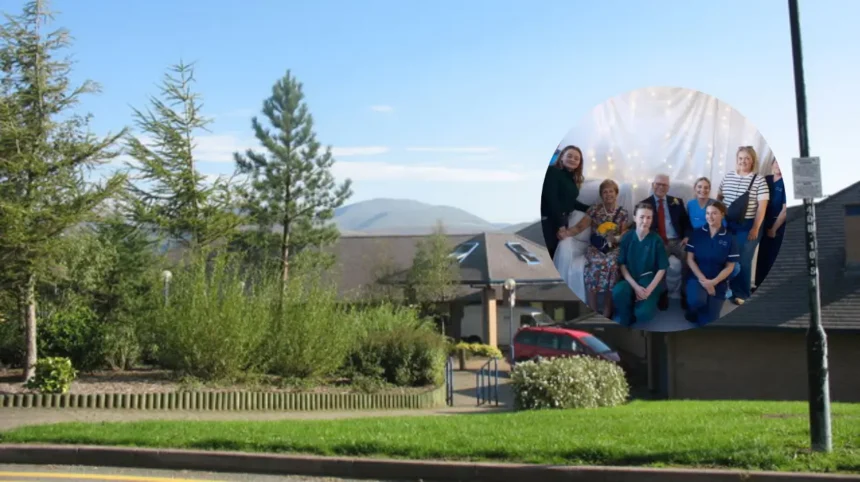
On the morning of the wedding, Maggie’s room was transformed with white sheets and fairy lights, while the relatives’ room was used as a reception area. Tegid Ward Manager Rachel Parry said the team had worked to create a special setting for the couple.
Why Were Maggie’s Horses Involved?
Maggie, who has spent many years riding and competing with horses at Pen Llŷn Stud and Riding School, received an additional surprise on her wedding day. Her horses, Ozzy and Quiosque, were brought to Ysbyty Gwynedd to visit her.
The health board described the visit as an “extra-special surprise” for the horse lover. Maggie later said that seeing both horses at the hospital was something she had not thought would be possible.
What Did the Ward Manager Say?
Rachel Parry, Tegid Ward Manager, said that once the registrar’s availability was confirmed, it was “all systems go”. She said staff had only the weekend to organise everything, but that people immediately became involved and wanted to contribute.
As reported by the Daily Post, Parry said:
“On the morning of the wedding, we transformed Maggie’s room with white sheets and fairy lights to create a beautiful space for the ceremony, while the relatives’ room became a reception area.”
She added that “everything ran like clockwork” and that some colleagues came in on their days off to help. Parry said it was a “special and emotional occasion”, with “not a dry eye in the room”.
Parry also said it was particularly meaningful that some patients Maggie had come to know during her time on the ward were able to join the celebrations. She said the team had been touched by the generosity of people who offered their talents and services.
What Did Maggie Say After the Wedding?
Maggie said she had been overwhelmed by the love and kindness shown by everyone involved. According to the health board’s account, she said: “I just cannot put into words how incredibly grateful I am to everyone who made this happen.”
She said the day was “so beautiful” and that she had not believed it would be possible, particularly seeing both of her horses there.
Maggie thanked the hospital staff, saying: “They work so incredibly hard and have surrounded me with so much love and kindness. They really are like family to me.”
She also gave a special thanks to hospital chaplain Wynne Roberts, saying he had helped organise everything and ensured that the wedding could take place.
What Did NHS Leaders Say About the Ceremony?
Matron Ceri Newell said the wedding was an example of the compassion and dedication shown by NHS staff. She said nursing involved more than treating illness, describing it as being about “compassion, kindness, humanity” and helping to make someone’s wishes come true.
Newell said: “What the team achieved for Maggie and Mark in such a short space of time was truly remarkable, and I could not be prouder of every single person involved.”
She added that everyone had gone “above and beyond”, working together to create something special for a couple going through a difficult time.
How Was the Story Reported?
The Daily Post reported the story on 13 November under the headline, “Woman with terminal cancer marries at Ysbyty Gwynedd just three days after proposal”. The report said there “wasn’t a dry eye in the room” as hospital staff, friends and local businesses helped make the wedding happen.
Betsi Cadwaladr University Health Board published its own account on 12 November, titled “Hospital staff pull out all the stops to make patients’ wedding dream come true”. The health board’s report included the same central details: Maggie’s diagnosis, Mark’s proposal, the two-day preparation period, the contributions from local performers and businesses, and the visit from her horses.
The health board also published a Welsh-language version of the story, “Staff ysbyty yn rhoi pob gewyn ar waith i wireddu priodas delfrydol cleifion”, on 12 November.
Background of the Development
Ysbyty Gwynedd is a hospital in uk/local/bangor/">Bangor, Gwynedd, managed by Betsi Cadwaladr University Health Board. The wedding took place on Tegid Ward, where Maggie had been receiving palliative care following her diagnosis.
Maggie’s admission followed her becoming unwell while riding one of her horses. After investigations and scans, clinicians gave her a terminal diagnosis of advanced liver cancer.
The ceremony came three days after Mark’s bedside proposal. Hospital staff, local performers, a hair salon, a chaplain and Maggie’s riding community all contributed to the arrangements, while fellow patients on the ward were also able to attend.
Prediction: How May This Affect Patients and Families
For patients receiving palliative care and their families, the case may highlight the importance of hospital teams being able to respond quickly to personally significant wishes. The speed with which Tegid Ward staff arranged the ceremony could encourage other patients and relatives to discuss important life events, ceremonies or visits with their care teams earlier.
For NHS staff, the response may reinforce the value of practical, compassionate support alongside medical care. The health board’s account suggests that staff gave time outside their normal duties and drew on local goodwill to meet the couple’s wishes.
For the wider Bangor and Gwynedd community, the involvement of a harpist, a hair salon, a choir and Maggie’s riding school may show how local businesses and volunteers can contribute to hospital-based celebrations. The story may also prompt greater awareness of palliative care services and the personal priorities that patients and families may wish to discuss with clinicians.