

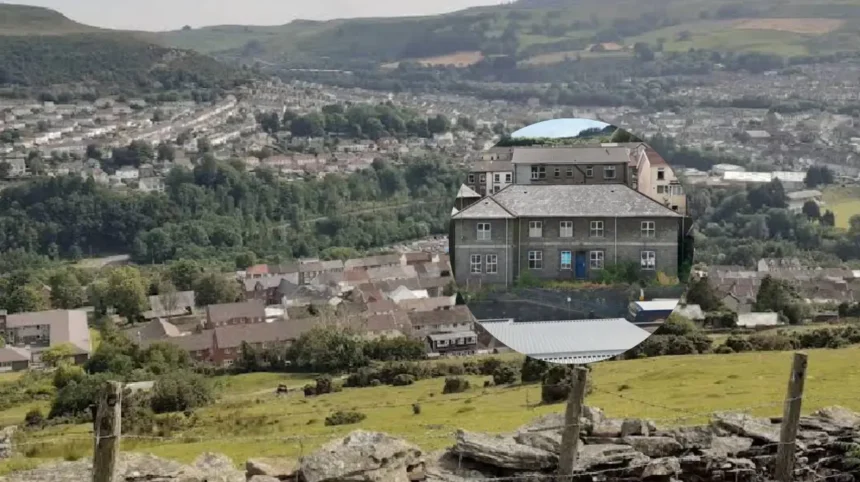
Key Points
- The Tonypandy Riots police station, an abandoned police station situated in Rhondda Cynon Taf, is expected to be auctioned off.
- According to Paul Fosh Auctions, the price range set for this two-storey structure is £99,000.
- Built in 1876, the building comprises cells with steel doors, bars, and fittings.
- The auctioning firm stated that those arrested in the Tonypandy Riots of 1910 were reportedly confined in this police station.
- This building has been derelict for a while now; however, some clearing of the premises is under way in view of the development work.
- Earlier, plans for developing the former police station into office spaces had been sanctioned by Rhondda Cynon Taf Council.
Wales Police (Wales Times) August 21, 2026 — Tonypandy Riots police station is being offered for sale at auction with a guide price of £99,000, placing a former Victorian police building linked to one of the most significant industrial disputes in Welsh history on the market.
The vacant Tonypandy Police Station in Rhondda Cynon Taf is a two-storey building constructed in 1876. It has stood empty for several years, but retains features from its policing past, including former custody cells, heavy metal cell doors and barred windows.
The sale was reported by Herald Wales under the headline “Tonypandy Riots police station up for sale”. The report identifies the property as the former police station associated with the 1910 unrest in the Rhondda Valley, commonly known as the Tonypandy Riots.
As reported by Nicholas Bourne of BBC Wales, Paul Fosh Auctions said that many people caught up in the disturbances are believed to have been arrested by police and military personnel operating from the station. The auction house described the building’s former cells as among its most distinctive surviving features.
Paul Fosh Auctions said:
“Surely the most iconic features of the vacant building must be the former cells with their solid walls, barred windows and steel-braced, bolt-fitted doors.”
The auctioneer added:
“One can only wonder at the history of the building and in particular the former inmates who would have been accommodated in this historic building over the years.”
The £99,000 figure is a guide price rather than a confirmed sale price. The eventual value of the property will depend on bidding at auction, the condition of the building, the cost of refurbishment and any requirements attached to future planning proposals.
Why is the former police station historically important?
The building’s importance is closely connected to the Tonypandy Riots, which took place during the wider Cambrian Combine dispute in 1910. The unrest emerged from a pay dispute involving miners and pit owners and became a defining episode in the industrial history of the south Wales coalfield.
According to BBC Wales’ account, the owners of uk/local/cardiff/ely/">Ely Pit in Penygraig shut out 950 miners on September 1, 1910, following disagreement over the expected extraction rate from a newly created coal seam. By early November, the dispute had spread to the 12,000 colliers employed by the Cambrian Combine, with all but one of its south Wales pits closed.
On the nights of November 7 and 8, 1910, striking miners damaged shops and property belonging to mine owners in Tonypandy. Additional police officers were deployed as the disorder developed.
The events brought national political attention to the valley. Winston Churchill, then the Liberal Home Secretary, was involved in the Government response. BBC Wales reported that troops were sent onto Tonypandy’s streets in support of police, a decision which subsequently affected Churchill’s standing among many people locally.
The former station is therefore not simply a redundant public building. It is associated with the policing response to a dispute that remains an important part of the history and collective memory of the Rhondda Valley.
What features does the Tonypandy property retain?
The sale listing focuses on the surviving physical evidence of the building’s former use. Although parts of the property have been emptied or partially cleared, the former custody area remains a central feature.
BBC Wales reported that the site retains imposing heavy metal cell doors and bars on the windows. The auctioneer also referred to solid cell walls and steel-braced, bolt-fitted doors.
These details may be relevant to any buyer considering a new role for the property. They also indicate that a future conversion would involve a building with an unusual internal layout and heritage characteristics.
The property’s former policing function could present practical considerations for redevelopment, including the condition of older fabric, the retention or removal of original fixtures, accessibility work and compliance with present-day building standards. None of those matters is resolved by the guide price alone.
The auction listing presents the building as vacant and available for renovation. However, a purchaser would need to carry out their own inspections, seek professional advice and establish the full costs of any project before deciding how the property could be used.
What redevelopment plans have previously been approved?
Rhondda Cynon Taf Council had previously agreed plans for the former police station to be converted into offices, according to the BBC Wales report.
That earlier approval indicates that a commercial reuse of the building has been considered by the planning authority. It does not automatically determine what a new owner may do with the site, as buyers would need to check the status, terms and timescales of any existing planning consent.
An office conversion could require substantial work, particularly if the former station’s cells and other original features are to be adapted for a modern workplace. The sale report does not state that an office conversion will proceed, nor does it identify a confirmed future buyer or use.
The station’s history could also be relevant to discussions about how much of the building’s character should be retained during any refurbishment. That question would be for the buyer, planning authority and other relevant bodies to address through the appropriate property and planning processes.
Background: What were the Tonypandy Riots?
The Tonypandy Riots were part of the 1910 Cambrian Combine dispute, a major conflict in the south Wales coal industry. The dispute centred on pay and working arrangements, including disagreement over output expectations at Ely Pit in Penygraig.
The lockout of 950 miners in September 1910 was followed by wider industrial action affecting thousands of workers. The unrest in Tonypandy during November led to damage to shops and mine-owners’ property, as well as the deployment of additional police.
The involvement of the authorities, including the role of Winston Churchill as Home Secretary, ensured that the events retained political as well as local importance. More than a century later, the name Tonypandy continues to be strongly associated with the coalfield’s industrial past, labour relations and the relationship between communities and the state.
The former police station’s link to arrests made during the disturbance gives the building a particular place within that history. Paul Fosh Auctions has said people involved in the unrest are believed to have been held there.
How could the auction affect Tonypandy and Rhondda Valley residents?
For people in Tonypandy and the wider Rhondda Valley, the auction could determine whether a long-vacant historic building returns to active use. A successful purchaser may choose to pursue office accommodation or another permitted redevelopment, subject to planning and building requirements.
The sale may also prompt renewed attention on the preservation of local industrial and civic heritage. Residents with an interest in the Tonypandy Riots and the history of the coalfield may closely follow whether original elements, particularly the cells and other policing features, remain part of the building after any redevelopment.
For prospective buyers, the property offers a guide price of £99,000 but also carries the responsibilities commonly associated with an older vacant building. Its condition, adaptation costs and planning position are likely to be important factors in determining its future.