

Key Points
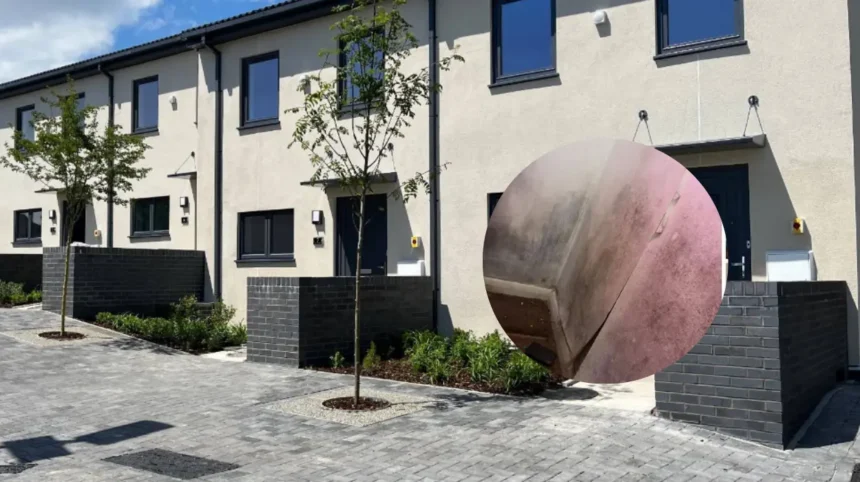
- Thirty-two-year-old Leah Morgan says that her 14-year-old daughter and five-year-old cannot sleep in their room anymore because of black mould growing up the walls of the flat at Pembroke Road, Bulwark, Chepstow.
- This past year, the 14-year-old fell unconscious after reporting chest pains. A doctor found a serious chest infection and has linked the recurring respiratory infections of the two children to the mould growing in their home.
- However, even though Monmouthshire Housing Association did some work that includes new panelling when the child collapsed, Ms Morgan claims that there is no more improvement from the company since she refused entry unless there is a way to remove the mould.
- Monmouthshire Housing Association has supported Ms Morgan’s complaints of long waiting times for mould complaints but has stated that any immediate danger has already been eliminated; however, it has said that it cannot provide her with temporary accommodation immediately because of the high demand.
- Ms Morgan states that the family cannot afford any private rental because the prices of two-bedroom flats range £1,000 per month while three-bedroom flats are priced around £1,500 a month, with their current rent amounting to £600.
Wales Crime (Wales Times ) August 22, 2026 – A mother in Chepstow says her two daughters have been sleeping outside their bedroom for months because of severe black mould, after her 14-year-old collapsed at home with a chest infection that a doctor linked to mould exposure. Leah Morgan, 32, told WalesOnline that her children, aged 14 and five, are now sleeping on a mattress in the living room and in her own bedroom because they “have no bedroom” due to the condition of the walls in their flat on Pembroke Road in the Bulwark.
- Key Points
- What did Leah Morgan say about her daughters’ health and living conditions?
- What repairs and complaints have been made to Monmouthshire Housing Association?
- What is Monmouthshire Housing Association’s response to the black mould Chepstow case?
- Why can’t the family move to a larger or private rental property?
- Background to the black mould Chepstow development
- Prediction: How could this development affect tenants and housing associations in south Wales?
What did Leah Morgan say about her daughters’ health and living conditions?
As reported by WalesOnline, Leah Morgan said:
“My five-year-old is sleeping in my bedroom and my other daughter is on a mattress on the floor of the living room. They have no bedroom.”
She said she has lodged numerous complaints with her housing association over several years about the property.
The situation reached a crisis point earlier this year when her 14-year-old collapsed at home.
“My eldest just walked out of the bedroom one day and said her chest hurt and she wasn’t feeling very well. She then collapsed on the kitchen floor,”
Ms Morgan told WalesOnline. She added: “We got her straight to the doctors who said she had a severe chest infection and the doctor asked: ‘Do you suffer with any sort of black mould?’”
Ms Morgan said she was given a letter from her GP confirming that both daughters had been seen at the surgery with recurrent respiratory tract illnesses, and that it was likely mould at the property was impacting their health and may be contributing to recurrent illnesses. She also said her youngest daughter has endured persistent skin irritations and infections.
What repairs and complaints have been made to Monmouthshire Housing Association?
Following the teenager’s collapse, landlords Monmouthshire Housing Association visited the property to undertake work including installing new panelling on the bedroom walls, but Ms Morgan said progress has stopped. She said additional work was only undertaken after Monmouthshire county councillor for Bulwark and Thornwell, Armand Watts, raised complaints on her behalf in July.
Ms Morgan said she has not allowed workers further entry to her flat, which she shares with her partner and two daughters, following advice that she should insist on a plan to address and treat the black mould. She said the housing association has previously painted over the mould in her living room and in the girls’ bedroom, but they told her the issue stemmed from the external wall.
The family relocated to the two-bedroom property six years ago after being in temporary accommodation, having been forced to leave a private rental in Thornwell when the property was sold.
What is Monmouthshire Housing Association’s response to the black mould Chepstow case?
Monmouthshire Housing Association said it had upheld a complaint from Ms Morgan regarding the time it had taken to respond to her reports of mould. A spokeswoman for the housing association said: “We take all reports of damp or mould seriously, and in this case the immediate risk from mould has been removed. The resident raised a formal complaint regarding the time taken to address the issue and we have upheld that complaint.”
The spokeswoman added: “We are committed to working with the resident to agree any further actions that may be required. We are currently awaiting a response from the resident’s appointed advocate so that we can discuss and agree the next steps.” She said: “We understand the impact that damp or mould can have on residents and are keen to bring this matter to a satisfactory conclusion as quickly as possible.”
On the question of rehousing, the spokeswoman said demand for social housing exceeds supply both locally and nationally, adding:
“While we assess every application in line with our allocations policy and take individual circumstances into account, we are unable to offer immediate rehousing in many cases.”
Why can’t the family move to a larger or private rental property?
Ms Morgan, who is studying with the Open University, said that while they want to relocate to a larger property, none are available, and private rentals are not something she is able to currently afford. She said: “I don’t think we can afford private rental anymore. This place is about £600 a month but even for a two-bedroom privately you are looking at about £1,000 a month and I’ve seen a three-bedroom advertised for about £1,500 a month.”
Background to the black mould Chepstow development
Cases of severe damp and mould in social housing have drawn heightened scrutiny across the UK in recent years, with multiple Housing Ombudsman decisions in 2026 finding service failures and maladministration in landlords’ handling of mould complaints and ordering apologies and compensation. In parallel, some councils have moved to adopt stricter response times for damp and mould under the framework of Awaab’s Law, which aims to force quicker action on hazardous conditions. The Chepstow case sits within this wider context of growing pressure on housing associations to treat mould as a health and safety issue rather than a cosmetic repair, and to provide clear plans for remediation when external walls and structural factors are cited as causes.
Prediction: How could this development affect tenants and housing associations in south Wales?
For tenants in south Wales and similar markets, the black mould Chepstow case is likely to reinforce the importance of documenting health impacts, securing GP letters, and escalating complaints through councillors and formal processes when repairs stall. For housing associations, the public nature of the case and the upheld complaint may increase pressure to publish clearer mould remediation plans, improve communication with residents’ advocates, and prioritise cases where children’s health is affected, particularly as ombudsman decisions continue to highlight failures in damp and mould handling. In the longer term, such cases could accelerate local policy changes on inspection timescales, independent surveys of external walls, and temporary accommodation offers where bedrooms are deemed unusable, especially if regulators and councils push for faster compliance with emerging standards on mould risk.