Key Points
- Residents of the Greenwood Drive area in Cimla, Neath, are calling for the removal of school sports pitch floodlights.
- Residents had complained of sleep disturbance, disturbance to children, and light pollution shining on homes and gardens as brightly as a runway at an airport.
- An independent post-floodlight installation study conducted by The Lighting Bee indicated that the structures installed were completely different from the planned ones.
- According to the independent study, the site should have been assessed using the E2 low-brightness environmental criteria instead of combining the E2 and E3 criteria.
- It has been stated that the lighting columns will be kept off until further investigation.
Wales (Wales Times) August 28, 2026 – Neath school floodlights installed at the Cefn Saeson Comprehensive site have sparked long-standing disputes, leading neighbouring homeowners to formally petition for their permanent removal following severe, multi-year light pollution and sleep deprivation.
- Key Points
- Why Are Cimla Residents Calling For The Permanent Removal Of The Floodlights?
- What Did The Independent Report Reveal About Planning Discrepancies?
- How Has Neath Port Talbot Council Responded To The Dispute?
- Background To The Cefn Saeson Comprehensive School Development
- Future Implications For Residents, Pupils, And Local Sports Organisations
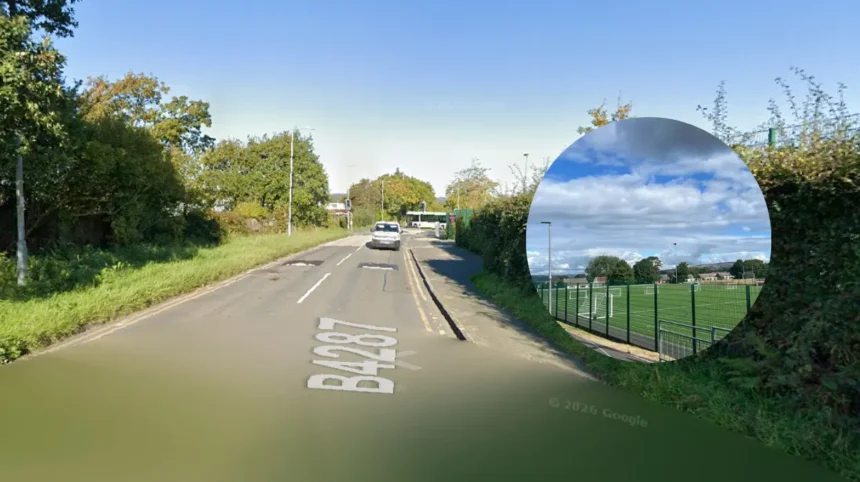
As reported by Lewis Smith of the Local Democracy Reporting Service via WalesOnline, residents living adjacent to the school uk/sports/">sports ground on Greenwood Drive have raised ongoing complaints since the floodlight columns were erected, describing the severe glare as a total nuisance that lit up residential streets like an airport.
Why Are Cimla Residents Calling For The Permanent Removal Of The Floodlights?
The primary contention among neighbours in Cimla is that the brightness penetrates directly into residential properties, causing severe disruption to normal sleeping patterns and daily living conditions.
As reported by Lewis Smith of WalesOnline, local resident Tim Pearson stated that
“people were finding it distressing because you’d have children that couldn’t sleep at the rear of the properties where their bedrooms were due to the amount of light pollution that was coming in. Even those that didn’t have young children found it a total nuisance because it was completely illuminating their gardens.”
Another resident who chose to remain anonymous informed the Local Democracy Reporting Service that the sheer intensity of the illumination made the nighttime feel like day, expressing deep apprehension over the risk of the system being switched back on in the future.
What Did The Independent Report Reveal About Planning Discrepancies?
Concerns regarding the installation heightened significantly after the release of an independent post-installation review conducted by specialist lighting design consultants, The Lighting Bee. The document was obtained by Tim Pearson following a formal Freedom of Information request submitted to the local authority.
According to the findings compiled by The Lighting Bee, the floodlight specification and structural design physically erected on the school grounds were entirely different from the proposals approved during the initial planning permission phase.
The report from The Lighting Bee states: “Although the levels based on the planning proposals are met for an E3 Zone, when considering light intrusion they are not met for an E2 zone, which in our opinion this site should have been assessed against. This statement is also irrelevant as a completely different floodlight specification and design has been installed, for which a design and assessment has not been prepared.”
Under UK environmental lighting classifications:
- E2 environmental zones designate low district brightness criteria, standard in rural or sparsely populated settlements.
- E3 environmental zones represent medium district brightness criteria, standard in well-inhabited suburban and urban districts.
The independent assessment determined that the entirety of the Cefn Saeson pitch perimeter should have been classified under the E2 standard rather than split across both zones. Furthermore, the Local Democracy Reporting Service reviewed an internal council email indicating that an environmental health officer considered the lighting levels to be contributing to a statutory nuisance under relevant environmental health legislation.
How Has Neath Port Talbot Council Responded To The Dispute?
Neath Port Talbot Council has kept two of the lighting units nearest to Greenwood Drive switched off since January 2024 to mitigate immediate glare while technical evaluations take place.
Addressing the findings, a spokesperson for Neath Port Talbot Council stated: “The impact of the floodlighting was considered as part of the planning application process and the development was assessed against the relevant planning requirements. The council is aware of concerns raised by residents and continues to engage with those concerns where appropriate. Whilst further enquiries are ongoing, the lighting columns will not be used.”
Although local homeowners acknowledge that temporary deactivation has offered relief, they continue to press the council for complete decommissioning and physical removal to permanently prevent future operations.
Background To The Cefn Saeson Comprehensive School Development
The disputed lighting infrastructure was constructed as part of a wider multimillion-pound replacement development for Cefn Saeson Comprehensive School, which officially completed and opened in 2021. The updated facility included modern outdoor community sports pitches intended to support both school physical education curricula and external evening sports bookings.
During the statutory planning stages leading up to the 2021 opening, technical assessments were carried out to evaluate potential environmental and visual impacts on neighbouring homes on Greenwood Drive. However, the subsequent post-installation review conducted in 2024 revealed that the physical hardware deployed on site deviated from the approved blueprints, leading to legal and technical scrutiny regarding whether statutory nuisance thresholds had been breached.
Future Implications For Residents, Pupils, And Local Sports Organisations
The outcome of the local authority’s ongoing technical review carries direct implications for several distinct local stakeholders:
- Local residents and homeowners: A permanent decommissioning or mandatory structural redesign would provide legal certainty, safeguarding sleep health, residential privacy, and property values from recurring light pollution.
- School pupils and educational administration: The continued restriction of the lighting units limits outdoor winter and evening physical education activities, requiring school leadership to adjust sports timetables within daylight hours.
- Community sports clubs and facility operators: Third-party evening sports leagues that rely on floodlit artificial pitches for revenue and grassroots training sessions may face reduced pitch availability or booking cancellations across autumn and winter seasons.
- Local authority planning and enforcement teams: If planning non-compliance is formally confirmed, the council may need to absorb remedial costs or enforce structural modifications against contractors, setting a clear precedent for sporting infrastructure compliance across the county borough.