
Key Points
- More caution has been advised for Leicestershire motorists due to rainier weather making it more dangerous to drive.
- The alert comes after an accident on Spencefield Lane in Leicester at around 02:30 BST on Saturday.
- One vehicle was involved in the incident where it left the road and struck a tree, causing injury to the driver who had to be taken to hospital.
- The injuries sustained by the driver were termed as not life-threatening.
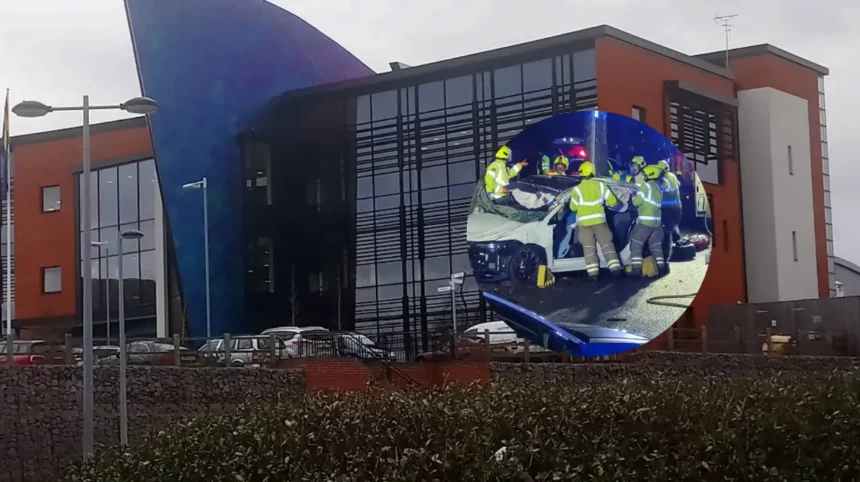
- The roof of the car was cut away by Leicestershire Fire and Rescue Service to enable extraction of the driver from the vehicle.
- The firefighters recommended that drivers do not drive on flooded roads.
- Other recommendations include taking care of standing water and adjusting speed.
Wales Fire (Wales Times) September 02, 2026 – Leicestershire drivers have been urged by firefighters to slow down, allow more time to react and avoid flooded roads as wetter weather creates hazardous driving conditions.
- Key Points
- What happened in the Leicester crash?
- Why are wet roads dangerous for motorists?
- What did the fire service advise drivers to do?
- Should drivers avoid flooded roads?
- How should motorists deal with standing water?
- Should drivers allow more time?
- What does the Leicester incident show about road safety?
- What information has been confirmed?
- How should drivers prepare for wetter journeys?
- Background to the warning
- Prediction: how could this affect Leicestershire drivers?
Leicestershire Fire and Rescue Service issued the warning after a vehicle left the road and collided with a tree on Spencefield Lane. Emergency services attended the incident at approximately 02:30 BST on Saturday, and the driver was taken to hospital with injuries that were not considered life-threatening.
The warning focuses on the risks created by wet roads, standing water and reduced visibility. Firefighters said motorists should adapt their driving to the conditions rather than continuing at normal speeds when the weather deteriorates.
The service advised drivers to avoid flooded roads altogether. It also urged motorists to exercise caution when travelling through standing water, while allowing extra time for journeys and leaving more room to respond to changing circumstances.
What happened in the Leicester crash?
According to the BBC report, emergency services were called to Spencefield Lane after a vehicle left the road and struck a tree. The incident happened at about 02:30 BST on Saturday. The driver was subsequently taken to hospital, although the injuries were described as non-life-threatening.
Leicestershire Fire and Rescue Service said firefighters removed the roof of the car. The service explained that this was done “to allow a safe extrication of the driver”. The statement indicates that specialist rescue work was required to remove the person from the damaged vehicle safely.
The BBC report did not provide further details about the driver’s identity, the cause of the crash, the vehicle’s speed or the precise road conditions at the time of the collision. No conclusion about the cause of the incident should therefore be drawn from the available information.
Why are wet roads dangerous for motorists?
Wet weather can make driving more demanding because water affects visibility, road grip and the distance needed to stop. Leicestershire Fire and Rescue Service specifically warned that reduced visibility and wet roads would increase stopping distances in the event of an accident.
The service said: “With the change to very wet weather conditions please take your time and drive [and] give yourself more time to react while driving.” The wording was quoted in the BBC report, which attributed the advice to the fire service.
Standing water can also make it harder for drivers to maintain control. Motorists who approach water too quickly may face reduced grip or difficulty judging the road surface beneath it. The fire service’s advice was therefore centred on caution, slower decision-making and avoiding flooded sections of road.
Wet conditions can be particularly difficult at night or during periods of poor visibility. Headlights, spray from other vehicles and reflections from wet surfaces may make hazards harder to identify. Drivers may also need more time to recognise obstructions, vehicles, cyclists or pedestrians.
What did the fire service advise drivers to do?
The fire service’s advice, as reported by the BBC, included several practical steps for motorists:
Should drivers avoid flooded roads?
Yes. Leicestershire Fire and Rescue Service advised drivers to avoid going through flooded roads.
The warning is important because the depth and condition of floodwater can be difficult to judge from inside a vehicle. Water may conceal damaged road surfaces, debris or other hazards. Drivers should not assume that a road is safe to cross simply because another vehicle has managed to pass through it.
If a route is visibly flooded, motorists should consider turning around where it is safe to do so and using an alternative route. They should avoid stopping in a dangerous position or making sudden manoeuvres that could put other road users at risk.
How should motorists deal with standing water?
Drivers were advised to take care when travelling through standing water.
Where water is present but the road remains passable, motorists should approach cautiously and avoid unnecessary speed. They should maintain a suitable distance from the vehicle ahead, as spray can further reduce visibility and water may affect braking.
Drivers should also be alert to the possibility that water has collected unevenly across the road. A shallow-looking area may be deeper than it appears, particularly where lighting is poor or the surface is obscured by spray.
Should drivers allow more time?
The fire service urged motorists to take their time and give themselves more time to react while driving.
This means allowing additional time for the journey rather than rushing to maintain a normal arrival time. It also means increasing the space between vehicles, reducing speed where appropriate and preparing for sudden changes in visibility or road conditions.
The advice is especially relevant where drivers encounter water, sharp bends, junctions, narrow roads or areas with limited lighting. A longer following distance can give a driver more time to respond if the vehicle ahead brakes suddenly or loses control.
What does the Leicester incident show about road safety?
The incident on Spencefield Lane highlights the potential consequences of losing control in poor weather. The BBC reported that the vehicle left the road and hit a tree, while firefighters had to remove the roof to extricate the driver safely. The driver’s injuries were not life-threatening, but the collision required emergency assistance and hospital treatment.
The available report does not state whether flooding, standing water, poor visibility or another factor caused the vehicle to leave the road. However, the fire service used the incident to reinforce its wider warning about changing weather conditions.
The message from the service was preventative rather than a finding about the crash. Drivers were asked to change their approach when roads become wetter, rather than treating the conditions as a normal journey.
What information has been confirmed?
The confirmed details reported by the BBC are:
- The incident occurred on Spencefield Lane in Leicester.
- Emergency services were called at about 02:30 BST on Saturday.
- A vehicle left the road and hit a tree.
- The driver was taken to hospital.
- The injuries were described as non-life-threatening.
- Leicestershire Fire and Rescue Service removed the vehicle’s roof to support a safe extrication.
- The fire service issued advice about flooded roads, standing water, reaction time, visibility and stopping distances.
The report did not identify the driver or publish details about the vehicle. It also did not state whether any arrests were made or whether an investigation remained under way.
How should drivers prepare for wetter journeys?
Motorists travelling in wet conditions should plan for slower journeys and possible disruption. The fire service’s advice means drivers should consider the condition of the road before and during the journey, rather than relying only on their usual route or travel time.
Drivers should avoid rushing, particularly when visibility falls or water begins to collect. They should remain alert to spray, standing water and changes in the road surface. If conditions become unsafe, stopping at a suitable and safe location may be preferable to continuing without adequate visibility or control.
The central advice from Leicestershire Fire and Rescue Service was to take more time, allow a longer reaction period and recognise that wet roads can increase stopping distances.
Background to the warning
The warning was issued after a vehicle collided with a tree on Spencefield Lane in Leicester during a period of wetter weather. Firefighters attended the incident and removed the car’s roof to allow the driver to be safely extricated before the driver was taken to hospital.
Leicestershire Fire and Rescue Service then advised motorists to avoid flooded roads, take care around standing water and adapt their driving to the conditions. It also highlighted the combined risks of reduced visibility and increased stopping distances on wet roads.
The BBC report did not name an individual journalist in the material available. The reported statements have therefore been attributed to the BBC and Leicestershire Fire and Rescue Service rather than to an unnamed author.
Prediction: how could this affect Leicestershire drivers?
The development is likely to make wet-weather road safety a more immediate concern for drivers across Leicestershire, particularly while roads remain wet and visibility is reduced. Motorists may face longer journeys if they slow down, avoid flooded routes or choose alternative roads.
Drivers who follow the fire service’s advice could reduce their exposure to hazards by avoiding floodwater, increasing their reaction time and leaving more space between vehicles. However, the available report does not provide a weather forecast, road-closure information or evidence of wider traffic disruption, so the effect on specific routes cannot be predicted with certainty.
The main practical impact for the public is the need for greater caution. Leicestershire drivers should expect wet conditions to affect visibility and stopping distances and should adjust their speed and route decisions accordingly.