

Key Points
- Eight people were arrested following a protest that took place outside the Defence Security Resilience Cymru conference at ICC Wales, Celtic Manor Resort, Newport, on Thursday, 3 September 2026.
- Seven people were charged for locking on causing serious disruption.
- The eight person who got arrested, who is a 72-year-old woman from Caerphilly, was arrested for the crime of breaching the peace.
- During the protest, protestors locked themselves on the access road and bridge that overlook the M4, causing disruption to vehicles heading to the conference venue.
- This particular protest was organized against the defence and security conference and Welsh Government.
- The seven people charged with the above crime have been released on conditional bail.
Wales (Wales Times) September 04, 2026 – Eight people were arrested after protestors glued themselves to the floor and road outside the International Convention Centre Wales at the Celtic Manor Resort, where a defence and security industry summit was being held.
- Key Points
- Who was arrested and charged?
- How did the protest unfold?
- What did Gwent Police say?
- Why were campaigners protesting?
- What is the locking-on offence?
- What was the Defence Security Resilience Cymru event?
- How did the event affect Newport?
- Background to the development
- Prediction: How could this affect the public and future events?
Seven of those arrested have since been charged with locking on to a person, object or land to cause serious disruption. An eighth person, a 72-year-old woman from Caerphilly, was arrested on suspicion of breaching the peace.
The demonstration took place outside the Defence Security Resilience Cymru event at ICC Wales, a major convention venue within the Celtic Manor Resort complex in uk/local/newport/">Newport. Protestors gathered during the event to oppose links between government, defence companies and the weapons industry.
Who was arrested and charged?
According to reporting by the South Wales Argus, the seven people charged following the protest were named as Tiegan Burrows, 23, of Ombersley Road, Newport; Emilia Chilcott, 22, of Colum Road, Cardiff; Sophia Damerell, 20, of Y Cilgant, Bangor; Leigh Evans, 55, of no fixed address in Swansea; Christina Jenkins, 33, of Chestnut Green, Cwmbran; Deirdre Murphy, 72, of Heathfield, Swansea; and Patrick Walker, 37, of Harlequin Drive, Newport.
Gwent Police said the seven people were charged with locking on to a person, object or land to cause serious disruption. They were later released on conditional bail and are expected to appear in court at a future date.
The 72-year-old woman from Caerphilly was arrested separately on suspicion of breaching the peace. Police said she remained in custody when the initial information about the protest was released.
How did the protest unfold?
Campaigners, including peace activists, anti-war groups, environmental campaigners and local residents, arrived outside ICC Wales on Thursday morning. Their protest focused on the Defence Security Resilience Cymru event, which brought together representatives from the defence, security and public sectors.
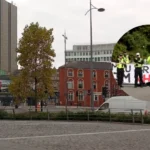
Protestors used their bodies to block traffic entering the Celtic Manor Resort and ICC Wales. Some were pictured lying or sitting on the access road, while others glued themselves to the surface to make removal more difficult.
Reports from WalesOnline said protestors also positioned themselves on a bridge overlooking the M4 motorway. They carried banners, Welsh flags and megaphones as they demonstrated against the event.
The protest caused disruption to access routes around the venue. A significant police presence was deployed during the demonstration, and officers made arrests over the course of the day.
A protestor identified only as D, from Swansea, told journalists that she had glued her hand to the access road. Another protestor was also reported to have attached their arm to the road surface.
What did Gwent Police say?
Gwent Police confirmed that officers attended what it described as a planned protest outside the Defence Security Resilience Cymru event in Newport on Thursday, 3 September.
A spokesperson said: “We attended a planned protest outside the Defence Security Resilience Cymru event being held in Newport on Thursday 3 September. Officers made eight arrests in connection with the protest.”
The force said a 72-year-old woman from Caerphilly was arrested on suspicion of breaching the peace. Seven others were initially arrested on suspicion of public order offences before being charged with locking on to cause serious disruption.
Superintendent Esyr Jones said police would continue to uphold the right to lawful protest while responding to conduct that crossed legal boundaries.
She said: “We will always be fair and proportionate in our response to any public gathering, as the right to lawful protest is a key part of any democracy that UK police services uphold and facilitate. Our officers were required to make eight arrests for attendees whose behaviour was unacceptable and enquiries are ongoing.”
Why were campaigners protesting?
The protest targeted the Defence Security Resilience Cymru summit, which featured organisations connected to the defence and security sector. Campaigners described the event as an arms industry gathering and objected to what they said was Welsh Government support or involvement.
Some protestors argued that the event helped facilitate links between public authorities and defence businesses. They also raised concerns about companies associated with military equipment and weapons supply chains.
BBC Wales reported that protestors said their aim was to disrupt what they described as a marketplace facilitated by the Welsh Government. Activists criticised the presence of defence companies, including firms associated with global military manufacturing.
The event became politically sensitive after concerns were raised about how the Welsh Government should engage with defence companies while pursuing policies described as ethical or responsible.
What is the locking-on offence?
The offence of locking on refers to conduct where a person attaches themselves to another person, an object or land in a way that is capable of causing serious disruption. It can include the use of glue, chains, tubes or other devices during demonstrations.
The charge has become increasingly associated with protests where campaigners seek to block roads, buildings, construction sites or event entrances. Police can investigate such cases where they believe the action was intended to cause, or was capable of causing, serious disruption.
In the Newport case, police alleged that the seven charged individuals had locked on to a person, object or land in connection with the protest outside ICC Wales.
The legal process will determine whether the evidence meets the required threshold. The charges do not amount to findings of guilt, and each defendant remains entitled to a fair hearing.
What was the Defence Security Resilience Cymru event?
Defence Security Resilience Cymru is a summit involving defence, security, resilience and public-sector organisations. It was held at the International Convention Centre Wales, located at the Celtic Manor Resort in Newport.
The event brings together businesses, government representatives and organisations involved in defence-related technology, supply chains, resilience planning and security. Its supporters view such meetings as opportunities for professional collaboration and economic activity.
Critics, including the groups involved in Thursday’s protest, say these events create a platform for arms manufacturers and military supply companies. Their objections were directed at the weapons industry, military links and public-sector participation.
The protest outside ICC Wales reflected wider scrutiny of arms fairs and defence exhibitions held across the United Kingdom. Such events have increasingly attracted direct-action demonstrations from groups opposed to weapons production and military exports.
How did the event affect Newport?
The protest disrupted access to one of Wales’s largest conference venues and drew police resources to the Celtic Manor Resort area. Motorists, event attendees, hotel visitors and local businesses may have experienced delays because of the blocked access route.
The incident also placed Newport at the centre of a wider debate about the relationship between public bodies, major defence companies and public protest. The city hosts large events at ICC Wales, making it a high-profile location for both commercial conferences and demonstrations.
For residents, the immediate impact was centred on traffic disruption and increased police activity. For people attending the defence summit, the action demonstrated the security and operational challenges associated with contentious events.
No injuries were reported in the initial accounts of the protest and arrests.
Background to the development
The Defence Security Resilience Cymru summit was held at ICC Wales, the convention centre at the Celtic Manor Resort in Newport. The event drew people from the defence and security sector, as well as organisations involved in resilience and public-sector planning.
Campaigners opposed the summit because they viewed it as an arms industry event. Their concerns focused on the involvement of defence companies and links between public institutions and weapons manufacturers.
The protest occurred amid broader debate in Wales over ethical support for defence companies and the Welsh Government’s role in events linked to the military industry. Opposition parties have raised concerns about the balance between economic development, employment, ethical policy and public accountability.
Direct-action protests involving road blockades and people attaching themselves to infrastructure have become a common tactic at high-profile events across the United Kingdom. Police forces have responded by using public order powers and, where appropriate, pursuing criminal charges.
Prediction: How could this affect the public and future events?
The charges may affect how future demonstrations are organised around defence and security events in Wales. Activist groups may consider legal risks more closely when planning tactics involving road blockades, adhesive substances or attempts to prevent access to venues.
Event organisers and venue operators may introduce additional security measures, traffic management plans and access controls for future conferences involving politically sensitive industries. These measures could affect delegates, local residents, hotel guests and businesses near major event sites.
For the Welsh Government and political parties, the protest is likely to sustain discussion about public engagement with defence companies and the standards applied to ethical business support. The issue could also lead to further calls for clarity over government involvement in events linked to military suppliers.
For Newport residents, future events at ICC Wales may bring increased policing and temporary traffic restrictions if similar protests are anticipated. The legal cases against the seven charged protestors will be closely watched by campaign groups, civil liberties organisations and those involved in organising public demonstrations.