

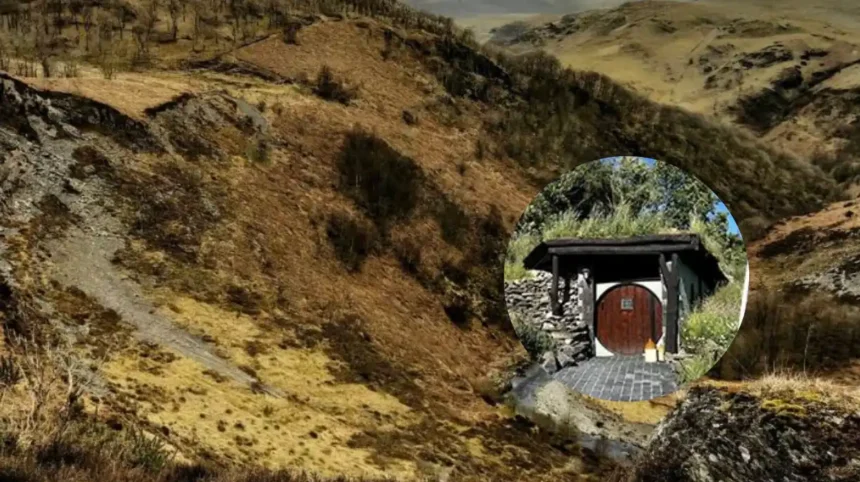
Key Points
- Phil and Sam Kilv, lifelong fans of Lord of the Rings, have invested half a million pounds in seven years building three Hobbit-style holiday cottages in Mid Wales.
- The underground cottages have been built into the sides of the hills on their 24-acre plot called Coed Y Ddraig in the Cambrian Mountains near Tregaron.
- The first cottage, Pen y Bag, was opened in August 2026; the other two cottages – Rhiw Ty’r Maes and Crucywel – will be opened later this year.
- The accommodation starts from £180 per night; the retreat is only for adults and is targeting Tolkien fans and couples.
- It includes curved architecture of hobbit-holes, log burners, bespoke four-poster beds, Smart TV, Wi-Fi, underfloor heating, walk-in showers, fire pits outside, and natural water supply from the boreholes.
- Local blacksmiths were commissioned to make authentic bed frames and thrones that have been placed outside the hillside cottages.
- The couple own also a pirate-themed inn at the same site which they opened after the pandemic when they converted an old cowshed.
Wales (Wales Times) September 5, 2026 — A couple with a long-standing devotion to J.R.R. Tolkien’s Middle-earth has completed a £500,000 project to create three Hobbit-style holiday homes embedded in the hills near the Cambrian Mountains. Phil and Sam Kilv spent seven years designing and constructing the properties at their 24-acre woodland site, Coed Y Ddraig, near Tregaron, with the first cottage, Pen y Bag, opening to guests in August 2026 and two additional homes scheduled to follow later this year.
- Key Points
- What are the Hobbit homes in Wales and where are they located?
- Who built the Middle-earth themed cottages and why?
- How much did the Hobbit holiday homes cost and how long did construction take?
- What facilities and features do the Tolkien-inspired cottages offer?
- When did Pen y Bag open and when will the other Hobbit homes open?
- How much does it cost to stay and who can book the Hobbit homes?
- What themes and design details reference The Lord of the Rings?
- How does this development fit into the wider Coed Y Ddraig business?
- Background of the particular development
- Prediction: How this development can affect Tolkien fans and the local tourism audience
What are the Hobbit homes in Wales and where are they located?
The Hobbit homes in Wales are a trio of underground, Tolkien-inspired holiday cottages built into the slopes of the Cambrian Mountains near Tregaron in Ceredigion, Mid Wales. They form part of Coed Y Ddraig, a family-run woodland retreat on a 24-acre site that already offered themed accommodation before this latest expansion. The location places the properties within private woodland with views across rolling hills and the wider Cambrian range, a setting the owners describe as integral to the “magical, memorable retreat” experience.
Who built the Middle-earth themed cottages and why?
Phil and Sam Kilv, aged 60 and 53 respectively, are the owners and creators of the Hobbit homes, motivated by a lifelong enthusiasm for The Lord of the Rings and a desire to share that fantasy world with other fans. As reported by journalists covering the story, the couple wanted to open theme-based holiday cottages and, after renovating an old cow shed into a pirate-themed inn, turned their attention to a Lord of the Rings project that would take more than seven years to complete. Their aim, according to coverage, was to offer guests an immersive escape that blends Welsh landscape with Tolkien’s literary legacy.
How much did the Hobbit holiday homes cost and how long did construction take?
The total investment in the project is reported at £500,000, with construction spanning more than seven years from initial planning to completion of the first cottage. The extended timeline reflects the bespoke nature of the build, including handcrafted interiors, curved architecture and specialist metalwork commissioned from local blacksmiths to produce authentic bed frames and thrones positioned outside the hillside hovels.
What facilities and features do the Tolkien-inspired cottages offer?
The three properties combine fantasy styling with modern amenities. Pen y Bag, the largest cottage, is a two-bedroom home sleeping up to four guests and features two bespoke four-poster king-size beds, an open-plan living area with a 60-inch Smart TV, a fully fitted kitchen, log burner and underfloor heating. The two smaller one-bedroom homes, Rhiw Ty’r Maes and Crucywel, each sleep two guests and include similar comforts such as Wi‑Fi, walk-in showers and Smart TVs, alongside Hobbit-themed décor. Additional site features include outdoor fire pits at each house and a natural water supply drawn from a borehole on the property.
When did Pen y Bag open and when will the other Hobbit homes open?
Pen y Bag opened in August 2026, marking the first of the three Hobbit homes to welcome guests. The remaining two cottages, Rhiw Ty’r Maes and Crucywel, are scheduled to open later in 2026, completing the trio of underground retreats.
How much does it cost to stay and who can book the Hobbit homes?
Stays at the Hobbit homes start from approximately £180 per night, according to multiple reports. The retreat is designed for adults, with the properties marketed as adult-only accommodations suitable for couples and grown-up lovers of fantasy fiction; they are not intended for children.
What themes and design details reference The Lord of the Rings?
Each cottage incorporates specific references to Tolkien’s world. Pen y Bag is themed around the year 1601 of the Third Age—the beginning of the Shire Reckoning and the start of the Hobbit calendar intending to immerse guests in that period. Curved, hobbit-hole architecture, handcrafted interiors, log burners and lavish four-poster beds reinforce the Middle-earth aesthetic, while hand-forged thrones installed outside the homes add a distinctive, fantasy-inspired touch.
How does this development fit into the wider Coed Y Ddraig business?
Coed Y Ddraig was established by Phil and Sam Kilv after the pandemic, beginning with the conversion of an old cow shed into a pirate-themed holiday rental featuring a private bar and games room. The Hobbit homes represent an expansion of that themed accommodation concept, leveraging the site’s nine-acre woodland setting and mountain views to attract niche markets seeking immersive experiences. As reported in local and national coverage, the couple’s broader strategy has been to develop unique, story-driven stays that differentiate the retreat in the Welsh holiday-let market.
Background of the particular development
The Hobbit homes project follows a broader trend of themed and experiential holiday accommodation in rural Wales, where operators increasingly target niche audiences with distinctive narratives. Coed Y Ddraig’s earlier pirate-themed inn demonstrated the viability of story-led lets on the site, providing a template for the more complex, fantasy-focused Hobbit build. The seven-year construction period and £500,000 investment underline the scale of the undertaking, with the owners relying on local craftspeople—such as blacksmiths—to deliver authentic details that align with Tolkien’s descriptions. The decision to open the first cottage in August 2026, ahead of the remaining two later in the year, allows the business to phase in operations while refining guest experience and maintenance routines across the underground properties.
Prediction: How this development can affect Tolkien fans and the local tourism audience
For Tolkien fans and fantasy enthusiasts, the Hobbit homes offer a rare, location-specific opportunity to experience a Middle-earth-inspired stay within a Welsh mountain landscape, potentially increasing demand for niche, themed breaks in Mid Wales. For the local tourism audience, the development could draw visitors from outside Ceredigion who might not otherwise travel to Tregaron, supporting nearby hospitality businesses and widening the profile of the Cambrian Mountains as a destination for experiential travel. However, the adult-only positioning and premium pricing from around £180 per night may concentrate demand among higher-spending couples and dedicated fans, meaning the wider local impact will depend on occupancy levels and the success of marketing to national and international Tolkien communities.