

Key Points
- Eleven approved premises (bail hostels) supposed to house released offenders in England and Wales have been shut down as of early October 2026.
- Seven of the shutdowns have been due to insufficient staff at the premises, whereas four of them have been shut down because of physical conditions such as infestation and lack of running water.
- The shutdowns account for almost one in eight approved premises, compared to almost one in ten reported in July 2026.
- The shutdowns follow just a few days after 700 offenders were released early on 1 October 2026 via the early release program established by the Sentencing Act 2026.
- The Ministry of Justice admits that there have been temporary shutdowns of some of the approved premises, and that alternative solutions such as budget hotels can be considered for use in releasing offenders if all else fails.
- Probation officers and charities have cautioned that some released offenders will be left homeless, and the pressure regarding accommodation is likely to increase after mid-October.
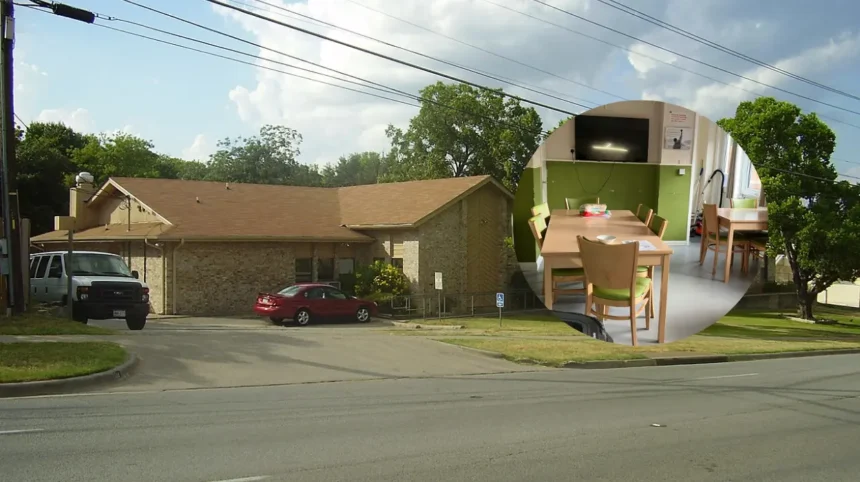
Wales (Wales Times) October 07, 2026 – commonly known as bail hostels that were due to accommodate offenders released early under the government’s new sentencing rules have been closed across England and Wales, according to reporting on 7 October 2026. The closures have been described in media reports as occurring just days after the first wave of early releases began on 1 October, when about 700 male offenders left prisons under the Sentencing Act 2026 scheme.
- Key Points
- How many prisoners have been released early so far?
- Why are bail hostels closing?
- What has the Ministry of Justice said?
- What are probation officers and charities warning?
- How does this fit into the wider early-release policy?
- Background to the development of bail hostel closures
- Prediction: how this development could affect offenders, communities and the justice system
As reported by multiple outlets citing Whitehall sources, seven of the 11 facilities were shut because of a lack of qualified staff, while the remaining four were closed over issues including pest infestations and a lack of running water. The scale of the closures means nearly one in eight approved premises is currently unavailable, an increase from nearly one in ten that were reported as temporarily closed in July 2026 due to staffing challenges.
How many prisoners have been released early so far?
The early-release programme began on 1 October 2026, with officials estimating that around 700 eligible offenders would leave prison on that day. Under the revised scheme, some 2,550 prisoners are due to be released by the end of 2026, with further tranches planned into mid-2027. The first group comprises those serving sentences of up to 19 months, who will now be released after serving one-third of their term rather than the previous 40% or 50% thresholds for standard determinate sentences.
A second tranche of about 650 prisoners, serving between 19 months and two years and five months, is scheduled to begin release from 13 October 2026. In total, roughly 4,500 prisoners are expected to be released by next summer under the phased approach, with about 70,000 offenders potentially eligible for the permanent early-release rules over time.
Why are bail hostels closing?
Staffing shortages are the primary driver behind the majority of the closures. As reported by journalists covering the justice system, the Probation Service has faced “staffing challenges” that forced the temporary shutdown of several approved premises, with contracts for overnight staff cover from private providers Sodexo and OCS having expired and new recruitment slowed by vetting delays. In some locations, security officers have been deployed at short notice to fill gaps normally covered by trained probation staff, a practice criticised by the probation union Napo as unacceptable given the risks involved in supervising high-need residents.
Physical conditions have also contributed to closures. Four of the 11 facilities were reported to have been shut because of problems such as infestations or a lack of running water, according to Whitehall sources cited in coverage on 7 October. Inspections in earlier months had already flagged “serious safeguarding concerns” at some bail hostels, with inspectors finding services not consistently safe or of high quality and staff working under significant pressure.
What has the Ministry of Justice said?
The Ministry of Justice (MoJ) has confirmed that a small number of approved premises are temporarily closed and that staffing pressures have at times led to these closures. In internal communications acknowledged in media reports, senior HM Prison and Probation Service officials have recognised the staffing challenges and said they are assessing resourcing and safeguarding arrangements.
On accommodation more broadly, Justice Secretary Shabana Mahmood told MPs that probation directors have been authorised to use alternative arrangements, including budget hotels, as a temporary measure for offenders who would otherwise be homeless on release. She described the early-release scheme as part of a “rescue effort” for a justice system under strain, while stressing that basic housing through the Prison and Probation Service remains the standard option, with ad hoc measures only to be used as a last resort. The MoJ has also stated that it has increased the total number of beds available in approved premises to accommodate more of the highest-risk offenders, despite some sites being temporarily closed.
What are probation officers and charities warning?
Probation sources have told journalists that in some towns and cities colleagues are struggling to find hostel places for people due to be released, with concerns that some individuals could be released with no accommodation secured. The probation union Napo has raised the shortage of accommodation with prison bosses, warning that the task of finding beds could reach critical levels from 13 October when the second tranche of releases begins.
Charities working with homeless people have reported chaotic scenes following the first day of releases. In Leeds, the homeless charity Homeless Street Angels said it faced a night of “chaos” as men released early arrived with nowhere to go, describing some as having “come out to nothing”. Similar concerns have been voiced by probation officers and support workers who fear that the combination of early release and limited accommodation could increase rough sleeping and complicate supervision in the community.
The Ministry of Justice has said that prisons, probation services and councils work together before release to assess housing need, and that prisoners at risk of homelessness can be offered up to 12 weeks of basic accommodation. Officials have also pointed to ongoing investment in rough-sleeping services, while acknowledging that prisons are “on the brink of collapse” without measures to reduce overcrowding.
How does this fit into the wider early-release policy?
The closures of approved premises are occurring against the backdrop of the Sentencing Act 2026, which changes automatic release dates for many prisoners serving standard determinate sentences. From 1 October 2026, most adults serving such sentences will be released earlier than previously planned, with those who would have served 40% or 50% of their term in custody now leaving after one-third, and some longer-sentence prisoners moving from two-thirds to half.
The policy is intended to free up prison places amid severe overcrowding, with the government estimating that about 5,500 people will leave prison early over September and October 2026 alone. However, critics and frontline staff have warned that without sufficient accommodation and supervision capacity, the reforms risk swapping a prison crisis for a homelessness and public-safety crisis. Earlier inspections and reporting had already highlighted pressures on approved premises, with nearly one in ten temporarily closed in July 2026 due to staffing issues.
Background to the development of bail hostel closures
Approved premises, formerly known in some contexts as bail hostels, are part of the Community Accommodation Service (CAS-2), previously called the Bail, Accommodation and Support Service (BASS). They provide short-term accommodation for people on bail, home detention curfew, licence, or at risk of recall due to loss of accommodation, and by discretion to those due to be released as homeless at their conditional release date. The service is intended to reduce the likelihood that people with no suitable housing will be held in custody or become homeless on release.
In recent months, the system has come under strain as the government prepares for and implements large-scale early releases. A leaked memo in mid-2026 revealed that staffing challenges had already forced the Probation Service to shut some approved premises temporarily, with nine out of 105 sites closed at that time. By October 2026, the number of closed sites had risen to 11, with nearly one in eight approved premises unavailable, according to reporting on 7 October.
The physical state of some buildings has also emerged as an issue, with four closures attributed to problems such as infestations and lack of running water. At the same time, the expiry of contracts with private providers for overnight cover and slow vetting for new staff have contributed to a reliance on security guards to fill probation roles, a practice union representatives have condemned as unsafe.
Prediction: how this development could affect offenders, communities and the justice system
If the closure of nearly one in eight approved premises continues or expands as further tranches of prisoners are released, the most immediate effect is likely to be increased pressure on alternative accommodation options, including budget hotels and emergency housing, for people leaving prison with no fixed address. For offenders, this could mean less stable living conditions, reduced access to structured support, and greater difficulty complying with licence conditions, all of which are associated in research and official guidance with higher risks of reoffending and recall.
For local communities, the combination of early release and constrained hostel capacity could heighten concerns about supervision and safeguarding, particularly if more individuals are placed in ad hoc accommodation or become homeless. Probation officers may face heavier caseloads and more complex logistics in monitoring people spread across temporary sites, potentially stretching an already pressured workforce.
For the justice system as a whole, persistent shortages in approved premises could undermine part of the rationale for early release, which assumes that suitable accommodation and supervision are in place to manage risk in the community. If accommodation gaps lead to higher breach or reoffending rates, policymakers may face renewed scrutiny over whether the balance between reducing prison overcrowding and maintaining public safety has been struck appropriately.