
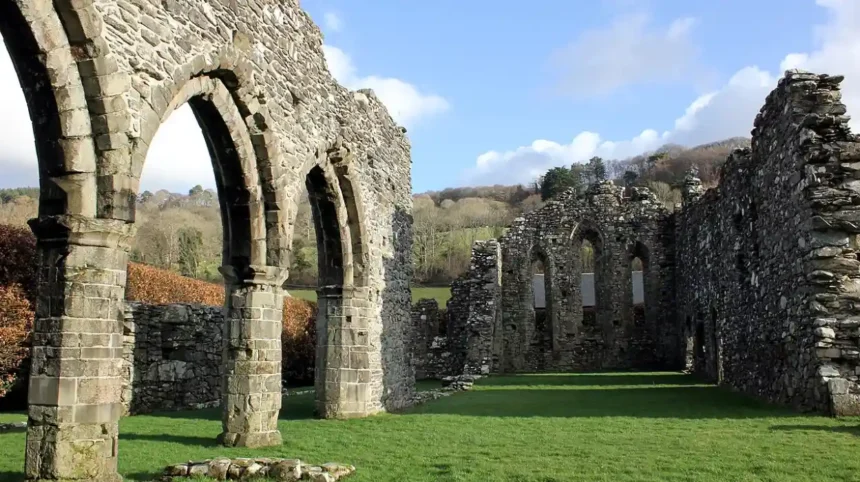
Cymer Abbey is a ruined twelfth-century Cistercian monastery situated near the village of Llanelltyd in Gwynedd, North West Wales. The historic site sits near the confluence of the Afon Mawddach and Afon Wnion rivers just north of the town of Dolgellau. Maredudd ap Cynan founded the monastery in 1198 under the authority of Abbeycwmhir, which served as its mother house. The monks belonged to the Cistercian order, a religious group known for monastic simplicity, agricultural innovation, and isolated architectural planning across Europe. Cadw manages the site today as a protected scheduled ancient monument.
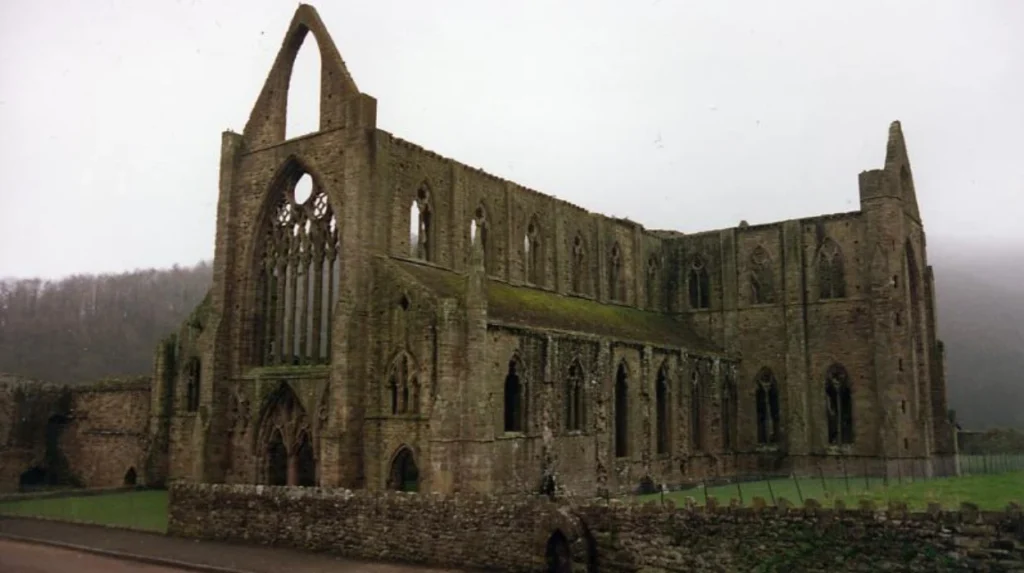
The location of Cymer Abbey provided essential natural resources for medieval survival. The surrounding valley allowed monks to establish agricultural estates, manage freshwater fisheries, and graze livestock across mountain pastures. Historical records show the monastery maintained smaller financial reserves than larger Welsh abbeys like Tintern Abbey or Strata Florida Abbey. However, Cymer Abbey played a pivotal political and social role in medieval Gwynedd during conflict between Welsh princes and the English Crown. Today, the site preserves structural walls, arcades, and window openings that demonstrate medieval building techniques.
Why Was Cymer Abbey Founded in 1198?
Maredudd ap Cynan founded Cymer Abbey in 1198 to establish a Cistercian presence in the Lordship of Meirionnydd. Maredudd ap Cynan was the ruler of Meirionnydd and a grandson of Owain Gwynedd, the Prince of Gwynedd. Welsh rulers frequently patronized monastic orders to strengthen their political legitimacy and manage local land holdings. Monks arrived from Abbeycwmhir in Powys to establish the initial religious community under traditional Cistercian customs.
The founding charter granted the Cistercian monks extensive land rights throughout the surrounding river valleys and mountain ranges. These grants included rights to pasture cattle, graze sheep, collect timber, and build watermills for grain processing. Prince Llywelyn ab Iorwerth, also known as Llywelyn the Great, confirmed and expanded these land grants in 1209. The expansion secured the monastery’s position as a primary center of literacy, record-keeping, and land management in rural North Wales during the thirteenth century.
What Architectural Layout Defines Cymer Abbey?
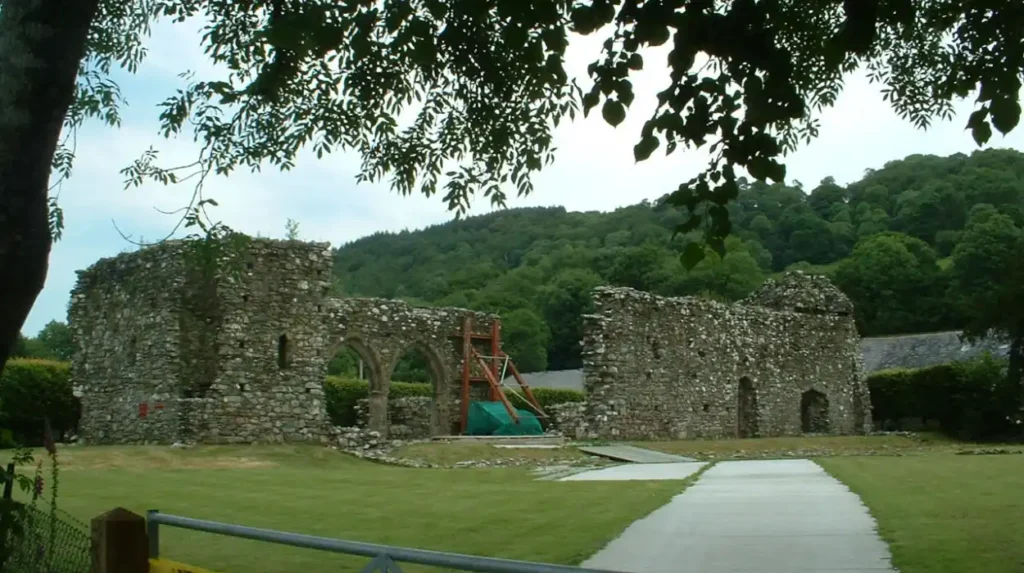
Cymer Abbey features a modified Cistercian floor plan that lacks traditional transepts and a structural central tower. Standard Cistercian monasteries utilized a cruciform or cross-shaped layout with northern and southern transepts projecting from the central nave. Architects at Cymer Abbey constructed a single continuous rectangular building that contained the nave, choir, and presbytery within one structural envelope. Financial constraints and shifting construction priorities during the early thirteenth century prevented the completion of the original expansive building design.
The surviving ruins consist primarily of the church walling, three-arched eastern sedilia, western tower base, and nave arcades. The arcade walls feature pointed Gothic arches supported by octagonal stone piers that reflect early English Gothic architectural styling. The western end of the church contains a sturdy stone tower built in the fourteenth century to support heavy church bells. To the south of the main church lie the remains of the monastic cloister, chapter house, warming room, and refectory foundation walls.
How Did Cymer Abbey Function in the Medieval Welsh Economy?
Cymer Abbey operated as a prominent pastoral enterprise that specialized in wool production, animal husbandry, and metal mining. Cistercian monks divided their workforce between choir monks, who managed daily liturgical prayers, and lay brothers, who performed physical labor across outlying agricultural granges. The abbey managed extensive sheep flocks across the uplands of Snowdonia and sold processed wool to English and European merchants. Wool sales generated the primary monetary income required to purchase external goods, tools, and liturgical items.
The monks also established iron forging operations and local dairy farms across the Mawddach estuary. Royal tax records from 1291 evaluate the total temporal property of Cymer Abbey at 28 pounds, 8 shillings, and 3 pence. This economic assessment confirms that Cymer Abbey was among the poorest Cistercian monasteries in Wales during the late thirteenth century. Despite modest monetary income, the abbey sustained its local population by offering employment, food distribution, and medical assistance to travelers passing through the Mawddach valley.
How Did Conflicts with the English Crown Impact Cymer Abbey?
Military campaigns during the Anglo-Welsh Wars repeatedly damaged the property, livestock, and infrastructure of Cymer Abbey. In 1245, royal English troops under King Henry III raided the abbey grounds, looted valuable church vessels, and destroyed surrounding farm crops. In 1282, King Edward I launched his final conquest of Wales, using the area around Dolgellau as a military staging ground against Welsh forces. English soldiers occupied the monastic buildings and extracted food supplies without providing compensation to the resident Cistercian monks.
Following the defeat of Llywelyn ap Gruffudd in 1282, King Edward I issued financial reparations to religious institutions damaged by English troops. Cymer Abbey received 80 pounds in compensation in 1284 to repair structural damage caused by the royal army. The monastery struggled financially throughout the fourteenth century due to the agrarian economic disruption of the Black Death in 1349. The uprising of Owain Glyndŵr in 1400 caused further economic stagnation across the region, reducing the total monk population at Cymer Abbey to fewer than five residents.
What Led to the Dissolution and Abandonment of Cymer Abbey?
King Henry VIII ordered the Dissolution of the Monasteries through parliamentary legislation passed in 1536. The Suppression of Religious Houses Act targeted small monasteries with annual revenues below 200 pounds. Royal commissioners visited Cymer Abbey in 1535 and reported severe financial debt, minimal maintenance, and a population of only Lewis ap Thomas, the final abbot, alongside four ordained monks. The Crown officially dissolved Cymer Abbey in March 1536, seizing its lands, livestock, and architectural lead.
The Crown leased the abandoned monastic lands to local gentry families, who repurposed the stone masonry for local construction projects. Workers stripped lead roofs from the church, causing timber roof trusses to decay and stone vaulting to collapse over time. The abbot’s private lodging was converted into a farm house during the late sixteenth century, preserving its late medieval timber-framed roof structure. The main abbey church stood exposed to natural weathering for centuries, gradually transitioning into the historic stone ruin visible today.
- Read More: Discover the cultural history of Wales and explore historic performing arts centers across the region.
- Related Article: Learn about ecological developments and historical land conservation at the Centre for Alternative Technology in Mid Wales.
Frequently Asked Questions
Where is Cymer Abbey located in Wales?
Cymer Abbey is located near the village of Llanelltyd, just north of the town of Dolgellau in Gwynedd, North West Wales. The ruins sit near the junction of the A470 and A494 roads along the banks of the Mawddach estuary.
Who manages Cymer Abbey today?
Cadw, the historic environment service for the Welsh Government, manages and maintains Cymer Abbey as a protected ancient monument. The site is accessible to visitors throughout the year, with parking available nearby.
When was Cymer Abbey built and dissolved?
Maredudd ap Cynan founded Cymer Abbey in 1198. The monastery operated for 338 years until King Henry VIII ordered its closure during the Dissolution of the Monasteries in March 1536.
Why is the architecture of Cymer Abbey unusual?
Cymer Abbey features a rare Cistercian plan that lacks northern and southern transepts and a central tower. Financial limitations forced builders to combine the nave, choir, and presbytery into a single continuous church hall.
Can you visit Cymer Abbey and is there an entry fee?
Yes, visitors can access the grounds of Cymer Abbey during standard operating hours managed by Cadw. The site provides informative bilingual signboards explaining the monastic history and structural layout.