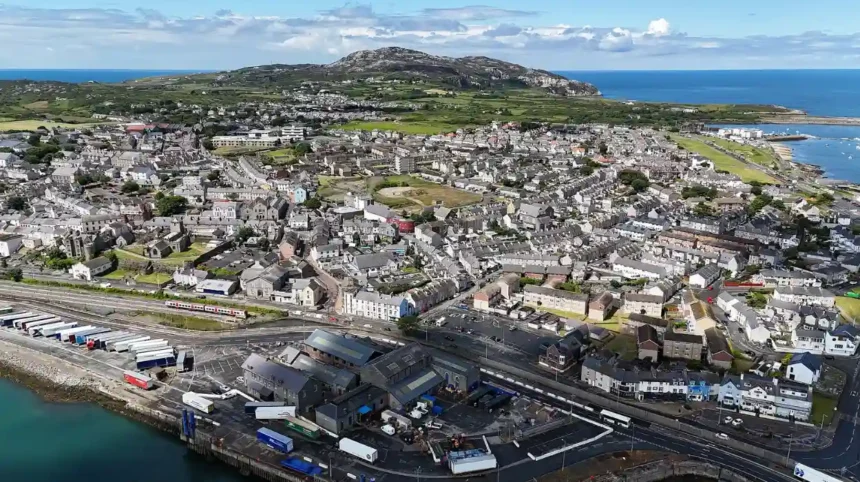
Holyhead employment relies on maritime logistics, ferry port operations, tourism, retail services, healthcare, and civil administration. Stena Line dominates port transport, while public services like Betsi Cadwaladr University Health Board and Anglesey Council drive regional stable employment.
- How has the history of Holyhead shaped its current economic landscape?
- What qualifications are needed to secure employment in Holyhead?
- What roles are available in maritime logistics and port services?
- How does the public sector contribute to local jobs in Holyhead?
- What is the role of tourism and hospitality in the local economy?
- What impact do renewable energy projects have on regional hiring?
- How do local training and educational institutions support job seekers?
- Frequently Asked Questions
- What are the top employers currently hiring in Holyhead Wales?
- Are there seasonal job opportunities available in Holyhead Wales?
- What renewable energy jobs exist in Holyhead Wales?
- How can job seekers find administrative roles in Holyhead Wales?
- Is Welsh language capability required for jobs in Holyhead Wales?
The economy of Holyhead, located on Holy Island in Anglesey, functions as a primary maritime gateway connecting North Wales to Dublin, Ireland. Transport and logistics companies form the foundational structure of the local commercial market. Stena Line operates major ferry routes across the Irish Sea, employing hundreds of workers in vessel management, freight logistics, customs checks, passenger handling, and dock maintenance.
Beyond maritime operations, public sector organisations maintain significant employment volumes. The Betsi Cadwaladr University Health Board provides administrative, clinical, and social care roles across local clinics and community care facilities. The Isle of Anglesey County Council employs educators, civil administrators, environmental managers, and social service personnel.
Retail and hospitality sectors sustain consumer infrastructure throughout the port town. Major supermarket chains, regional trade outlets, and local retail stores recruit sales associates, warehouse stockists, and operational managers. Accommodation providers, food service establishments, and visitor centers expand workforce headcount during peak travel periods. Renewable energy projects, such as offshore wind farms and marine energy initiatives in Morlais, generate specialized technical roles for engineers, site safety officers, and environmental technicians.
How has the history of Holyhead shaped its current economic landscape?
Holyhead developed around maritime trade, harbour engineering, and cross-channel ferry networks built throughout the nineteenth century. Industrial shifts, harbour expansions, and the closure of major manufacturing plants transformed local employment from heavy industry to logistics, services, and renewables.
Holyhead grew into a maritime hub following the passage of the Act of Union 1800, which increased demand for official travel between London and Dublin. Civil engineer Thomas Telford designed the Holyhead Road in 1826 to link London directly to the port, accelerating freight transit speeds across the United Kingdom.
The construction of the Admiralty Pier and the Holyhead Breakwater between 1845 and 1873 established a protected deep-water harbour. Railway developments by the Chester and Holyhead Railway Company connected rail freight directly to passenger ships, establishing dual rail-maritime logistics jobs that continue to exist today under modern rail operators.
During the twentieth century, heavy industry entered the local economy. The Anglesey Aluminium smelting plant opened in 1971, providing direct manufacturing jobs to over five hundred technicians and metalworkers until its closure in 2009. The loss of manufacturing shifted local workforce dynamics toward port expansion, renewable energy, border customs processing, and public sector employment.
What qualifications are needed to secure employment in Holyhead?
Job requirements in Holyhead depend on sector classification, ranging from basic secondary certifications to specialized maritime tickets and professional degrees. Logistics roles require driving licenses and safety clearance, health roles require formal medical qualifications, and engineering requires technical certifications.
Employers across Anglesey seek candidates with specific qualification profiles based on functional business needs. General entry-level positions in retail, hospitality, and customer service require General Certificate of Secondary Education qualifications or equivalent experience in public-facing roles.
Maritime and logistics workers must obtain International Convention on Standards of Training, Certification and Watchkeeping for Seafarers certificates. Deck crew, port handlers, and freight drivers require specialized equipment licenses, including heavy goods vehicle passes and forklift operation tickets.
Healthcare positions managed by public bodies require professional registry credentials. Registered nurses must maintain status with the Nursing and Midwifery Council, while social care assistants need National Vocational Qualifications in Health and Social Care.
Engineering and renewable energy firms require candidates to hold Higher National Diplomas or Bachelor of Science degrees in mechanical, electrical, or marine engineering. Safety qualifications accredited by the Global Wind Organisation are mandatory for technicians working on offshore marine projects.
What roles are available in maritime logistics and port services?
Maritime logistics offers roles in ferry management, customs brokerage, stevedoring, vessel maintenance, and supply chain coordination. Stena Line and port operational bodies employ deck officers, marine engineers, harbour masters, border staff, and cargo handling crews.

The Port of Holyhead serves as a critical logistics node handling passenger traffic and commercial freight shipments between Great Britain and the Republic of Ireland. Skilled professionals operate within physical port facilities, administrative control centers, and border control structures.
- Ferry Operations Deck Officers: Manage navigation, vessel safety, and deck crew operations on cross-channel passenger vessels.
- Marine Engineers: Maintain propulsion engines, electrical systems, and emergency machinery aboard passenger and cargo ships.
- Border Inspection Officers: Review shipping manifests, inspect incoming freight loads, and enforce UK border control regulations.
- Cargo Stevedores: Load, unload, secure, and transport shipping containers and heavy freight vehicles using specialized cranes and tugs.
- Logistics Coordinators: Schedule vessel arrival windows, manage port traffic schedules, and coordinate onward road transport networks.
Port administration relies on customs specialists to process international trade documentation following structural regulatory changes. Maintenance teams work on dock infrastructure, breakwater repairs, and dredging operations to keep shipping lanes operational year-round.
How does the public sector contribute to local jobs in Holyhead?
Public sector organisations are primary employers in Holyhead, offering jobs in healthcare, primary education, local governance, and emergency response. Public sector positions deliver career stability, structured pay scales, and professional advancement pathways across Anglesey.
The public sector stabilizes the local labor market by maintaining structured employment levels across various administrative services. Betsi Cadwaladr University Health Board hires general practitioners, clinic nurses, occupational therapists, and administrative coordinators to staff local health centres.
Education institutions create ongoing employment for primary teachers, secondary educators, learning support assistants, and school facilities managers. Ysgol Uwchradd Caergybi, the main secondary school in Holyhead, employs teaching and operational support personnel.
The Isle of Anglesey County Council hires administrative officers, council tax handlers, planning managers, and social workers. Emergency services, including the North uk/police/">Wales Police, North Wales Fire and Rescue Service, and Her Majesty’s Coastguard, maintain operational teams based in and around Holyhead to ensure regional safety.
What is the role of tourism and hospitality in the local economy?
Tourism generates seasonal and permanent jobs in hotel management, food service, heritage site management, and outdoor recreation. Visitors traveling through Holyhead or exploring Anglesey support retail, food, and accommodation businesses throughout the year.
Tourism operates as a driver of private-sector revenue in Holyhead and surrounding coastal communities across Anglesey. Visitors traveling to Ireland or exploring the Isle of Anglesey Coastal Path utilize local hospitality services, directly generating customer service employment.
Hotel managers, front desk receptionists, housekeepers, and kitchen staff support regional accommodation providers. Food and beverage businesses, including coastal cafes, traditional pubs, and restaurants, hire bar staff, head chefs, and front-of-house servers.
Heritage sites, such as South Stack Lighthouse and the Holyhead Maritime Museum, employ tour guides, visitor center managers, and preservation assistants. Outdoor recreation providers hire water sports instructors, walking tour guides, and equipment rental staff during peak summer travel months.
What impact do renewable energy projects have on regional hiring?
Renewable energy infrastructure creates technical jobs in tidal stream generation, offshore wind maintenance, and grid connections. Projects like the Morlais Tidal Energy Zone attract engineering firms, environmental consultants, and skilled technicians to Anglesey.

Anglesey holds an Energy Island designation, placing Holyhead at the center of regional low-carbon energy developments. The Morlais Tidal Energy Zone, managed by Menter Môn, provides a commercial framework for marine energy developers to deploy floating and submerged tidal turbines off Holy Island.
- Offshore Wind Technicians: Perform mechanical repairs, electrical inspections, and routine servicing on marine wind turbines.
- Subsea Cable Engineers: Design, install, and monitor high-voltage subsea cables connecting offshore generators to onshore electrical sub-stations.
- Marine Environmental Consultants: Conduct ecological impact assessments, marine life surveys, and water quality testing around tidal project zones.
- High-Voltage Maintenance Crew: Inspect electrical substations, maintain safety relays, and manage regional grid connection points.
The arrival of energy development companies creates secondary jobs in civil site construction, marine transport, protective coating applications, and heavy equipment maintenance. Energy initiatives provide long-term career opportunities for young technicians graduating from regional technical colleges.
How do local training and educational institutions support job seekers?
Regional colleges, apprenticeship providers, and employment centers deliver vocational courses, professional certificates, and job placement assistance. Institutions like Coleg Llandrillo align training curricula with the skill requirements of regional logistics and energy industries.
Workforce development initiatives link local residents with emerging job opportunities across Anglesey. Coleg Llandrillo maintains a campus nearby, offering vocational training programs in engineering, construction trades, health care, business administration, and culinary arts.
Apprenticeship schemes funded by the Welsh Government allow individuals to gain industry-recognized qualifications while earning a wage. Local businesses collaborate with training centers to build custom apprenticeship pathways in port operations, green energy maintenance, and digital marketing.
Jobcentre Plus in Holyhead offers direct assistance to job seekers through resume workshops, interview coaching, and targeted funding for professional licensing. Work Wales and local employment agencies help match candidates with temporary and permanent job placements.
Related Coverage:
Frequently Asked Questions
What are the top employers currently hiring in Holyhead Wales?
The largest primary employers in the Holyhead area include Stena Line for maritime port logistics, Betsi Cadwaladr University Health Board for local healthcare, and the Isle of Anglesey County Council for municipal administration. Retailers like Tesco and Morrisons also provide steady employment opportunities.
Are there seasonal job opportunities available in Holyhead Wales?
Yes, seasonal employment increases significantly between April and September due to rising visitor numbers across Anglesey. Local hotels, seaside cafes, tourism heritage sites, and ferry operators hire additional staff annually to manage seasonal demand.
What renewable energy jobs exist in Holyhead Wales?
The Morlais Tidal Energy Zone and regional offshore wind developments generate technical roles for subsea engineers, turbine maintenance technicians, site safety officers, and environmental impact assessors working directly along the Holyhead coastline.
How can job seekers find administrative roles in Holyhead Wales?
Administrative jobs are listed through the Isle of Anglesey County Council careers portal, NHS Wales jobs database, and regional recruitment agencies. Public sector vacancies offer regular clerical, secretarial, and operational management positions.
Is Welsh language capability required for jobs in Holyhead Wales?
Welsh language skills are desirable or essential for many public sector roles, particularly in local schools, social services, and council offices across Anglesey. However, many private logistics, maritime, and retail positions do not require bilingual fluency.