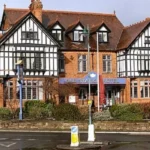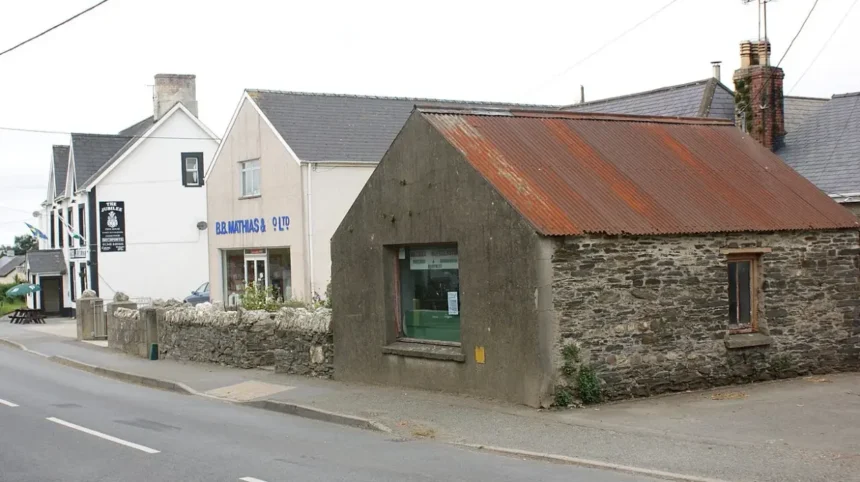
Letterston provides a central geographical position in North Pembrokeshire along the A40 trunk road, offering direct transit access to Fishguard and Haverfordwest. The village combines local housing opportunities, educational facilities, community amenities, and historic landmarks within a rural countryside setting.
Letterston, known in Welsh as Treletert, is a parish and local government community situated in the county of Pembrokeshire, Wales. The settlement occupies a key position in West Wales, lying approximately ten miles north of the county town of Haverfordwest and five miles south of the coastal port of Fishguard. The community encompasses an geographic area of 9.27 square kilometers within the SA62 50 postcode district. The UK Office for National Statistics 2021 Census recorded a community population of 1,270 residents, with mid-2024 population estimates placing the area at 1,255 residents. The central built-up area accommodates 805 residents within a concentrated 0.42 square kilometer settlement boundary. The village operates under the local administrative jurisdiction of Pembrokeshire County Council and the Letterston Community Council.
The historical foundation of Letterston dates back to the Anglo-Norman settlement of Pembrokeshire during the twelfth century. The English name Letterston derives from Letterston’s medieval lord, Ivo de Lettard, who established a manor on the site. The Welsh name Treletert translates directly as Lettard’s town. The medieval parish church of Saint Giles stands as a focal point of historic architecture, featuring stone construction dating back to the thirteenth century. During the nineteenth century, Letterston developed as an agricultural trade hub servicing surrounding farms in North Pembrokeshire. The North Pembrokeshire and Fishguard Railway opened Letterston railway station in 1895, operating passenger transport services until closure in 1964. The post-war era saw suburban expansion, with modern housing developments expanding the historical village core along primary road arteries.
The structural arrangement of Letterston is defined by linear development along the A40 road corridor and lateral housing estates. The village infrastructure includes essential local commercial and public services. Ysgol Cwm Gwaun primary school provides local Welsh-medium and English-medium primary education. Community facilities comprise the Memorial Hall, a public playing field, a petrol filling station with a convenience store, and local trade outlets. The local economy relies on agriculture, local retail, tourism support services, and light commercial trades. The village sits just outside the boundary of the Pembrokeshire Coast National Park, providing immediate access to protected environmental landscapes. Transport networks connect Letterston directly to regional employment centers across South and West Wales.
The administrative and social mechanisms of Letterston function through structured community organizations and council services. Pembrokeshire County Council oversees municipal services, including waste collection, highway maintenance, planning regulation, and social care provision. Letterston Community Council consists of elected local representatives managing community assets, public lighting, and local parish improvements. Regional bus operators, including Richards Bros, run daily public bus transit services connecting Letterston to Fishguard, Haverfordwest, and St Davids. Local emergency service coverage is provided by Dyfed-Powys Police and Mid and West Wales Fire and Rescue Service. The community maintains active social groups, sports clubs, and cultural events centered at the Letterston Memorial Hall.
Demographic data for the Letterston community reveals a stable rural population profile. The 2021 UK Census recorded 1,270 total residents across 540 occupied households. According to ONS mid-2024 population estimates, 656 residents are aged 18 to 64 years, 344 residents are aged 65 years and over, and 255 residents are under 18 years of age. The gender distribution indicates 658 females and 597 males within the community boundary. White British residents account for over 94 percent of the local population. Welsh language speakers comprise approximately 20 percent of the resident population, reflecting the cultural transition zone between Welsh-speaking North Pembrokeshire and the historically English-speaking southern region.
The future relevance of Letterston depends on modern housing development, rural infrastructure investment, and digital connectivity upgrades. Pembrokeshire County Council’s Local Development Plan identifies Letterston as a service village suitable for infill residential development. High-speed fiber broadband installation projects continue to enhance remote working capabilities for local professionals. The village plays an ongoing role as a affordable residential option compared to coastal real estate hot spots such as St Davids and Newport. The preservation of local services ensures Letterston maintains its functional utility as a central hub for North Pembrokeshire. Sustainable transport initiatives seek to improve active travel links and local bus frequency across the regional transit network.
Related Article:Tony Lovell Admits Serious Injury After Haverfordwest Crash Wales
How does the real estate market operate in Letterston for buyers and renters?
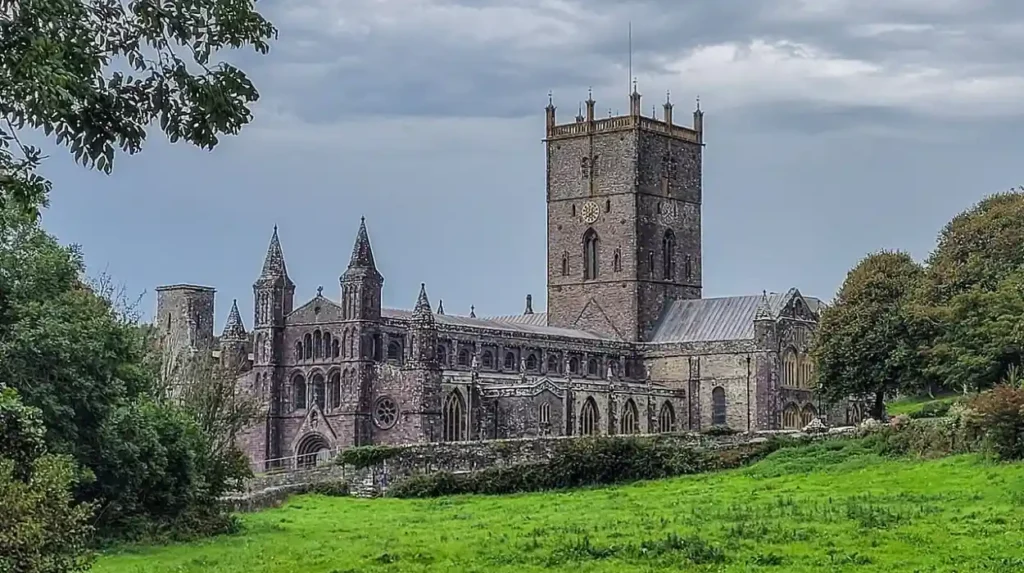
The Letterston property market features a mix of detached family homes, semi-detached houses, modern bungalows, and historic stone cottages. The village offers competitive real estate values relative to coastal Pembrokeshire, attracting primary homebuyers, agricultural workers, retirees, and property investors.
The real estate landscape in Letterston encompasses a diverse range of residential property classifications. The local housing inventory includes 3 main housing types: single-family detached bungalows, two-storey semi-detached homes, and traditional stone terrace cottages. Housing developments constructed between 1970 and 2020 account for a significant share of the modern residential areas surrounding the A40. Property listings in Letterston frequently feature private gardens, off-street parking, and countryside views across the Preseli Hills. The local market operates primarily through regional estate agencies based in Haverfordwest and Fishguard. Housing stock availability remains constrained due to low turnover rates in established residential cul-de-sacs.
Historically, Letterston housing developed around agricultural farmsteads and trade cottages along the main turnpike road. The expansion of Victorian stone cottages occurred during the mid-nineteenth century to house farm laborers and railway workers. The mid-twentieth century brought public council housing initiatives, expanding streets such as St Davids Road and Station Road. Private suburban expansion accelerated during the late twentieth century, establishing modern cul-de-sacs including Jubilee Close and Min-Y-Llyn. Real estate value growth in Letterston historically mirrored regional Pembrokeshire trends, experiencing sustained price growth during post-2000 migration cycles. The area avoided extreme speculative price inflation seen in immediate coastal resort towns.
The structural pricing framework of Letterston real estate displays lower average purchase prices than coastal settlements located five miles north. Land Registry property transaction data places average house prices in the SA62 50 postcode sector below the overall Pembrokeshire coastal average. Detached bungalows and three-bedroom semi-detached properties form the core volume of annual real estate sales. The private rental sector consists of long-term residential lets governed by the Renting Homes (Wales) Act 2016. Local planning restrictions managed by Pembrokeshire County Council regulate new residential construction to maintain settlement boundaries. Affordable housing allocations are integrated into newly approved residential planning applications.
Property acquisitions in Letterston follow standard Welsh property conveyancing and land transaction tax procedures. Prospective buyers submit purchase offers through licensed estate agents, followed by legal conveyancing executed by qualified solicitors. Mortgage lenders require standard structural surveys and local authority searches through Pembrokeshire County Council. Property transactions trigger Land Transaction Tax payable to the Welsh Revenue Authority based on property value bands. Buyers purchasing secondary properties or holiday lets incur higher residential tax rates under Welsh tax legislation. Energy Performance Certificates are legally required for all residential sales and rental listings within the community.
Market statistics highlight specific valuation benchmarks across the Letterston residential property sector. Data from HM Land Registry indicates average property values in Letterston range from 180,000 GBP for two-bedroom terraced houses to 380,000 GBP for four-bedroom detached executive homes. Overall average property prices in the village stand at approximately 245,000 GBP. The average time a property remains on the active market in Letterston is 45 days. Owner-occupiers account for approximately 76 percent of total residential tenures, with private rented properties comprising 14 percent and social housing representing 10 percent. Annual rental yields for residential investments in the area range between 4.5 percent and 5.5 percent.
The long-term outlook for the Letterston housing market indicates sustained demand driven by regional housing shortages. The geographical position of Letterston makes it a key target for buyers priced out of coastal towns like Fishguard and Solva. Energy efficiency regulations implemented by the Welsh Government will require retrofitting older housing stock to meet modern decarbonization targets. Proposed local planning updates aim to deliver small-scale affordable housing developments to retain younger demographics within the parish. Property valuations are projected to maintain steady appreciation aligned with broader West Wales economic trends. Investment in local digital infrastructure will continue to support remote workers purchasing village homes.
Read More:Wales Green Party Leadership Vote: Ian Chandler Seeks Top Role
What key amenities, infrastructure, and transport routes serve Letterston?
Letterston provides essential public infrastructure including the A40 trunk road, primary educational facilities, emergency services access, and local commercial services. The village functions as a functional service center for surrounding agricultural communities across North Pembrokeshire.
The municipal and commercial infrastructure of Letterston supports both resident populations and regional commuters. The village sits directly on the A40 trunk road, a primary national transport artery managed by the Welsh Government’s North and Mid Wales Trunk Road Agent. Commercial amenities include a 24-hour petrol service station, convenience stores, a traditional public house, and award-winning fish and chip restaurants. Educational infrastructure is centered on Ysgol Cwm Gwaun, providing primary instruction for children aged 3 to 11 years. Community infrastructure features the Letterston Memorial Hall, which hosts public meetings, indoor sports, and local voting polling stations. Public green space includes the community playing field equipped with children’s play apparatus.
The development of infrastructure in Letterston evolved alongside regional road transport improvements during the twentieth century. The turnpiking of the main road in the eighteenth century established Letterston as a coaching stop between Haverfordwest and Goodwick. The construction of the North Pembrokeshire railway line in 1895 modernised freight transport for local agricultural produce. Following the closure of the railway line in 1964, infrastructure investments shifted exclusively toward road transport improvements along the A40 trunk corridor. The upgrading of mains water, electricity grids, and telecommunication lines during the late twentieth century modernized rural living standards. Recent infrastructure additions focus on digital telecommunications and electric vehicle charging facilities.
The physical network of Letterston combines highway engineering, public utilities, and civic structures. The A40 road cuts directly through the center of the village, bisecting the community into eastern and western sectors. Mains water and sewerage services are managed by Dŵr Cymru Welsh Water, operating regional supply lines across Pembrokeshire. Electricity distribution is maintained by National Grid Electricity Distribution. Broadband connectivity is delivered via Openreach copper and fiber networks, with Superfast Cymru initiatives expanding fiber-to-the-premises coverage. The physical layout of commercial properties allows for vehicle parking along the main road and dedicated service forecourts.
Daily infrastructure operations rely on regional service providers and public utility management. Welsh Water conducts routine monitoring of local water quality and wastewater processing plants. Transport for Wales coordinates regional rail connections accessible at nearby stations in Fishguard and Haverfordwest. Local bus transit services operate under contract to Pembrokeshire County Council, delivering hourly daytime routes along the A40 route. Refuse collection and recycling operations are performed on a weekly rotating schedule by municipal waste teams. Highway maintenance crews manage road surfacing, street lighting, and winter gritting operations along the primary trunk road.
Quantitative infrastructure metrics demonstrate high operational capacity relative to rural village standards. Over 90 percent of residential properties in Letterston have access to superfast broadband speeds exceeding 30 Megabits per second. Average daily traffic counts on the A40 section passing through Letterston exceed 7,500 vehicles per day, according to Department for Transport data. Public transit bus routes provide 12 scheduled daily departures connecting the village to regional commercial hubs. The local primary school, Ysgol Cwm Gwaun, maintains an enrollment capacity of over 100 pupils. Public electric vehicle charging points deliver 50 kilowatt rapid charging capacity at local commercial forecourts.
Future infrastructure plans for Letterston focus on highway safety enhancements, public transit integration, and green energy transition. The Welsh Government continues to evaluate traffic calming measures and pedestrian crossing safety along the A40 village stretch. Expansion of ultrafast full-fiber broadband infrastructure aims to reach 98 percent of rural parish premises. Environmental sustainability initiatives include the installation of solar photovoltaic arrays on community buildings and residential upgrades. Regional transport plans prioritize integrating local bus services with rail timetables at Fishguard Harbour station. These infrastructure improvements ensure Letterston retains its operational capacity as a modern rural hub.
What is the historical significance and cultural heritage of Letterston?
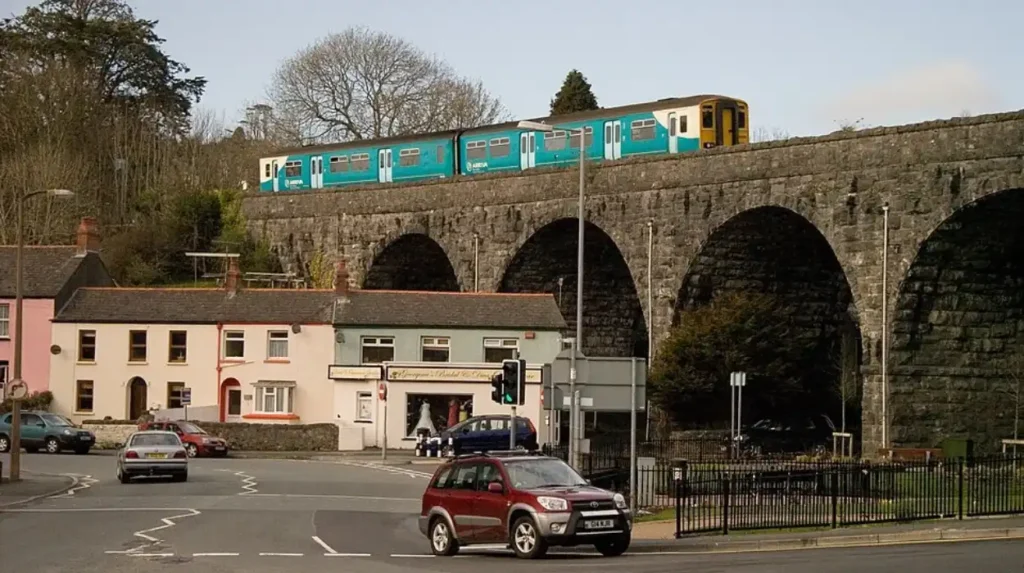
Letterston possesses a rich historical heritage spanning medieval Anglo-Norman lordships, nineteenth-century agricultural development, and Welsh ecclesiastical traditions. The parish preserves historic stone architecture, ancient churchyards, and strong connections to traditional West Wales rural culture.
The historical identity of Letterston is rooted in the medieval settlement patterns of North Pembrokeshire. The parish church of Saint Giles serves as the primary historic monument, retaining structural elements from the thirteenth and fourteenth centuries. The church features a traditional West Wales bellcote, historic stone effigies, and a medieval parish graveyard. The surrounding landscape contains archaeological evidence of prehistoric land use, including Bronze Age round barrows and Iron Age enclosure sites. The historical culture of the village reflects a blend of Anglo-Norman estate influences and native Welsh agricultural traditions. The parish forms an integral part of the historic hundred of Dewisland.
The recorded history of Letterston began following the Norman conquest of West Wales in the early twelfth century. Anglo-Norman knight Ivo de Lettard established a fortified manor and granted the local church to the Commandery of the Knights Hospitallers at Slebech. The parish recorded agricultural census data in the 1291 Taxatio Ecclesiastica under the Diocese of St Davids. During the English Civil War in the seventeenth century, the surrounding region experienced minor troop movements between Royalist and Parliamentary forces. The Industrial Revolution brought quarrying activities and improved turnpike roads, transforming Letterston into a Victorian market village. The twentieth century marked a transition from agrarian dominance to modern residential community structures.
The cultural and physical heritage of Letterston is preserved through listed buildings and local heritage archives. Historic structures in the parish include Grade II listed buildings such as Saint Giles Church, historic farmhouses, and stone milestone markers along the A40. The architectural fabric utilizes locally quarried stone, slate roofing, and traditional lime plastering techniques. Cultural institutions include local Welsh language societies and historical research groups documented in Pembrokeshire library archives. The historical layout of the village remains visible in the orientation of older cottages facing the historic turnpike route.
Heritage management in Letterston operates through statutory protection laws and community preservation efforts. Cadw, the Welsh Government’s historic environment service, administers statutory listings for buildings of architectural and historic interest. Pembrokeshire County Council enforces planning regulations to protect historic structures from insensitive alteration. Local community members and church committees manage the maintenance of Saint Giles Church and its historic burial grounds. Archaeological surveys conducted by Dyfed Archaeological Trust record and preserve physical artifacts discovered during local development projects. Cultural heritage events celebrate local Welsh history through Eisteddfod competitions and parish festivals.
Data from Cadw records multiple designated heritage assets within the parish of Letterston. The parish contains 1 Grade II* listed building and over 5 Grade II listed structures representing historical architectural periods. Archaeological databases maintained by the National Monuments Record of Wales index 14 specific sites of historical interest within the community boundaries. Historical census records from 1801 show a parish population of 358 residents, growing to 1,008 residents by 1851 during the peak of Victorian agricultural expansion. Archives preserve original parish registers dating back to the eighteenth century, held at the Pembrokeshire Archives in Haverfordwest.
The future preservation of Letterston’s history relies on digital archiving, heritage tourism, and structural conservation projects. Community initiatives aim to create digital historical walking trails highlighting medieval and Victorian landmarks across the parish. Conservation grants support ongoing masonry repair and stained-glass restoration at Saint Giles Church. Educational programs at local primary schools integrate regional Pembrokeshire history into standard humanities curricula. The integration of historic preservation policies within local planning frameworks ensures that future development respects the historical village setting. Letterston continues to maintain its distinct historical identity within the cultural landscape of Wales.
- Related Article: Tony Lovell Admits Serious Injury After Haverfordwest Crash Wales
- Read More: Wales Green Party Leadership Vote: Ian Chandler Seeks Top Role
Frequently Asked Questions
Where is Letterston located in Pembrokeshire, Wales?
Letterston is located in North Pembrokeshire along the A40 trunk road. The village sits approximately 10 miles north of Haverfordwest and 5 miles south of the coastal port of Fishguard.
What is the population of Letterston?
According to official census estimates, the community of Letterston has a population of approximately 1,255 residents. The central built-up village area accounts for around 805 of these residents.
What is the Welsh name for Letterston and what does it mean?
The Welsh name for Letterston is Treletert. The name translates to Lettard’s town, named after the 12th-century Anglo-Norman lord Ivo de Lettard.
What amenities and schools are available in Letterston?
Letterston offers primary education at Ysgol Cwm Gwaun, a community memorial hall, a 24-hour petrol station with a shop, local pubs, and award-winning fish and chip outlets.
What are average property prices in Letterston?
Average house prices in Letterston hover around 245,000 GBP. Prices range from 180,000 GBP for smaller terraced properties to over 380,000 GBP for large detached family homes.