Key Points
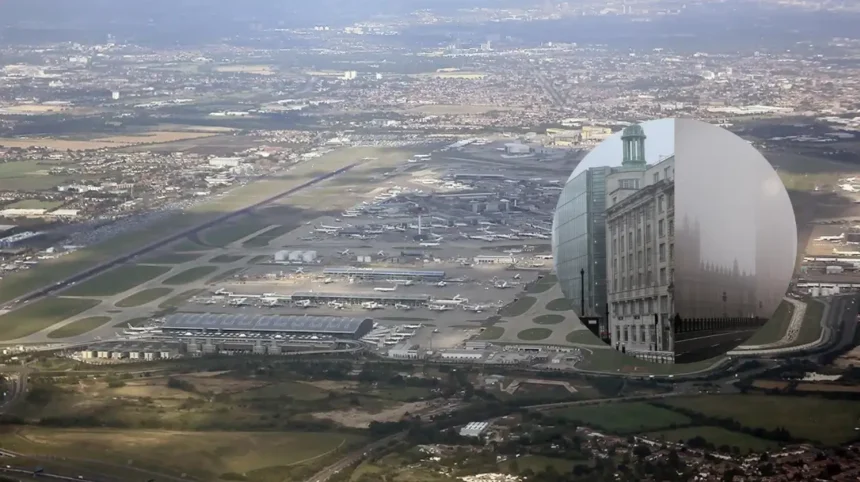
- Heavy fog has caused disruptions to transportation in London, Monday, November 9, 2026, as around 40 flights were canceled at Heathrow airport, BBC reports.
- According to Evening Standard, earlier that morning, by 6:30, seven flights departing from Heathrow airport and three flights from London City airport had been canceled.
- According to LBC, at least 33 flights from Heathrow were delayed and 15 flights were canceled; the flights had departed between 09:20 and 13:00.
- According to Met Office, a yellow fog warning for London and a large part of southeast England was issued until 11:00 on Monday, saying that visibility will go below 50 metres.
- Another yellow warning from Met Office was issued from 18:00 Monday until 10:00 GMT Tuesday for parts of England and Wales where visibility was likely to fall below 100 metres.
- Passengers were asked to contact their airlines by Heathrow airport and advised drivers going to the airport to allow some extra time.
- This warning affected the large area stretching from Canterbury to Cardiff, from Hull to St Asaph and from Southampton to York including London, Birmingham and some parts of Greater Manchester.
- Met Office warns that services by buses and trains can be delayed and flights might experience delays or cancellation due to fog.
- Moreover, heavy fog was associated with a very serious multiple vehicle accident on the M20 in Kent at the weekend involving over 30 vehicles and leaving two people seriously injured.
Wales (Wales Times) November 10, 2026 — Dense fog across London forced Heathrow Airport to cancel 40 flights on Monday, as visibility fell sharply and the Met Office warned that conditions could remain hazardous into Tuesday morning. The BBC reported that the fog eventually lifted after causing the cancellations.
- Key Points
- How many flights were delayed at Heathrow?
- Which London airports were affected?
- What did the Met Office warn?
- What did Heathrow tell passengers?
- How widespread was the fog disruption?
- Were there road accidents linked to the fog?
- What happens next for passengers?
- Background of the development
- How will this affect travellers?
The disruption began in the early hours of Monday 9 November, when thick fog settled over the capital and reduced visibility at Heathrow and London City Airport. As reported by the Evening Standard, forecasters warned that visibility could fall to 50 metres or less, while a yellow weather warning covering London and most of the south-east remained in force until 11:00.
By 06:30, seven flights from Heathrow and three from London City had been cancelled. The Evening Standard listed affected Heathrow services including British Airways flights to Belfast, Glasgow, Dublin, Edinburgh, Zurich and Paris, as well as a British Airways service to Manchester.
How many flights were delayed at Heathrow?
As reported by LBC, at least 33 flights from Heathrow were delayed while 15 were cancelled. The outlet said the affected take-off times ranged from 09:20 to 13:00.
The Scottish Sun also reported that at least 33 Heathrow flights had been delayed and 15 cancelled, adding that most were bound for UK, Irish and European destinations.
The final figure of 40 cancellations at Heathrow was reported by the BBC in its Tuesday weather update. The broadcaster stated:
“On Monday, Heathrow Airport experienced the cancellation of forty flights due to the fog, which eventually lifted.”
MaltaToday, citing the wider disruption, reported that the fog had disrupted “more than 40 flights” and that a fresh UK warning put visibility below 100 metres in parts of England and Wales.
Which London airports were affected?
Heathrow was the most significantly affected airport, but London City Airport also experienced cancellations. The Evening Standard reported that three London City flights had been cancelled by 06:30, alongside seven Heathrow departures.
Aviation news site Aerocorner reported that at least 24 morning departures were cancelled across Heathrow and London City, with British Airways operating 18 of the 19 Heathrow flights on the Evening Standard’s cancellation list as of 08:00. It said Iberia operated the remaining flight.
The same outlet reported that British Airways bore the greatest share of the disruption at Heathrow. It also said visibility at Heathrow fell to about 50 metres between 23:20 on Sunday and 00:20 on Monday, before gradually improving during the morning.
By 10:50, Heathrow’s weather report showed visibility had risen to more than 7 kilometres, according to Aerocorner.
What did the Met Office warn?
The Met Office issued a yellow warning for fog covering London and much of the south-east until 11:00 on Monday. The warning said visibility could fall to 50 metres or less in some areas and warned of difficult travel conditions during the morning rush hour.
A wider Met Office warning covered an area stretching from Canterbury to Cardiff, Hull to St Asaph and Southampton to York. It included London, Birmingham and parts of Greater Manchester.
The BBC reported that the Met Office issued a further yellow warning for fog from Monday evening into Tuesday morning. That warning covered east and north-east Wales, parts of the Midlands, East Anglia and southern areas of northern England, taking effect from 18:00 until 10:00 GMT on Tuesday.
The Met Office said fog would once again become dense in places, with visibility dropping below 100 metres.
What did Heathrow tell passengers?
Heathrow advised passengers to check with their airline before leaving home and urged motorists travelling to the airport to allow extra time for their journeys. The airport said overnight fog had affected visibility on roads around Heathrow and that conditions could continue into the morning.
As reported by AOL, a Heathrow spokesperson said:
“Overnight fog has affected visibility on roads around Heathrow and conditions may continue into this morning. If you’re travelling to the airport, please allow extra time for your journey. We advise passengers to check with their airline before leaving home and to drive with care.”
The advice came as the Met Office warned that fog could prove stubborn to clear in areas where temperatures remained low.
How widespread was the fog disruption?
The fog affected transport beyond London’s airports. The BBC reported that fog caused disruption across England, Wales and Northern Ireland on Monday morning, affecting a broad area from Canterbury to Cardiff, Hull to St Asaph and Southampton to York.
The Met Office warned that bus and train services could be affected by longer journey times, while flights could face delays or cancellations where fog was slow to lift.
Anadolu Agency reported that dense fog disrupted road, rail and air travel across parts of the UK, with visibility falling below 50 metres in some areas. It said the Met Office’s warning covered much of England and eastern Wales and warned of hazardous driving conditions and possible delays or cancellations to bus, train, ferry and flight services.
AOL reported that thick fog was expected to shroud much of southern England, eastern Wales and most of Northern Ireland in the early part of the week. It said yellow warnings covered most of England south of Manchester, excluding Devon and Cornwall; eastern Wales, including Cardiff; and most of Northern Ireland, excluding Belfast.
Were there road accidents linked to the fog?
Yes. London Loves Business reported that dense fog was linked to a serious pile-up on the M20 in Kent on Saturday evening, involving more than 30 vehicles. The outlet said two people were seriously injured and the motorway was closed in both directions for almost 12 hours.
Britannia Daily also reported that fog was blamed for serious crashes on the M20 and A303 at the weekend, and said two people were seriously injured.
The reports underline the wider transport risk posed by the fog, beyond the flight cancellations at Heathrow and London City.
What happens next for passengers?
The Met Office’s fresh yellow warning, running from 18:00 on Monday until 10:00 GMT on Tuesday, means further travel disruption remains possible. The warning covers east and north-east Wales, parts of the Midlands, East Anglia and southern areas of northern England.
The Met Office said visibility could again fall below 100 metres in places.
Aerocorner reported that the new warning did not list Greater London, but covered Essex, Luton, Greater Manchester and the West Midlands areas served by Stansted, Luton, Manchester and Birmingham airports. It said the Met Office warned that some flight disruption was possible.
Passengers were advised to check with airlines before travelling and to allow extra time for journeys to airports.
Background of the development
The disruption followed a period of persistent fog across parts of the UK. The BBC reported that fog caused disruption on Monday morning across England, Wales and Northern Ireland, before the Met Office issued a further warning for Monday evening into Tuesday morning.
The Met Office’s yellow warnings are its lowest level of weather warning, but they still highlight the potential for difficult travel conditions. The Traveler reported that the Met Office’s fog warning flagged the possibility of delays to bus and rail services and the chance of delays or cancellations to flights.
Heathrow had already experienced disruption earlier in the week. Heathrow Airport Guide reported that on Saturday 7 November, roughly a third of the airport’s departures left late as a fog warning covered London overnight, with about 220 of roughly 610 scheduled departures delayed by midday, according to aviation site The Contrail.
How will this affect travellers?
For passengers flying from Heathrow, London City, Stansted, Luton, Manchester or Birmingham, the main risk is further delay or cancellation as fog persists into Tuesday morning. The Met Office has warned that visibility could fall below 100 metres in places, and has said flight disruption is possible where fog is slow to clear.
Travellers should check directly with their airline before leaving for the airport, as Heathrow has advised. Motorists travelling to airports should also allow extra time, as the airport has warned that road visibility around Heathrow may be affected.
For commuters, the Met Office has warned that bus and train services could face longer journey times. For drivers, the risk is heightened where visibility falls below 100 metres, with the Met Office warning of hazardous conditions on roads.
The situation remains fluid, and passengers are advised to monitor updates from airlines, airports and the Met Office before setting out.