


Alway is a residential suburb, electoral ward, and coterminous community on the eastern side of Newport, offering a snapshot of modern Welsh urban life shaped by housing estates, commuter links, and strong local identity. As part of a fast‑changing city on the Severn estuary, Alway combines post‑war housing, green spaces, and strategic transport connections with the wider economic story of Newport and south‑east Wales.
Understanding Alway: Location and Boundaries
Alway lies to the east of Newport’s historic centre, forming one of the city’s defined electoral wards and communities within the unitary authority of Newport, Wales. It sits within the wider urban area that stretches along the River Usk and towards the M4 corridor, close to important commuter routes linking Cardiff, Bristol, and the English Midlands.
The ward is tightly framed by transport and local roads that make its boundaries easy to trace on a map. To the south, the Great Western Main Line forms a clear edge, while to the north the M4 motorway marks the point where suburban streets give way to regional highway infrastructure.
On its western side, Alway is bounded by Windsor Road, Chepstow Road, and Beechwood Road, placing it immediately east of the Beechwood area and its parkland. A line running via Glanwern Grove, Ringwood Hill, Ringland Circle, Aberthaw Road, and Balfe Road defines the eastern boundary, where Alway meets the neighbouring communities of Ringland and Llanwern.
As a community, the Alway ward includes the Alway estate itself, the Somerton area, and the eastern fringes of Beechwood that cluster around Beechwood Park, making it both a residential and recreational catchment. Within Wales’s multi‑layered government structure, Alway sits in the country of Wales and the sovereign state of the United Kingdom, under Newport City Council, Gwent Police, and the Welsh NHS ambulance and fire services.
Historical Context: From Port Town to Suburb
To understand Alway today, it helps to set it against the long history of Newport, which developed from a medieval port on the River Usk into an industrial and commercial centre for south‑east Wales. Newport’s early growth followed the Norman construction of Newport Castle and the town’s successive royal charters, which firmly embedded it as a trading point between the Welsh hinterland and wider maritime routes.
By the nineteenth century, Newport’s docks and wharves had become vital outlets for coal from the South Wales Valleys, driving rapid population growth and an expanding urban footprint that began to absorb previously rural or semi‑rural land around the town. The Monmouthshire Canal, local railway expansion, and later dock developments effectively re‑oriented Newport from a small market town into a regional industrial hub, bringing new workers, businesses, and services.
Through the twentieth century, Newport continued to grow as heavy industry, transport infrastructure, and new residential estates spread outward from the historic core, shaping what are now its modern suburbs. Large planned estates such as Bettws and extensive housing at Llanwern, linked partly to steelworks development, mirror the kind of post‑war and late‑industrial expansion that also influenced areas like Alway.
Although Alway itself is a relatively modern suburb rather than a medieval village, it forms part of this wider evolution of Newport from port and industrial town to a diversified city with distinct wards and communities. The designation of Alway as both an electoral ward and a community reflects this more recent phase of Welsh local government and urban planning, where residential estates are recognised as communities in their own right.
Demographics and Community Profile
Alway has a population in the mid‑thousands, sitting within a city that recorded more than 150,000 residents in recent official statistics, making Newport one of the larger urban centres in Wales. The ward is characterised by predominantly residential streets, with a mix of local authority housing, former council homes now in private ownership, and other general‑needs housing typical of post‑war suburban development.
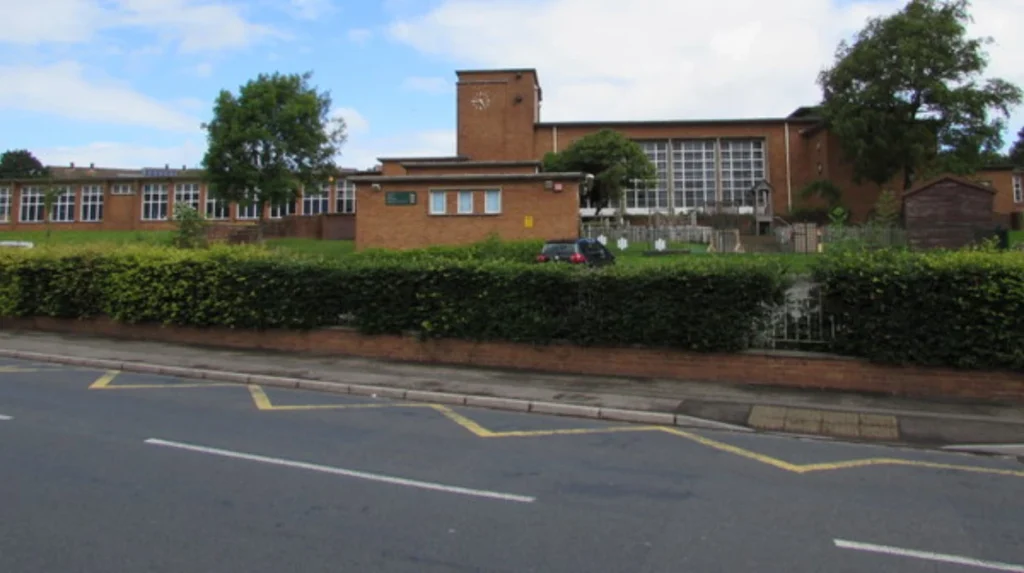
As an urban community within Newport, Alway reflects many of the social patterns seen across south‑east Wales, including a mix of working families, long‑term residents, and younger households attracted by relative affordability and access to employment in both Newport and neighbouring city regions. Service‑sector jobs, public‑sector employment, and commuting to larger employment hubs along the M4 corridor all play a role in the local economic profile, aligning with broader shifts away from the heavy industry that historically dominated the region.
Local identity is reinforced by the designation of Alway as a coterminous community, meaning that the community and the electoral ward share the same boundaries and representation. Residents elect councillors to Newport City Council who act as their direct link into local decision‑making on issues ranging from planning and housing to schools, parks, and neighbourhood services.
Governance, Representation and Electoral Role
Alway is one of the defined wards making up the City of Newport unitary authority area in south‑east Wales. The ward sends representatives to Newport City Council, which is responsible for a wide range of local services such as education, housing, highways, environmental services, social care, and cultural provision across the city.
In terms of local electoral maps, Alway has been recognised as a stable ward through recent boundary reforms, with Welsh Government‑approved changes to Newport’s electoral arrangements confirming that the Alway ward would be retained in its existing form. These reforms increased the total number of councillors in Newport and adjusted ward structures in some areas, but Alway remained one of the wards that did not experience boundary alteration.
At a national level, Alway plays a continuing role in parliamentary representation as part of wider constituencies for both the UK Parliament and the Senedd (Welsh Parliament). For Westminster elections, Alway has formed part of the Newport East constituency across successive boundary reviews, linking it with other eastern parts of Newport and nearby communities in Monmouthshire.
For devolved elections to the Senedd, Alway is similarly grouped within constituencies that reflect Newport’s modern urban geography and the need to balance population and representation across south‑east Wales. This dual layer of representation highlights how, while Alway is a local suburban area, its residents vote in elections that influence not only city‑level decisions but also Welsh and UK‑wide policies on transport, health, education, and the economy.
Urban Landscape, Housing and Street Pattern
Alway’s built environment is defined by its status as an estate‑dominated suburb, with planned residential streets laid out in patterns typical of mid‑twentieth‑century urban design in Wales. The Alway estate forms the core of the ward, complemented by housing in Somerton and adjoining parts of Beechwood, resulting in a largely continuous urban fabric east of Newport’s older central districts.
A distinctive feature of the Alway estate is its street naming, with roads named after well‑known composers, a pattern that gives the area a recognisable identity and a sense of thematic cohesion. This naming convention aligns with a wider tradition in British housing estates of grouping street names around cultural or historical themes, which can make neighbourhood navigation intuitive and foster a subtle shared identity among residents.
Housing density in Alway reflects its role as a suburban estate rather than a high‑rise inner‑city development, with a mix of terraced, semi‑detached, and low‑rise properties. This creates a streetscape of relatively uniform building heights, front gardens, and local green pockets, typical of post‑war public and mixed‑tenure residential schemes in Welsh cities.
The ward’s physical character is also shaped by its major boundary features: the Great Western Main Line to the south introduces a strong infrastructural presence, while the M4 to the north offers visual and acoustic evidence of the motorway’s role in regional connectivity. Between these transport corridors, Alway’s estate streets form a contained yet permeable neighbourhood, linked by local roads to adjacent areas such as Beechwood, Ringland, and Lliswerry.
Infrastructure, Transport and Connectivity
Alway benefits from its position between two of the most significant transport routes in south Wales: the Great Western Main Line railway and the M4 motorway. While Alway itself is primarily residential, these corridors support commuting and travel to Newport city centre, Cardiff, Bristol, and beyond, reinforcing the ward’s role as a well‑located suburb for workers across the wider city region.
The Great Western Main Line, which forms the ward’s southern boundary, carries passenger services that connect Newport to major cities along the South Wales and Severn Estuary corridor, underlining the importance of rail for regional connectivity. To the north, the M4 provides road access westwards into the rest of south Wales and eastwards over the River Severn into England, making car and bus travel central to everyday movement for many residents.
Within the ward, local roads link Alway to Chepstow Road and Windsor Road, both of which are longstanding routes on the eastern side of Newport that support local bus services and everyday traffic to shops, schools, and services. Together, this network connects Alway to nearby neighbourhoods, the city centre, and major employment sites, including industrial and commercial areas around Newport and the wider M4 corridor.
The presence of Ladyhill Reservoir within Alway adds another layer of strategic infrastructure to the ward’s profile. This treated water storage facility, with capacity of around 22.5 million litres, plays a key role in supplying potable water to communities in eastern Newport, illustrating how critical utility infrastructure can sit discretely within residential areas while underpinning the daily life of tens of thousands of people.
Green Spaces, Environment and Everyday Life
Although Alway is chiefly residential, it sits close to significant green spaces that contribute to quality of life for residents of the ward and neighbouring communities. The eastern part of Beechwood Park falls within the ward, providing tree‑lined paths, open lawns, and recreational areas that serve as a local breathing space within the built‑up eastern side of Newport.
These green areas play an important role in creating a more balanced environment by offering places for walking, informal sport, and community use, as well as facilitating biodiversity in an otherwise urban setting. For families and older residents alike, proximity to parkland is a significant amenity, especially in communities where the majority of housing is concentrated in estate‑style layouts with limited private outdoor space.
Alway’s environmental context is also shaped by its elevation and position on the eastern side of the city, away from the immediate banks of the River Usk yet still part of Newport’s coastal and estuarine climate. The combination of motorway adjacency, residential density, and green pockets means that local planning and environmental management – from traffic regulation to tree planting – are important to maintaining air quality, reducing noise, and providing pleasant public spaces.
Within the wider Newport urban area, Alway contributes to a mosaic of neighbourhoods that collectively make up the city’s environmental footprint, with community‑level initiatives, council programmes, and regional planning all shaping how green and built environments interact on the ground.
Alway Within the Story of Modern Newport
As a coterminous community and electoral ward, Alway encapsulates many of the themes that define modern urban Wales: post‑war suburban housing, strategic transport links, changing employment patterns, and evolving local government structures. It is one of a series of wards – alongside areas such as Beechwood, Ringland, Lliswerry, and Bettws – that together illustrate how Newport’s growth has been expressed in planned estates and residential districts across the twentieth and twenty‑first centuries.
The retention of Alway’s boundaries during recent electoral reforms underlines its established status within Newport’s civic geography, with clear lines that residents recognise and that administrators use for planning, service delivery, and democratic representation. The ward’s location between the Great Western Main Line and the M4 motorway symbolises Newport’s dual reliance on historic routes and modern infrastructure, connecting older port traditions with contemporary commuting and regional integration.
In daily life, Alway operates as a lived community as much as an electoral unit, with its composer‑named streets, local facilities, and access to shared amenities such as Beechwood Park and Ladyhill Reservoir shaping the routines and experiences of residents. Within the broader picture of Newport and south‑east Wales, Alway stands as an example of how distinct suburban districts contribute to the social, economic, and cultural fabric of a modern Welsh city while remaining grounded in their own local identity and sense of place.
