


Direct non-stop commercial flights regularly connect uk/local/cardiff/">Cardiff Airport in Wales to Dublin Airport in Ireland through regional air carriers. Commercial air operators maintain scheduled services throughout the calendar year to facilitate business, trade, and leisure transit between these two European capitals.
- What is the average cost and best timing for air travel from Cardiff to Dublin?
- What are the airport facilities and transit options at Cardiff Airport and Dublin Airport?
- What travel documents and entry requirements apply when flying from Wales to Ireland?
- How can travelers optimize their flight itinerary for business or leisure in Dublin?
- Frequently Asked Questions
- What is the fastest way to get from Cardiff to Dublin?
- Do I need a passport to fly from Cardiff Wales to Dublin Ireland?
- Which airlines offer direct non-stop flights from Cardiff to Dublin?
- How far in advance should I arrive at Cardiff Airport for a Dublin flight?
- How do I travel from Dublin Airport to Dublin city center after landing?
The air travel path linking South Wales to the Republic of Ireland covers an aerial distance of approximately 186 miles, which translates to 299 kilometers across the Irish Sea. Aircraft flying this direct corridor achieve an average flight duration of one hour and five minutes under normal meteorological conditions. Departure operations originate from Cardiff Airport, situated in Rhoose within the Vale of Glamorgan, fifteen miles west of Cardiff city center. Arrival operations land at Dublin Airport, located in Collinstown within Fingal, seven miles north of central Dublin. Air connectivity between these regional hubs serves thousands of transatlantic connection passengers, international students, corporate travelers, and tourists each week.
Primary commercial airlines servicing this point-to-point European sector include Ryanair and Aer Lingus Regional, operated by Emerald Airlines. Ryanair operates short-haul routes using Boeing 737-800 and Boeing 737 MAX 8 jet aircraft. Aer Lingus Regional deploys turboprop aircraft, specifically the ATR 72-600, engineered for regional efficiency on short-distance European runways. Direct flight frequencies range between four and nine operations per week depending on seasonal travel demand. Travelers seeking alternative routing options can utilize indirect services involving connection hubs such as Amsterdam Airport Schiphol via KLM.
Flight schedules across this cross-border route feature early morning, afternoon, and evening departures to accommodate diverse itinerary requirements. Early departures typically clear Cardiff Airport by 07:55 AM, enabling same-day business operations within Dublin’s central business district. Late departures exit Wales around 23:15 PM, facilitating full-day itineraries prior to embarkation. Flight operations remain active across all four calendar quarters, with elevated capacity deployed during peak summer holiday periods and major international sporting events.
What is the average cost and best timing for air travel from Cardiff to Dublin?
Airfares for direct flights from Cardiff to Dublin average eighty-eight pounds for round-trip tickets under standard booking parameters. Base single fares begin as low as thirteen to twenty pounds during off-peak demand months like September, excluding baggage fees and seat allocation charges.
Dynamic pricing algorithms applied by regional carriers dictate that ticket costs fluctuate based on capacity inventory, seasonality, and advance purchasing timelines. Passenger traffic peaks significantly between June and August, driving average ticket prices higher due to summer holiday demand. Off-peak travel windows occur during autumn and late winter, specifically from September through November and January through March. Booking ticket reservations four to six weeks prior to intended departure dates yields the most competitive pricing structure across budget airlines.
Additional operational expenses to factor into overall travel budgets include checked luggage fees, cabin bag allowances, and seat selection options. Low-cost air carriers unbundle base ticket prices, charging supplementary fees for items exceeding strict personal item dimensions. Passengers carrying cabin trolleys or checked baggage weighing up to twenty kilograms incur additional fees ranging from fifteen to forty pounds per flight segment. Travelers opting for priority boarding privileges gain permission to carry additional cabin baggage aboard Boeing 737 or ATR 72 aircraft.

Financial expenditures can be minimized by comparing mid-week flight departures against peak weekend schedules. Flight operations scheduled on Tuesdays and Wednesdays frequently display lower base fares compared to Friday and Sunday departures. Early morning departures also offer statistically lower price points due to off-peak airport transit times. Utilizing online fare tracking tools enables consumers to monitor seat inventory fluctuations and secure optimal pricing windows before automated yield management systems raise fares.
What are the airport facilities and transit options at Cardiff Airport and Dublin Airport?
Cardiff Airport offers streamlined passenger infrastructure featuring dedicated check-in desks, security clearance channels, executive lounges, and public transport connections. Dublin Airport operates two major passenger terminals equipped with extensive international transport hubs, retail centers, and dining amenities.
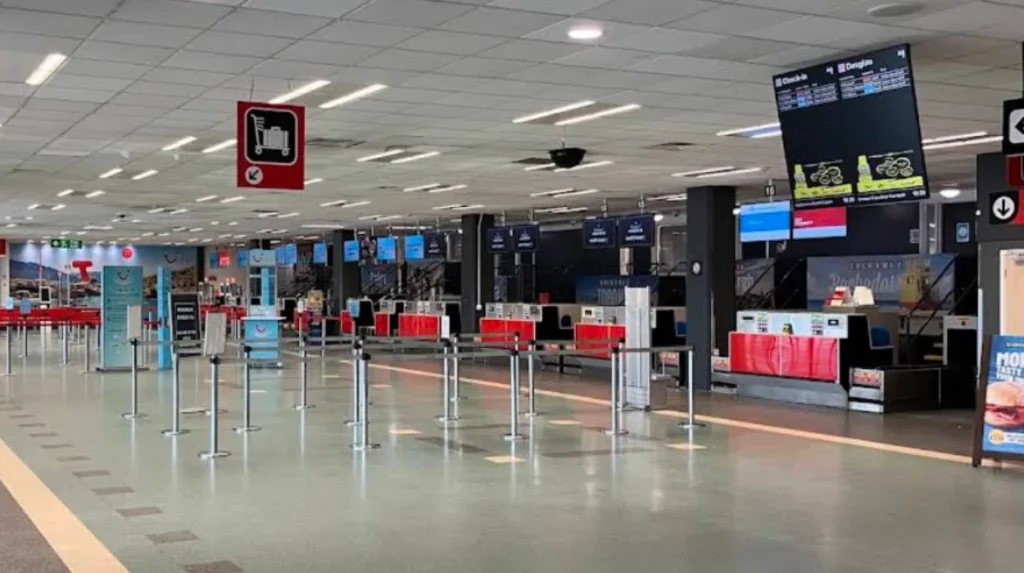
Cardiff Airport operates out of a single main terminal building designed for rapid passenger navigation. Terminal facilities include executive departure lounges, duty-free retail shops, currency exchange desks, and accessible assistance services. Ground transportation to Cardiff Airport includes the 905 bus service connecting Rhoose Cardiff International Airport railway station directly to the terminal entrance. Rail passengers travelling from Cardiff Central railway station can reach Rhoose station in thirty minutes. Dedicated short-stay and long-stay car parking lots sit adjacent to the terminal premises with pre-booking options available online.
Dublin Airport features two operational passenger terminals connected by an enclosed pedestrian walkway. Terminal 1 handles the majority of low-cost international carrier arrivals, including Ryanair flight operations. Terminal 2 serves national carrier operations, including Aer Lingus regional and transatlantic transit flights. Arrival halls in both terminals provide immediate access to car rental desks, automated teller machines, tourist information centers, and official taxi ranks.
Ground transportation from Dublin Airport to Dublin city center relies on expressway bus networks, private coach services, and metered taxis. The Dublin Express bus service operates routes 782 and 784, providing non-stop links to Dublin Connolly, Dublin Heuston, and Trinity College in twenty-five to thirty minutes. Aircoach services operate continuous twenty-four-hour transport lines connecting Dublin Airport to key city center hotels and southern suburban zones. Taxis operate continuously from designated ranks outside Terminal 1 and Terminal 2, utilizing standard taximeter fare calculations.
What travel documents and entry requirements apply when flying from Wales to Ireland?
Travelers flying between Cardiff Wales and Dublin Ireland must comply with Common Travel Area rules, immigration documentation standards, and customs regulations. Citizens of the United Kingdom and Ireland enjoy special movement privileges within the Common Travel Area framework.
The Common Travel Area is an arrangement established between the United Kingdom, Ireland, the Isle of Man, and the Channel Islands. Under this legal framework, British and Irish citizens do not require a visa or a formal passport to cross internal borders between Wales and Ireland. However, all commercial air carriers operating out of Cardiff Airport strictly enforce internal photographic identification requirements prior to passenger boarding. Ryanair and Aer Lingus require passengers to present valid government-issued photo identification, such as a full valid passport or photographic driving license.
International citizens residing in the United Kingdom or visiting Wales who do not hold British or Irish citizenship must satisfy Irish entry visa specifications. Third-country nationals must verify whether their nationality requires a Short Stay ‘C’ Visa to enter the Republic of Ireland. Ireland is not part of the European Union Schengen Zone, meaning European Schengen visas are not valid for entry into Dublin Airport. Non-EEA passengers undergo standard immigration border passport checks upon landing at Dublin Airport terminals.
Customs regulations apply to goods brought from Wales into Ireland following the United Kingdom’s exit from the European Union. Passengers entering Dublin Airport from Cardiff must adhere to duty-free allowance limits on alcohol, tobacco, and commercial merchandise. Duty-free shopping is accessible at Cardiff Airport prior to departure, allowing travelers to purchase tax-free items within statutory limits. Duty allowances permit two hundred cigarettes, one liter of spirits, or two liters of fortified wine per adult traveler entering the Republic of Ireland.
How can travelers optimize their flight itinerary for business or leisure in Dublin?
Optimizing a Cardiff to Dublin flight itinerary requires selecting strategic flight times, coordinating ground transportation, booking central accommodations, and accounting for local logistics. Proper planning maximizes time efficiency and minimizes operational friction during transit.
Day trips and short weekend getaways demand precise flight selection to extract maximum value from time spent in Dublin. Booking an early morning outbound departure from Cardiff combined with a late evening return flight provides up to fourteen operational hours on the ground in Ireland. This schedule works well for business meetings, academic conferences, or day tours of Dublin’s cultural landmarks. Leisure travelers planning extended stays should coordinate flight arrival times with hotel check-in schedules, which typically begin at 15:00 PM across Dublin accommodations.
Packing efficiently according to carrier baggage restrictions prevents delays and extra costs at Cardiff Airport gate counters. Utilizing compact, compliant carry-on luggage allows passengers to bypass check-in desks and proceed directly through airport security screening. Online check-in opens twenty-four to forty-eight hours prior to departure across airline mobile applications, allowing travelers to download digital boarding passes directly to mobile devices. Arriving at Cardiff Airport ninety minutes before domestic or Common Travel Area departures ensures sufficient buffer time for security processing.
To ensure seamless transit upon arrival in Dublin, travelers should purchase express bus tickets online prior to flight departure. Pre-booking ground transit locks in discounted fares and guarantees seating during high-volume arrival periods at Dublin Airport. Visitors planning extensive travel within Dublin’s public transport system should acquire a Visitor Leap Card, which grants unlimited access to Dublin Bus, LUAS light rail, and DART suburban train networks. Selecting centrally located hotels near O’Connell Street, Temple Bar, or St. Stephen’s Green reduces intra-city travel times and simplifies return transport to Dublin Airport.
Frequently Asked Questions
What is the fastest way to get from Cardiff to Dublin?
The fastest way to travel from Cardiff to Dublin is via a direct flight from Cardiff Airport to Dublin Airport. Direct air routes take approximately 1 hour and 5 minutes of flight time, covering a distance of 186 miles across the Irish Sea.
Do I need a passport to fly from Cardiff Wales to Dublin Ireland?
British and Irish citizens travelling within the Common Travel Area do not legally require a passport to enter Ireland, but airlines require photographic identification. Airlines operating this route, such as Ryanair and Aer Lingus, mandate a valid passport or driving license at boarding gates.
Which airlines offer direct non-stop flights from Cardiff to Dublin?
Aer Lingus Regional and Ryanair are the primary commercial air carriers offering direct, non-stop flights between Cardiff Airport and Dublin Airport. Flight availability ranges from 4 to 9 scheduled direct departures each week depending on the travel season.
How far in advance should I arrive at Cardiff Airport for a Dublin flight?
Passengers flying from Cardiff Airport to Dublin should arrive at the passenger terminal at least 90 minutes to 2 hours before scheduled departure. This timing allows sufficient buffer for baggage drop-off, security screening, and boarding gate arrival.
How do I travel from Dublin Airport to Dublin city center after landing?
Travelers can reach Dublin city center from Dublin Airport using express bus services like Dublin Express or Aircoach, which take 25 to 30 minutes. Licensed taxis are also available 24/7 outside both terminal arrival areas, offering direct door-to-door transit.