
Cardiff is the capital and largest city of Wales, serving as the country’s primary political, economic, and cultural administrative hub. Located in southeast Wales, uk/local/cardiff/">Cardiff covers 54 square miles and has an estimated municipal population of over 383,000 residents.
- How Did Cardiff City Wales Evolve Historically?
- What Is the Governance Structure of Cardiff City Wales?
- What Drives the Economy and Demographics of Cardiff City Wales?
- What Are the Key Landmarks and Institutions in Cardiff City Wales?
- How Is Transportation Structured Across Cardiff City Wales?
- What Is the Role of Sports in Cardiff City Wales?
- Frequently Asked Questions
Cardiff sits along the Bristol Channel at the mouth of the River Taff, serving as the county town of Glamorgan. The urban area functions as the focal point of the broader Cardiff Capital Region, which encompasses a population of roughly 1.5 million people. The city serves as the permanent seat of the Senedd, the national devolved parliament of Wales. The geographic layout features historic urban centers, expansive parklands, and modern waterfront developments. Infrastructure connections link the city directly to major transportation corridors across Great Britain.
The modern urban environment integrates preserved medieval structures with twentieth-century industrial architecture and high-density contemporary commercial centers. Major civic institutions operate within the city center, establishing an administrative zone that supports federal, regional, and municipal governance. The municipality maintains authority over local planning, civil infrastructure, public education, and environmental services across its constituent wards. As the dominant economic driver in the nation, the capital generates a significant portion of Welsh gross value added.
How Did Cardiff City Wales Evolve Historically?
Cardiff evolved from a strategic Roman military outpost established in 75 AD into the world’s largest coal-exporting port by the early twentieth century. The city secured official city status in 1905 and became the national capital of Wales in 1955.
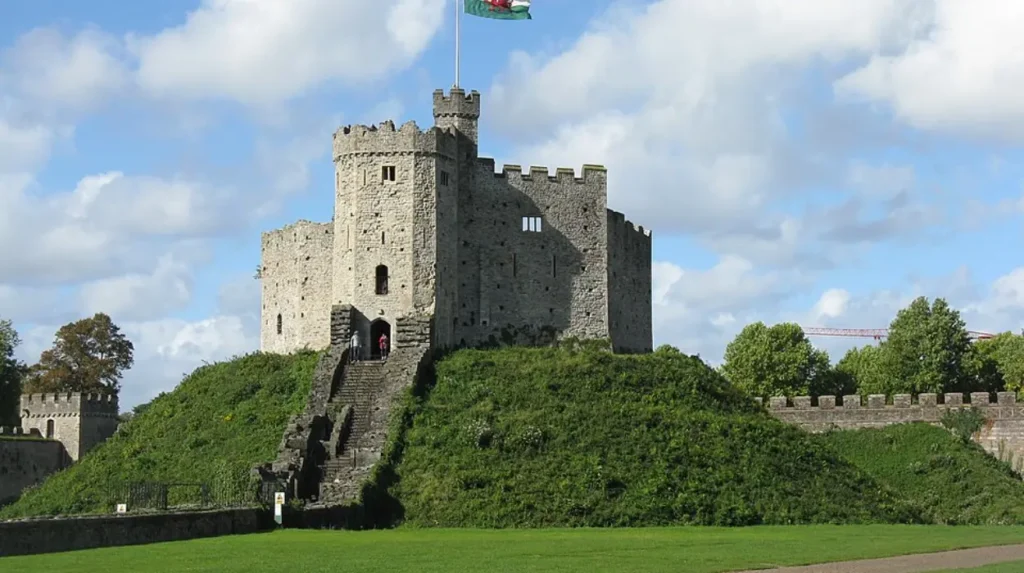
The earliest documented permanent settlement in the area dates to the Roman conquest of Great Britain. Roman forces constructed a timber fort around 75 AD, which was later reinforced with stone walls that remain visible at Cardiff Castle. Following the Norman conquest in the eleventh century, Robert Fitzhamon established a motte-and-bailey fortress on the Roman foundations. The medieval town grew within defensive walls, functioning as a modest trading center with a population under 2,000 residents through the eighteenth century.
The industrial revolution transformed the agrarian settlement into an international industrial port. The opening of the Glamorganshire Canal in 1794 and the construction of the Bute West Dock in 1839 connected South Wales coalfield production directly to maritime transport. Coal exports expanded rapidly, increasing municipal population from 1,870 in 1801 to over 164,000 by 1901. By 1913, the Port of Cardiff exported over 10 million tons of coal annually, marking its peak as a global maritime trading site. Post-industrial transition during the late twentieth century refocused the economy toward service, governance, and tourism.
What Is the Governance Structure of Cardiff City Wales?
Cardiff operates under a principal council system governed by Cardiff Council, comprising 79 elected councillors across 28 electoral wards. The city hosts the Senedd, which manages devolved legislative functions for the entire Welsh nation.
Local governance relies on the City and County of Cardiff unitary authority, established under the Local Government Act 1994. Executive decisions reside with a cabinet led by a council leader, operating out of County Hall at Atlantic Wharf. Public policy implementation covers statutory duties including social care, waste management, primary education, local transport, and housing. Electoral wards select representatives through local elections held every five years. Five smaller community councils operate in outlying rural parishes such as Lisvane, Pentyrch, and Tongwynlais.
National governance centers on the Senedd Cymru building in Cardiff Bay, designed by architect Richard Rogers and opened in 2006. The Senedd exercises legislative power over primary policy domains, including health services, transport, housing, agriculture, and economic development. The Welsh Government civil service operates primarily from its national administrative headquarters in Cathays Park. Parliament representation links the municipality to the United Kingdom House of Commons through four distinct Parliamentary constituencies.
What Drives the Economy and Demographics of Cardiff City Wales?
The economy of Cardiff relies on financial services, public administration, higher education, creative media, and service sector industries. The city population totals over 383,000, supported by significant ethnic diversity and a large student community.
Economic production transitioned from heavy industry to knowledge-intensive services during the late twentieth century. The finance and business services sector accounts for a high proportion of total employment, with major corporate headquarters operating in Central Square and Central Quay. Media production represents another key economic driver, anchored by BBC Cymru Wales and independent production studios. Commercial retail developments, including the St David’s shopping complex, generate substantial annual consumer spending from regional visitors.
Demographic data reveals a young, expanding urban population supported by internal and international migration. Over 47,000 tertiary students reside in the city, enrolled at Cardiff University, Cardiff Metropolitan University, and the University of South Wales. According to official census data, approximately 79 percent of residents identify as white, while minority ethnic communities make up roughly 21 percent of the population. Traditional maritime migration established historically established multicultural communities in Butetown, while modern expansion continues to attract skilled international professionals.
What Are the Key Landmarks and Institutions in Cardiff City Wales?
Cardiff hosts national cultural landmarks including Cardiff Castle, the Principality Stadium, Wales Millennium Centre, and the National Museum Cardiff. These institutions support tourism, performing arts, research, and major international athletic events.
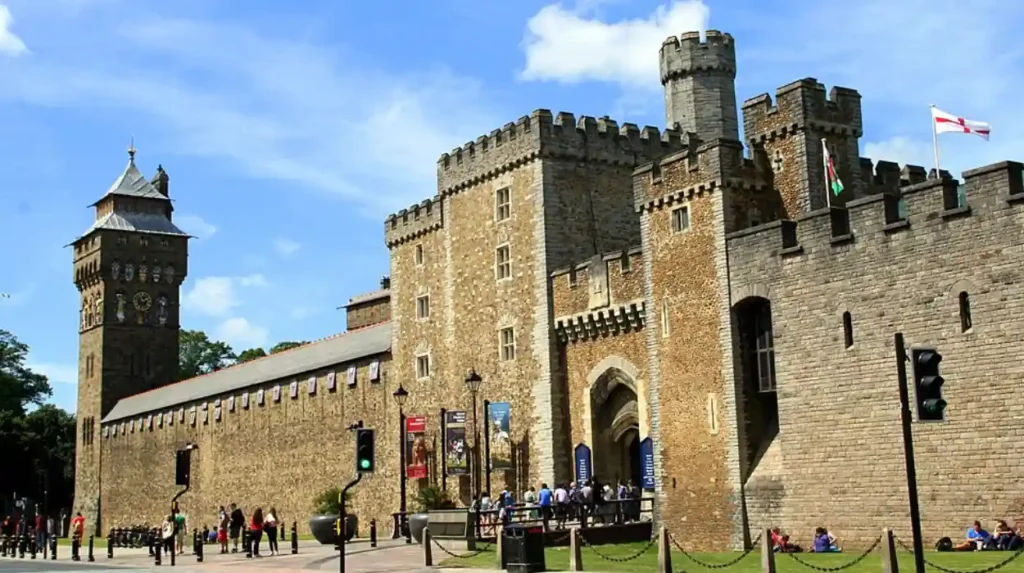
Cardiff Castle stands in the city center, showcasing layered architecture that spans Roman fort walls, a Norman keep, and nineteenth-century Victorian Gothic revival interiors designed by William Burges. Nearby, the Principality Stadium features a fully retractable roof with a seating capacity of 74,500 spectators. The stadium serves as the national home of Welsh rugby union and hosts international football matches, concerts, and international sports tournaments. Surrounding parklands like Bute Park form an extensive green corridor extending north from the city core.
Cultural performing arts concentrate in the Cardiff Bay area, headlined by the Wales Millennium Centre. This facility hosts the Welsh National Opera, dance companies, and large-scale theatrical productions. The National Museum Cardiff in Cathays Park houses national art collections, natural history exhibits, and archaeological artifacts. Outside the central core, the St Fagans National Museum of History operates an open-air museum detailing historic Welsh life through reconstructed buildings from various historical eras.
How Is Transportation Structured Across Cardiff City Wales?
Transportation relies on a comprehensive network of suburban rail lines, municipal bus routes, major highway links, and maritime port facilities. Cardiff Central station acts as the busiest passenger railway hub in the Welsh transport system.
Rail infrastructure connects Cardiff to national rail links via the South Wales Main Line. High-speed passenger trains provide direct connections to London Paddington, Bristol, and Manchester. The Valley Lines commuter network links urban neighborhoods and surrounding South Wales Valleys directly to central stations at Cardiff Central and Cardiff Queen Street. The South Wales Metro project continues to modernize these commuter corridors through electrification and light rail Integration.
Road connectivity centres on the M4 motorway passing along the northern edge of the city, providing east-west transit across South Wales and into England. Internal road systems connect urban wards through the A48 and A4232 trunk roads. Municipal and commercial bus operators provide public transit across local wards, supported by a central bus station adjacent to the main railway terminal. Cardiff Airport, located 12 miles west in Rhoose, provides international commercial passenger flights.
What Is the Role of Sports in Cardiff City Wales?
Sporting culture centers on professional football, rugby union, cricket, and ice hockey teams competing in major national leagues. Cardiff City Football Club and Cardiff Rugby form the structural core of the local sports ecosystem.
Cardiff City Football Club, founded in 1899 as Riverside A.F.C., represents the city in the English football league system. The team plays home matches at the 33,000-capacity Cardiff City Stadium and remains the only non-English club to have won the English FA Cup, achieving the feat in 1927. Professional rugby union centers on Cardiff Rugby, who compete in the United Rugby Championship at the historic Cardiff Arms Park ground.
Cricket operates at Sophia Gardens, home to Glamorgan County Cricket Club. The stadium hosts domestic English county cricket and international test matches. Winter sports are represented by the Cardiff Devils professional ice hockey team, who play in the UK Elite Ice Hockey League at the Arena UK venue in Cardiff Bay. The city regularly hosts international sporting events, including games during major global tournaments.
Frequently Asked Questions
What language is spoken in Cardiff City Wales?
English is the primary language spoken across the city. Welsh is spoken by approximately 11 percent of the population, and all public signage and municipal services operate bilingually under Welsh language legislation.
Is Cardiff City Football Club in England or Wales?
Cardiff City Football Club is physically located in Wales. However, the club plays within the English football league system due to historical league entry decisions made prior to the establishment of the Welsh football league structure.
How far is Cardiff from London?
Cardiff is located approximately 150 miles west of London. Direct rail service from Cardiff Central to London Paddington takes around 1 hour and 50 minutes, while road transport via the M4 motorway takes roughly three hours.
What is Cardiff Bay known for?
Cardiff Bay is known for its major urban regeneration project that replaced former industrial coal docks. It houses the Welsh Parliament, Wales Millennium Centre, recreational waterfront spaces, and extensive commercial dining developments.
Why is Cardiff called the capital of Wales?
Cardiff was officially proclaimed the capital of Wales in 1955 due to its status as the largest urban population center, primary economic hub, and historical industrial shipping port in the nation.