

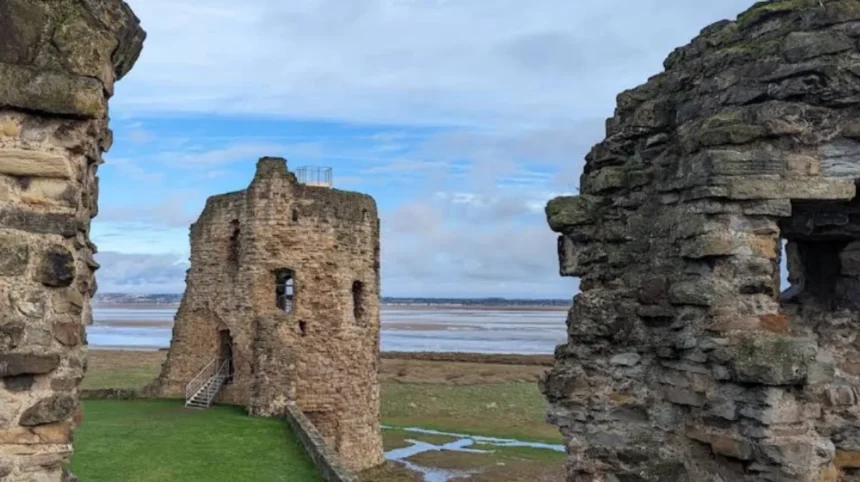
Flint uk/local/swansea/castle/">Castle North Wales is a thirteenth century royal fortress situated on the banks of the River Dee estuary in Flintshire. King Edward I commissioned the castle in July 1277 as the first fortification of his Welsh campaign.
- Why did King Edward I build Flint Castle North Wales?
- What makes the architecture of Flint Castle North Wales unique?
- What key historical events took place at Flint Castle North Wales?
- How did Flint Castle North Wales impact local Welsh history?
- What is the current condition of Flint Castle North Wales today?
- Frequently Asked Questions
- Is Flint Castle North Wales free to visit for tourists?
- Can you walk around the Great Tower at Flint Castle North Wales?
- How close is Flint Castle North Wales to the nearest train station?
- Are dogs allowed inside the grounds of Flint Castle North Wales?
- How long does a typical visit to Flint Castle North Wales take?
The physical location of Flint Castle North Wales provided a strategic military base near the English border, positioning troops right along the tidal marshes. Master architect James of Saint George oversaw the structural engineering, completing the initial major masonry work by 1284. The castle occupies a low sandstone promontory that allowed immediate access for sea resupply ships arriving from Chester. This geographic positioning ensured that English garrisons could maintain communication lines even when surrounding land routes were blocked during regional conflicts. The site is managed by Cadw, the historic environment service for the Welsh Government, and remains accessible to visitors year round.
Why did King Edward I build Flint Castle North Wales?
King Edward I built Flint Castle North Wales to establish a permanent military foothold during his first invasion of independent Wales. The fortress served as the strategic anchor for his Iron Ring of coastal fortifications subduing regional resistance.
The construction of Flint Castle North Wales began following tensions between the English Crown and Llywelyn ap Gruffydd, the Prince of Wales. King Edward I assembled over 1,800 workers, including masons, diggers, and carpenters, to construct both the castle and an adjacent fortified market town. The primary objective was securing absolute control over the coastal corridor leading into Gwynedd. By constructing a heavily fortified base at Flint, the Crown established a operational center for administrative and financial control over the newly acquired territories. The defensive perimeter protected English soldiers while providing a secure staging area for further advances deeper into Welsh territory during the campaign of 1282.
What makes the architecture of Flint Castle North Wales unique?

The architecture of Flint Castle North Wales features a unique isolated Great Tower, separated from the main inner courtyard by a defensive moat. This specific donjon design is unmatched across medieval military buildings in Britain.
Architect James of Saint George based the layout of Flint Castle North Wales on continental fortresses, specifically referencing the Tour de Constance at Aigues-Mortes in France. The inner ward forms an approximate square measuring fifty meters by forty meters, flanked by three smaller quarter-engaged towers. The fourth corner holds the massive circular Great Tower, which functioned as an independent castle within a castle. This isolated tower possessed its own internal rooms, dedicated water well, thick defensive walls, and private drawbridge entrance. In the event that invaders breached the main outer bailey and inner courtyard, the garrison could retreat to this self-contained stronghold to sustain a prolonged siege.
What key historical events took place at Flint Castle North Wales?
Flint Castle North Wales was the historic site where King Richard II surrendered his crown to Henry Bolingbroke in August 1399. This pivotal confrontation directly led to the rise of the House of Lancaster.
The surrender of King Richard II at Flint Castle North Wales altered the course of English monarchy. Returning from a military expedition in Ireland, Richard II was lured to the fortress under false pretenses of negotiation. Henry Bolingbroke surrounded the site with a large force, forcing the king to yield the throne. This encounter was immortalized by William Shakespeare in Act III of his historic play, Richard II. Centuries later, during the English Civil War, the castle was held by Royalist forces. After enduring a three-month siege by Parliamentarian troops in 1646, the fortress surrendered and was deliberately slighted in 1647 to render it unusable for military purposes.
How did Flint Castle North Wales impact local Welsh history?
Flint Castle North Wales served as a symbol of English rule and triggered several major Welsh uprisings across the regional marches. Its establishment permanently changed the social and political structure of North Wales.
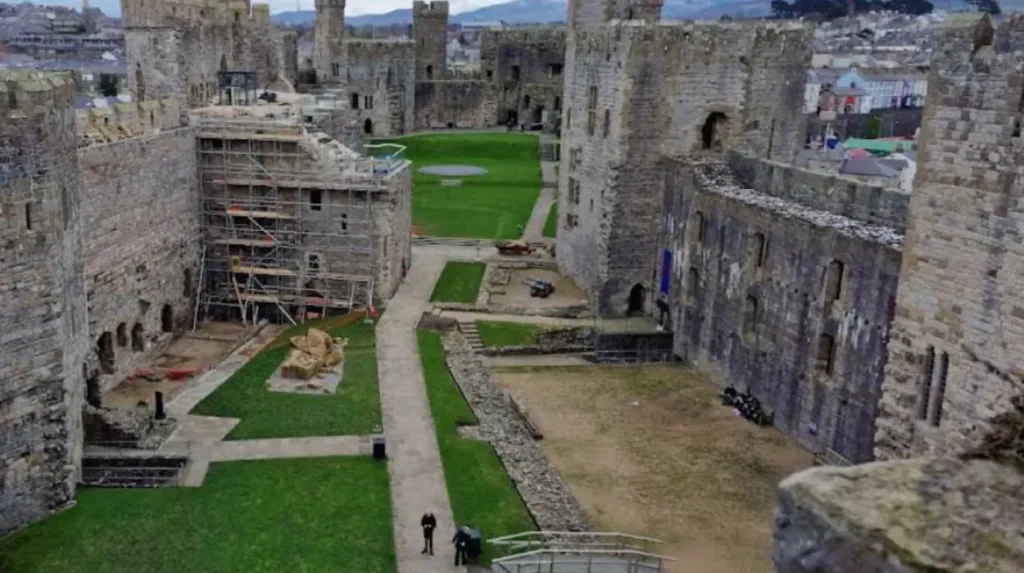
The construction of Flint Castle North Wales altered traditional Welsh governance by introducing English borough laws and administrative institutions. Welsh forces repeatedly targeted the site during national rebellions to challenge royal authority. In 1282, Prince Dafydd ap Gruffudd launched a surprise attack on the castle, igniting the second Welsh War of Independence. Later, in 1294, Madog ap Llywelyn besieged the fortress during a widespread revolt against English taxation. The castle garrison set fire to parts of their own structure to prevent capture, demonstrating the intensity of regional resistance. Despite these attacks, the castle remained an English administrative hub throughout the fourteenth century.
What is the current condition of Flint Castle North Wales today?
Flint Castle North Wales survives as a protected historical ruin managed by Cadw, offering public access to its structural remains. Visitors can explore the preserved masonry of the Great Tower and curtain walls.
While the outer fortifications and county gaol added in 1785 have largely disappeared, the core medieval layout remains clearly visible. The lower levels of the isolated Great Tower, the foundations of the inner ward buildings, and three corner towers are fully accessible. Structural conservation work carried out by archaeologists has stabilized the surviving masonry to protect it against coastal erosion from the River Dee. Interpretive panels across the site explain the military engineering, medieval life, and royal history of the ruins. Ground level paths allow easy navigation around the inner courtyard and surrounding earthworks.
Frequently Asked Questions
Is Flint Castle North Wales free to visit for tourists?
Yes, Flint Castle North Wales is completely free to enter for all visitors throughout the year. The site is maintained by Cadw and does not require advance booking or admission tickets.
Can you walk around the Great Tower at Flint Castle North Wales?
Visitors can walk around the base and lower chambers of the famous Great Tower via a modern pedestrian footbridge. The elevated positioning provides clear views across the River Dee estuary.
How close is Flint Castle North Wales to the nearest train station?
Flint Castle North Wales is located approximately three hundred meters from Flint railway station. Travelers can reach the castle ruins within a five-minute walk from the platform.
Are dogs allowed inside the grounds of Flint Castle North Wales?
Dogs are permitted on the grounds of Flint Castle North Wales as long as they are kept on short leads. Pet owners must keep animals on the ground floor accessible areas.
How long does a typical visit to Flint Castle North Wales take?
A standard tour of Flint Castle North Wales takes between 45 minutes to an hour. This provides enough time to read the information boards and walk through the ruined towers.