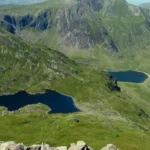
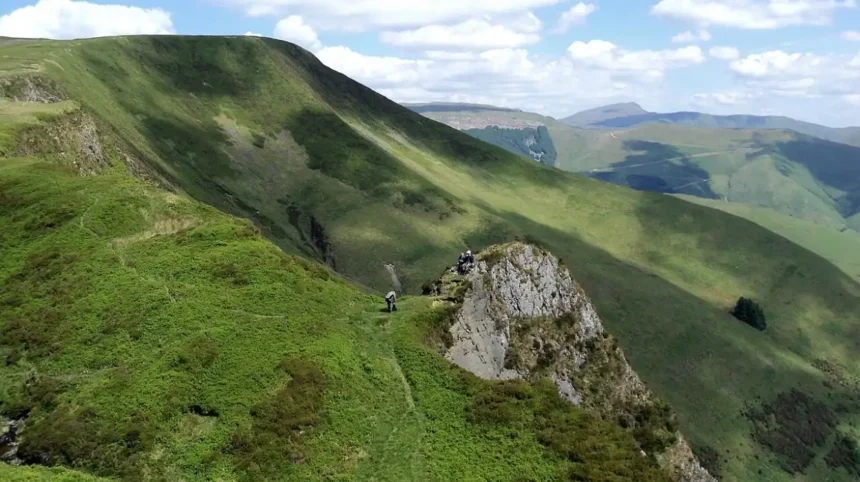
Brecon Beacons Click to open side panel for more information represents a protected upland region located in south Wales that spans approximately 520 square miles within a designated national park established in 1957. The terrain contains dramatic sandstone ridges, deep glacial valleys, expansive moorlands, and numerous underground cave networks formed over millions of years. Geological formations date back to the Devonian period when ancient rivers deposited thick layers of red sandstone across the landscape. The highest summit within the range reaches 886 meters above sea level at Pen y Fan, providing panoramic views across the British countryside. Conservation authorities manage the natural habitats to protect rare upland flora and fauna species while supporting sustainable rural tourism initiatives.
- What is the geographical and geological structure of Brecon Beacons Wales?
- What historical and archaeological milestones shaped Brecon Beacons Wales?
- How does the ecosystem and wildlife function in Brecon Beacons Wales?
- What recreational activities and tourism opportunities exist in Brecon Beacons Wales?
- What economic and conservation challenges impact Brecon Beacons Wales?
- Frequently Asked Questions
- What is the best time of year to visit Brecon Beacons Wales?
- Are dogs allowed on walking trails in Brecon Beacons Wales?
- How do visitors access Brecon Beacons Wales using public transport?
- What are the main safety guidelines for hiking in Brecon Beacons Wales?
- Can visitors camp overnight in Brecon Beacons Wales?
What is the geographical and geological structure of Brecon Beacons Wales?
The geographical layout of the national park encompasses four distinct mountain ranges running from west to east across the southern region of Wales. These geological groups include the Black Mountain in the west, the central Fforest Fawr massif, the Brecon Beacons proper, and the Black Mountains situated further to the east. Tectonic activity and glacial erosion during the last ice age carved out steep cirques, tarns, and deep valleys that define the modern topography. Underlying rock strata consist primarily of Old Red Sandstone, Carboniferous Limestone, and Mudstone which create varied soil profiles and unique subterranean cave systems. Hydrological features such as the River Usk and River Tawe originate within these uplands and flow outward to nourish surrounding agricultural valleys.
Subterranean limestone formations harbor some of the deepest and most complex cave systems in the United Kingdom, including Ogof Ffynnon Ddu and Dan yr Ogof. Speleologists explore these vast underground chambers containing stalactites, stalagmites, and subterranean rivers that span over 70 kilometers of mapped passages. Surface water drainage patterns create numerous cascading waterfalls, such as Henrhyd Falls which plunges 27 meters over a hard sandstone ledge into a wooded gorge. Soil composition varies dramatically from acidic peat bogs on high plateaus to nutrient rich brown earths on lower valley slopes where pastoral farming thrives. Environmental monitoring programs record annual rainfall totals exceeding 2,000 millimeters in western elevated sectors due to prevailing Atlantic weather systems.
What historical and archaeological milestones shaped Brecon Beacons Wales?
Human habitation within the upland region dates back over 8,000 years to the Mesolithic period when nomadic hunter gatherers utilized the seasonal resources of the high plateaus. Neolithic communities and Bronze Age tribes subsequently constructed numerous burial cairns, standing stones, and ceremonial circles that remain visible across the moorlands today. Notable prehistoric monuments include the Fan Frynach cairn and several chambered tombs that provide vital data regarding ancient funerary practices. Iron Age hillforts such as Y Gader and Twyn y Gaer demonstrate strategic defensive occupation by native Celtic tribes prior to the Roman conquest of Britain.
Roman military forces established a significant presence in the area by constructing the strategic auxiliary fort of Y Gaer near the modern town of Brecon around 75 AD. This fortification housed cavalry units tasked with maintaining control over rebellious local Silures tribes and protecting vital supply routes through the mountainous terrain. Norman lords later invaded the region during the eleventh century, building stone castles such as Carreg Cennen and Brecon uk/local/swansea/castle/">Castle to consolidate territorial dominance along the Welsh marches. Industrial heritage emerged during the eighteenth and nineteenth centuries through extensive limestone quarrying, iron ore extraction, and the construction of the Monmouthshire and Brecon Canal.
How does the ecosystem and wildlife function in Brecon Beacons Wales?
Diverse natural habitats support an extensive array of native flora and fauna adapted to upland climates, acidic soils, and exposed weather conditions. Heather moorland, blanket bog, and upland oak woodlands dominate the landscape, providing crucial nesting sites for threatened bird species. Avian populations feature breeding pairs of red kites, peregrine falcons, merlins, and Eurasian curlews that soar above the sweeping ridges. Mammal populations include robust herds of wild Welsh mountain ponies, red deer, badgers, and otters inhabiting pristine river catchments across the protected park boundaries.
Botanical surveys identify numerous rare plant species, including purple saxifrage, mountain pansy, and delicate alpine lichens clinging to sheltered rock crevices at high altitudes. Conservation grazing programs utilize traditional livestock breeds such as hardy sheep to maintain open moorland habitats and prevent invasive scrub encroachment. Wetland reserves and specialized peat bogs capture significant quantities of atmospheric carbon, contributing to regional climate change mitigation strategies monitored by environmental scientists. River ecosystems support healthy populations of native brown trout, Atlantic salmon, and freshwater pearl mussels requiring high water quality standards.
What recreational activities and tourism opportunities exist in Brecon Beacons Wales?
Outdoor recreation drives a thriving local economy, attracting millions of visitors annually who participate in hill walking, mountain biking, rock climbing, and caving expeditions. Marked trails such as the Beacons Way traverse the entire length of the national park, offering challenging long distance hiking routes for experienced outdoor enthusiasts. Mountain biking centers in Glynneath and Afan Forest provide purpose built singletrack trails catering to cyclists of varying skill levels and technical abilities. Water sports enthusiasts utilize local reservoirs and rivers for kayaking, canoeing, and paddleboarding under regulated environmental permits.
Stargazing represents a rapidly growing tourism sector following the designation of the entire park as an International Dark Sky Reserve in 2013 due to minimal light pollution. Visitors gather at designated observation sites such as Usk Reservoir and Craig y Nos Country Park to witness clear views of the Milky Way and meteor showers. Local communities host annual cultural festivals, agricultural shows, and heritage events that celebrate Welsh food, music, traditional crafts, and rural traditions. Visitor centers located in Libanus and Craig y Nos offer comprehensive educational exhibits, interactive displays, and expert guidance for safe mountain exploration.
What economic and conservation challenges impact Brecon Beacons Wales?
Modern land management requires balancing sustainable agricultural practices with ecological preservation, visitor safety, and rural economic development needs across the vast protected territory. Climate change introduces severe challenges, including increased frequency of severe storms, accelerated peatland erosion, and heightened risks of destructive summer wildfires on dry moorlands. Agricultural policies and Brexit transitions influence farming subsidies, encouraging landowners to adopt regenerative techniques that enhance biodiversity and improve water retention in river headwaters. Visitor management initiatives address footpath erosion on popular mountain routes, illegal parking, and litter accumulation through cooperative community ranger programs.
Local authorities and national park wardens collaborate to maintain infrastructure, upgrade drainage systems, and ensure accessibility for visitors with diverse physical mobility requirements. Economic studies indicate that heritage tourism and outdoor recreation generate over 500 million pounds annually while supporting thousands of full and part time jobs in hospitality. Renewable energy projects, including community scale wind turbines and hydroelectric schemes, contribute to regional carbon reduction targets while preserving landscape aesthetics. Ongoing scientific research partnerships investigate soil health, water quality restoration, and species reintroduction programs to safeguard the fragile upland ecosystems.
Frequently Asked Questions
What is the best time of year to visit Brecon Beacons Wales?
The optimal period for exploration extends from late spring through early autumn, specifically between May and September. During these months, daylight hours are longest, weather conditions are comparatively stable, and walking trails remain free from heavy winter snow. Wildflowers bloom across the moorlands in June, while autumn foliage provides vibrant landscape colors in October.
Are dogs allowed on walking trails in Brecon Beacons Wales?
Dogs are permitted throughout most public rights of way within the national park under responsible pet ownership guidelines. Owners must keep dogs on a short lead between March and July to protect ground nesting birds and newborn livestock. Stile designs across agricultural land frequently feature pet bypass gates to facilitate safe passage for animals.
How do visitors access Brecon Beacons Wales using public transport?
Public transportation access relies primarily on regional train services connecting to stations at Abergavenny, Merthyr Tydfil, and Llandovery on the periphery of the park. Connecting local bus routes operate limited schedules between surrounding market towns and popular hiking trailheads. Visitors frequently utilize private automobiles or organized tour operators to reach remote mountain locations efficiently.
What are the main safety guidelines for hiking in Brecon Beacons Wales?
H3:
H3:
Hikers must check mountain weather forecasts, carry waterproof clothing, sturdy footwear, navigation equipment, and emergency rations before embarking on upland routes. Mobile phone coverage remains unreliable across deep valleys and remote plateaus, making physical maps and compasses essential navigational tools. Mountain rescue teams operate continuously to assist lost or injured adventurers across the rugged terrain.Can visitors camp overnight in Brecon Beacons Wales?
Wild camping is technically restricted without explicit landowner permission across the majority of the national park territory. Numerous authorized campsites, caravan parks, and glamping sites operate within local valleys to accommodate overnight visitors legally. Designated pitching areas offer essential sanitation facilities while protecting sensitive ecological zones from environmental degradation.